The world may experience a dramatic solar eclipse, sparking global interest in astronomy.
???? A Dramatic Solar Eclipse: A Global Viewing Experience
4
A solar eclipse, or at least a spectacular solar eclipse, ranks among the most astounding astrophysical phenomena on our planet and might bring the whole world together with common curiosity and delight. During a solar eclipse, it occurs that the Moon passes exactly between the Earth and the Sun and either partially or completely hides it. Not only does it make it dark for several minutes, but it also captures people’s global interest in astronomy and science as well as philosophy.
???? What Is a Solar Eclipse?
A solar eclipse happens because the Moon passes into exactly/very close to perfect alignment with the Sun and the Earth. It should be pointed out that even though the Sun is 400 times larger than the Moon, it also keeps a similar ratio of 400 times farther away. As a result, it appears almost equal in size from our planet.
There are three types of solar eclipses:
Total Solar Eclipse
By Evelyn
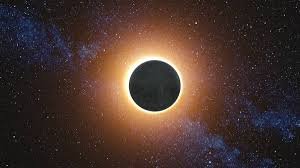
The Moon fully covers the Sun. It changes day to a sort of dusk for a very short while. The outer layer of the Sun, known as ‘corona’, becomes visible. It is a beautiful sight.
Partial Solar Eclipse
Only a part of the sun will be covered by the Moon. Also, this will be more typical.
Annular Solar Eclipse
An
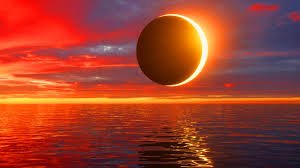
The Moon is slightly farther away and appears smaller, and there will be a bright “ring of fire” around the Sun.
A spectacular eclipse typically means that it will be a total solar eclipse, as it is the rarest and most spectacular.
???? The Reason Behind Global Interest for Eclipses
Since people
- Rarity and Timing
It’s quite rare for total solar eclipses to occur in densely populated areas. It might be several decades or even several centuries before some places experience a solar eclipse. It becomes global when a solar eclipse path passes through major nations and even continents.
- Scientific Opportunity
For astronomers and scientists, a solar eclipse is more than a sight to see. During a solar eclipse, scientists can:
Observe the corona of the Sun
Study solar flares and magnetic fields
Increase understanding of space weather impacting satellites and power distribution on Earth
- Public Engagement with Astronomy
Eclipses sometimes provide a gateway event for people, especially schoolgoing kids, to get interested in astronomy and space science. Organizations like planetariums, observatories, educational institutions, and space departments conduct:
Live streams
Viewing sessions for the general public
Educational workshops and presentations
???? Cultural and Historical Importance
Culture:
Additionally
Solar eclipses have been associated with various legends and meanings throughout history:
Eclipses were commonly perceived as messages or signified as omens even by ancient civilizations.
In India and China, there were beliefs that during an eclipse, some creatures might be devouring the Sun.
Ancient Greek astronomers, however, employed eclipses as a prediction instrument for the motion of celestial bodies.
Eclipses, as they occur today, stand for humanity’s curiosity and its quest for science. Fear gives way to understanding.
???? The Emotional Component OF Totality
It doesn
A total solar eclipse is an event that changes people’s lives who have witnessed it. During totality, “the solar corona becomes visible
The temperature begins dropping sharply
By: Claire Lower
Originally from
The sky darkens with a 360-degree sunset illumination
Stars and planets appear for a short while
Many people have
This surreal phenomenon establishes an intense relationship between humanity and the universe, as it reminds us that we have our own special position within it.
???? Role of Space Agencies and Technology
The global space agencies, including NASA, ESA, ISRO, and more, have an important role during eclipses as:
1.
Broadcasting live, high definition programming.
Launching Space Telescopes and Ground Facilities
Promoting citizen science projects, wherein people contribute photos and data.
Social media and modern technology make it possible for millions who will not be physically present for the eclipse to be there with it, as it becomes a global moment.
???? Safety: A Key Reminder
Although solar eclipses are very exciting, eye safety becomes an extremely important consideration. Viewing the sun without eye protection can potentially harm your eyes.
Safe viewing procedures include:
Solar eclipse viewing glasses that meet certification standards
Solar filters on telescopes and cameras
Unfortunately, taking images
B. Indirect viewing methods like pinhole projectors
During these moments of totality, it becomes safe to gaze at it without any assistance, but only when it’s fully hidden.
???? Impact Beyond Science
A spectacular solar eclipse also affects:
Tourism: Many people visit locations lying within the path of totality.
Media and Content Production: Eclipses trend worldwide on news media, You Tube, and social networking sites.
Art and Literature
Artists, writers, and moviemakers have often drawn inspiration from these phenomena. To bloggers and content marketers, as well as those who focus on trending stories, an eclipse presents an attractive combination of science and drama. ???? A Shared Human Experience A solar eclipse crosses borders, languages, and ideologies. It brings a unified experience that happens on a single planet with global inhabitants. It reminds people that they share the earth as a single unit because they coexist as an earthling in a very large universe. ✨ Conclusion A solar eclipse is so much more than an astronomical phenomenon—it reminds us of the precision, the beauty, and the mystery of nature. It inspires an interest in astronomy on a global scale, and it challenges us to learn, wonder, and unite as a people. Whether we watch an eclipse with special glasses, a telescope, or an online link, we are all encouraged to pause and appreciate the universe we share with wonder.