Israel-Iran war LIVE: Pezeshkian says Iran will halt strikes on neighbours; Trump vows to hit harder
The Israel-Iran war has taken a turn with missile strikes, drone attacks and threats getting worse in the Middle East.
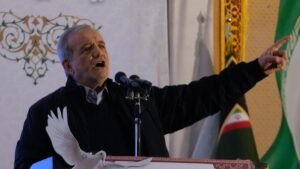
Iranian President Masoud Pezeshkian said Iran will stop attacking neighboring countries. Former US President Donald Trump warned Iran that it will be “hit very hard.”
This situation shows divisions and a growing military conflict involving Iran, Israel, the US and several Gulf states.
The war has already caused thousands of deaths disrupted oil supply routes and raised fears of a regional war.
### Background of the Israel-Iran War
The current conflict comes from standing hostility between Iran and Israel which has grown worse over the past decade due to nuclear concerns, proxy wars and regional rivalry.
#### Historical Tensions
Iran and Israel have been enemies since the 1979 Iranian Revolution, when Iran’s new Islamic government declared Israel an illegitimate state.
Tensions escalated through:
* Iran’s support for groups like Hezbollah in Lebanon and Hamas in Gaza
* Israel’s opposition to Iran’s program
* Covert operations, cyberattacks and assassinations
Both countries avoided full-scale war for decades fighting through proxy conflicts across the Middle East.
### The Trigger for the 2026 War
The trigger was on February 28 2026 when Israel and the US launched major airstrikes on Iran targeting military and leadership locations.
One of the dramatic consequences was the assassination of Iran’s Supreme Leader Ali Khamenei in Tehran during the strikes.
The killing of Khamenei shocked the region. Triggered a rapid escalation.
#### Iranian Retaliation
Iran responded with:
* missile attacks
* Drone strikes
* Attacks on US bases in the Gulf
* Strikes against Israel and regional targets
These actions quickly expanded the conflict beyond Iran and Israel.
### Regional Spread of the War
The war soon spread across countries in the Middle East.
#### Gulf States Affected
Iran launched attacks that impacted neighboring countries, including:
* United Arab Emirates
* Bahrain
* Qatar
* Kuwait
* Saudi Arabia
Some of these states host US bases making them strategic targets for Iranian retaliation.
Explosions and drone interceptions were reported in cities and airports like Dubai temporarily suspended flights due to security concerns.
#### Lebanon Front
Another front opened in Lebanon, where Hezbollah. An ally. Began attacking Israel.
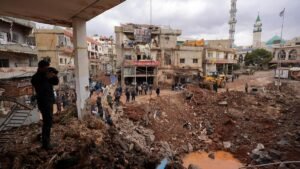
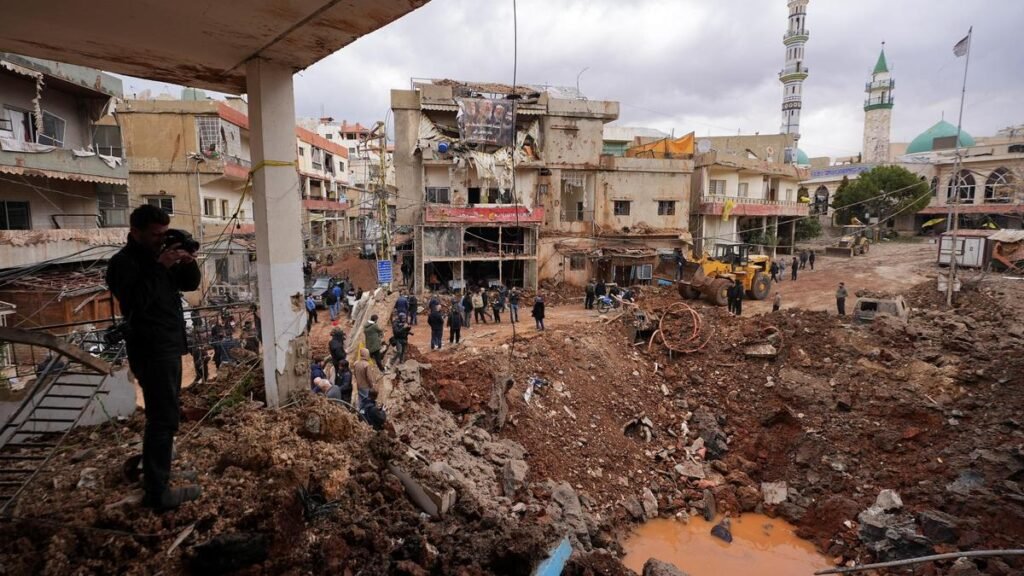
Israeli retaliatory airstrikes in Lebanon have reportedly killed hundreds. Displaced tens of thousands.
This development raised fears of a scale regional war involving multiple countries.
### Pezeshkian’s Statement: Iran Will Halt Strikes on Neighbors
Amid rising tensions Iranian President Masoud Pezeshkian issued a conciliatory message.
He apologized to neighboring countries affected by strikes and stated that Iran would stop attacking regional states unless they directly participate in attacks on Iran.
#### Key Points of His Message
* Iran respects the sovereignty of neighboring countries.
* Iran does not intend to escalate conflict with Gulf states.
* Attacks will continue against US and Israeli targets.
This statement was widely interpreted as an attempt to reduce opposition against Iran.
#### Why Iran Made This Move
Several reasons explain the statement:
1. Diplomatic pressure: Gulf countries like Oman, Qatar and Turkey urged Iran to de-escalate.
2. Risk of isolation: If Gulf states unite against Iran Tehran could face military pressure.
3. Consequences: Regional instability threatens oil exports and trade routes vital to Iran.
4. Domestic political divisions: Iran’s civilian leadership appears cautious than its military factions.
However Iranian military leaders suggested strikes could continue if neighboring countries allow US forces to operate from their territory.
### Trump’s Reaction: “Iran Will Be Hit Hard”
Following Pezeshkian’s remarks Donald Trump responded aggressively.
Trump claimed Iran had effectively “surrendered to its neighbors”. Warned that new military strikes could soon occur.
Trump’s statements included:
* Iran will be “hit hard”
* New targets are under consideration
* Some Iranian groups may face ” destruction”
He also reiterated his demand for Iran’s “unconditional surrender.”
Iran has rejected this demand calling it unrealistic and unacceptable.
### The Military Situation on the Ground
The war has already become one of the military confrontations in the Middle East in decades.
#### Airstrikes on Iran
Israeli and US forces have launched air campaigns targeting:
* Iranian military bases
* Missile facilities
* Nuclear infrastructure
* Government buildings
Iranian cities like Tehran and Isfahan have experienced repeated bombardments.
#### Iranian Retaliation
Iran has responded with:
* Long-range missiles
* Drone swarms
* activity in the Persian Gulf
* Attacks on US bases
Iran has reportedly targeted countries hosting American forces.
#### Casualties
Reports suggest the conflict has already caused:
* Over 1,200 deaths in Iran
* Hundreds of deaths in Lebanon
* Several casualties in Israel
* US personnel killed in regional attacks
These numbers continue to rise.
### Strategic Importance of the Strait of Hormuz
One of the dangerous aspects of the conflict is the threat to the Strait of Hormuz a key global oil route.
The strait carries around one-fifth of the world’s oil supply.
Following the war’s outbreak:
* Shipping traffic was disrupted
* Tankers were damaged
* Global oil prices surged
The crisis in this region is now known as the 2026 Strait of Hormuz crisis.
If the strait closes completely it could trigger an energy shock.
### Internal Divisions Within Iran
Another major development is tension inside Iran’s leadership.
After the death of Supreme Leader Khamenei, Iran established a temporary leadership council.
There are signs of disagreement between:
* The civilian government
* The Islamic Revolutionary Guard Corps (IRGC)
* Hardline political factions
Some hardliners have criticized Pezeshkian for being too soft toward countries.
This division could influence Iran’s strategy in the war.
### Role of Proxy Groups
Iran’s influence in the region relies heavily on militias and proxy forces.
These include:
* Hezbollah (Lebanon)
* Houthi rebels (Yemen)
* Militias in Iraq and Syria
These groups may open fronts against Israel or US forces increasing the risk of a wider war.
### Global Reactions
Countries around the world are watching the conflict closely.
#### US Allies
Many Western countries support Israel. Have:
* Increased military readiness
* Deployed naval forces
* Strengthened regional bases
#### Gulf States
Countries like Saudi Arabia and the UAE are trying to avoid direct involvement while protecting their territories.
#### China and Russia
These powers have called for solutions and criticized Western military actions.
### Economic Impact
The war has already affected the economy.
#### Oil Prices
Energy markets reacted sharply due to fears of supply.
#### Financial Markets
Stock markets worldwide experienced volatility.
#### Trade Disruption
Shipping routes in the Middle East have become unsafe affecting trade.
### Risk of a Larger War
The current conflict could escalate into a regional war involving:
* Iran
* Israel
* United States
* Gulf states
* Hezbollah
* Other militias
Some analysts warn the situation could resemble an Eastern world war scenario.
Possible escalation scenarios include:
* US ground invasion of Iran
* war between Israel and Hezbollah
* Attacks on Gulf oil infrastructure
* Closure of the Strait of Hormuz
### Diplomatic Efforts to Prevent Escalation
Several countries are attempting mediation.
Diplomatic talks are reportedly being explored by:
* Qatar
* Oman
* Turkey
* European Union
However negotiations face obstacles because:
* The US demands surrender.
* Iran refuses to accept these conditions.
### Why Pezeshkian’s Statement Matters
Although limited Iran’s statement about halting strikes on neighbors could signal:
* A desire to avoid isolation
* Concern about consequences
* Internal political pressure
* Attempt to divide US alliances in the Gulf
However experts warn the statement does not necessarily mean de-escalation since attacks against US and Israeli targets are continuing.
### Future Outlook
The next few weeks will be critical.
Possible outcomes include:
* **Scenario 1: Escalation**: More US strikes could lead to a war.
* **Scenario 2: Stalemate**: Both sides continue attacks without victory.
* **Scenario 3: Negotiated ceasefire**: International pressure forces talks.
At the moment however the conflict shows signs of slowing down.
The Israel-Iran war has rapidly evolved into a regional conflict involving multiple countries and armed groups.
Iran’s President Masoud Pezeshkian has attempted to reduce tensions, with neighboring states by promising to halt strikes on them. The broader war continues.
Meanwhile Donald Trump’s warning that Iran will be “hit hard” highlights the risk of further escalation.
With missile attacks, proxy warfare, oil supply disruptions and rising casualties the conflict represents one of the dangerous geopolitical crises of the decade.
Whether diplomacy can prevent a war remains uncertain.