India will not raise petrol prices despite global crude headwinds: Government sources
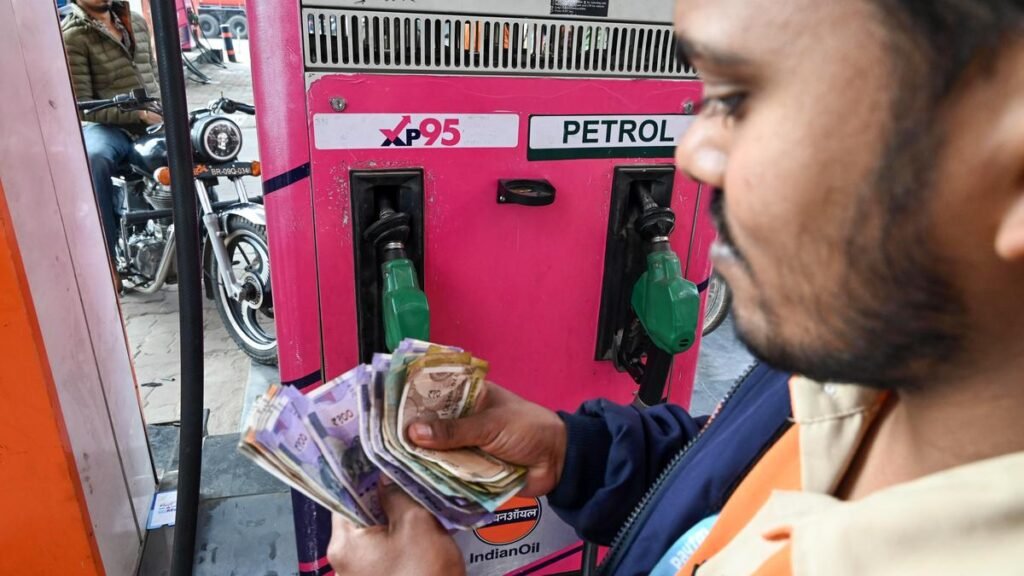
India’s government has recently reassured citizens that petrol and diesel prices will not be increased immediately, even though global crude oil prices are rising due to geopolitical tensions and supply disruptions. The statement comes at a time when energy markets are volatile, especially because of conflicts in the Middle East and concerns about disruptions in oil supply routes. Government officials say that India has sufficient fuel stocks, diversified supply sources, and policy mechanisms that allow it to maintain price stability in the short term.
1. Background: Global crude oil headwinds
Global oil markets have recently experienced significant volatility. Geopolitical tensions—particularly conflicts in the Middle East involving Iran and other regional powers—have pushed crude oil prices sharply higher. Brent crude, one of the key global oil benchmarks, has surged to levels close to a four-year high in recent trading sessions.
These developments have created concerns worldwide because oil is a critical input for transportation, manufacturing, and electricity generation. When crude oil prices increase, countries that import oil—like India—typically face higher costs. Since India imports more than 80% of its crude oil requirements, any rise in global oil prices normally affects domestic fuel prices and the broader economy.
The recent spike in oil prices is mainly linked to:
- Military tensions in West Asia and possible disruptions to oil supply routes
- Reduced production or supply uncertainty among major oil-producing nations
- Market speculation and fears of supply shortages
- Possible blockages or risks in the Strait of Hormuz, a key oil shipping route
Because of these factors, analysts expected petrol and diesel prices in India to increase. However, government sources have indicated that domestic fuel prices will remain stable for now.
2. Government assurance on petrol and diesel prices
Government sources recently clarified that petrol and diesel prices in India will not be raised despite global crude headwinds. The main reason cited is the country’s improved energy stock position and supply management.
Officials explained that India currently has:
- Adequate fuel reserves
- Stable supply arrangements
- Diversified crude import sources
Because of these factors, authorities believe that short-term fluctuations in global oil prices will not necessarily translate into immediate price hikes for consumers.
This assurance aims to prevent panic in domestic markets and reassure consumers that fuel supply remains stable.
3. Adequate fuel reserves in India
One of the key reasons behind the government’s confidence is India’s strategic petroleum reserves (SPR) and fuel inventories.
India has built underground storage facilities to store crude oil in case of emergencies or supply disruptions. These reserves act as a buffer when global supply becomes uncertain.
The country’s strategic petroleum reserves have a total capacity of about 5.33 million metric tons, and a large portion of this capacity is currently filled.
Having these reserves means that the government can temporarily absorb shocks in the global oil market without immediately increasing retail fuel prices.
In addition to strategic reserves, Indian oil marketing companies also maintain operational inventories of petroleum products such as petrol, diesel, and aviation fuel.
4. Diversification of crude oil imports
Another important factor is India’s diversification of crude oil suppliers.
Traditionally, India imported a significant portion of its oil from the Middle East. However, geopolitical tensions in that region have encouraged the country to diversify its sources of crude oil.
Recent policies have increased imports from countries such as:
- Russia
- United States
- Canada
- Africa and Latin America
In fact, India has reportedly increased crude imports from sources outside the Strait of Hormuz by around 10%, reducing dependence on vulnerable shipping routes.
Diversification helps ensure that supply disruptions in one region do not severely affect India’s energy security.
5. Continued purchase of Russian crude
One significant development helping stabilize supply is India’s continued purchase of discounted Russian oil.
After Western sanctions on Russia following the Ukraine conflict, Russia began selling crude oil at discounted prices to countries willing to buy it. India became one of the largest buyers.
Recently, the United States even granted a temporary waiver allowing India to purchase Russian oil that was already in transit, ensuring that global oil supply remains stable.
This supply helps reduce the cost pressure on Indian refiners and allows them to maintain stable fuel prices domestically.
6. Government intervention in fuel pricing
Although petrol and diesel prices in India are technically deregulated, the government still plays an important role in influencing prices.
Fuel prices depend on several factors, including:
- Global crude oil prices
- Exchange rate (rupee vs dollar)
- Refining and transportation costs
- Taxes imposed by the central and state governments
However, during periods of extreme volatility, the government often intervenes indirectly by:
- Adjusting excise duties
- Asking oil companies to absorb some losses
- Providing subsidies or financial support
These interventions help prevent sudden spikes in retail fuel prices.
7. Oil marketing companies absorbing cost pressures
India’s major oil marketing companies (OMCs) include:
- Indian Oil Corporation (IOC)
- Bharat Petroleum (BPCL)
- Hindustan Petroleum (HPCL)
These companies import crude oil, refine it, and sell petrol and diesel across the country.
During times of high global crude prices, these companies sometimes absorb part of the cost increase, reducing the immediate impact on consumers.
However, rising crude prices can affect their profitability. In fact, shares of Indian refinery companies recently fell sharply after oil prices surged, reflecting investor concerns about shrinking profit margins.
Despite these pressures, the government may encourage OMCs to maintain stable fuel prices in the short term.
8. Impact of global conflicts on oil prices
The current surge in oil prices is linked to geopolitical tensions involving Iran and other countries.
Conflicts in the Middle East can disrupt oil supply in several ways:
- Threats to shipping routes
The Strait of Hormuz is one of the world’s most important oil transit chokepoints. - Production disruptions
Military conflicts may damage infrastructure or reduce production capacity. - Sanctions and trade restrictions
Sanctions on oil-producing countries can reduce global supply.
Because the Middle East supplies a large share of the world’s oil, any conflict there tends to push global prices higher.
9. Inflation concerns and economic stability
Fuel prices are closely linked to inflation in India. Petrol and diesel affect the cost of transportation, agriculture, and manufacturing.
If fuel prices rise sharply, the following may happen:
- Transport costs increase
- Food prices rise
- Manufacturing costs go up
- Overall inflation increases
However, the Indian government has indicated that the current rise in global crude prices is unlikely to significantly affect inflation, partly because domestic fuel prices remain stable for now.
This stability helps maintain economic confidence.
10. Impact on India’s economy
Even if retail fuel prices remain unchanged, rising crude prices can still affect the economy.
Key impacts include:
1. Higher import bill
India spends billions of dollars importing crude oil every year. Higher oil prices increase the country’s import bill and may widen the current account deficit.
2. Pressure on the rupee
Higher oil imports require more dollars, which can weaken the Indian rupee.
3. Market volatility
Energy companies and stock markets may react negatively to rising oil prices.
4. Slower economic growth
Higher energy costs can reduce business investment and consumer spending.
11. Why the government may avoid fuel price hikes
There are several political and economic reasons why governments often avoid raising fuel prices suddenly.
Protecting consumers
Fuel price increases directly affect millions of households and businesses.
Controlling inflation
Stable fuel prices help keep inflation under control.
Political considerations
Fuel prices are a sensitive issue in India and often influence public sentiment.
Economic recovery
Keeping energy costs stable can support economic growth.
12. Possible future scenarios
Although the government has ruled out immediate fuel price hikes, the situation could change if global oil prices remain high for a prolonged period.
Possible future scenarios include:
Scenario 1: Oil prices fall
If geopolitical tensions ease and crude prices decline, India may maintain stable fuel prices without major intervention.
Scenario 2: Government reduces taxes
If crude prices remain high, the government may reduce fuel taxes to prevent price increases.
Scenario 3: Oil companies absorb losses
Public sector oil companies may temporarily bear the cost increases.
Scenario 4: Gradual price increase
If crude prices stay elevated for a long time, gradual fuel price hikes may eventually become unavoidable.
13. Long-term energy strategy of India
India is also working on reducing its dependence on imported oil.
Key strategies include:
- Expanding renewable energy such as solar and wind power
- Increasing ethanol blending in petrol
- Promoting electric vehicles
- Improving fuel efficiency
These measures aim to reduce vulnerability to global oil price shocks in the future.
The Indian government’s assurance that petrol and diesel prices will not rise immediately reflects a combination of strategic planning, supply diversification, and economic management. Despite global crude headwinds caused by geopolitical tensions and supply disruptions, India currently has sufficient fuel stocks and diversified import sources that allow it to maintain stable domestic fuel prices.
By relying on strategic petroleum reserves, discounted crude imports, diversified suppliers, and policy interventions, the government aims to shield consumers from sudden fuel price spikes. However, the long-term sustainability of this strategy will depend on how global oil markets evolve in the coming months.
If crude prices continue rising for an extended period, India may eventually face difficult choices regarding taxes, subsidies, or fuel price adjustments. For now, however, the government’s message is clear: fuel prices will remain stable despite global turbulence in the oil market.