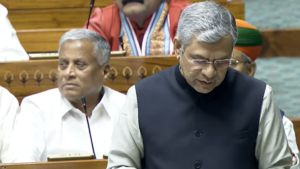
Parliamentary panel suggests a raise to EPF pension, says ₹1,000 inadequate to meet basic needs

The recent suggestion by a panel to increase the Employees’ Provident Fund (EPF) pension has started a debate about social security, retirement dignity and India’s pension framework.
At the heart of the issue is a fact: the current minimum monthly pension of ₹1,000 under the Employees’ Pension Scheme (EPS) is not enough for retirees to meet their basic needs.
This fact pointed out by a standing committee shows deeper problems in India’s social security system and calls for urgent reform.
To understand the importance of this suggestion we need to know what the EPF and EPS systems are. The Employees’ Provident Fund is a savings scheme for salaried employees in the organized sector managed by the Employees’ Provident Fund Organisation (EPFO).
Both employers and employees put a part of their wages into this fund, which is meant to provide security after retirement. A part of the employer’s contribution goes into the Employees’ Pension Scheme, which gives a fixed pension to retirees based on their salary and years of service.
However despite the intention behind the EPS its implementation has faced criticism for years. The minimum pension of ₹1,000 per month introduced in 2014 has not been changed since then.
Over time inflation has reduced its value significantly. The cost of things like food, healthcare, housing and utilities has increased manifold making it nearly impossible for pensioners to survive on such a small amount.
The panel’s observation that ₹1,000 is inadequate is not just a statement of concern—it is an acknowledgment of a systemic failure to protect the elderly.
One of the arguments presented by the panel is that pensions must be linked to the cost of living. Without revisions or indexation to inflation fixed pension amounts quickly become outdated.
In India, where a large section of retirees does not have access to sources of income or savings the EPS pension often serves as a crucial lifeline.
For many those in low-income jobs this pension is the only form of financial support in old age. The inadequacy of this amount can push retirees into poverty, dependence and even destitution.
The panel has therefore suggested an increase in the minimum pension.
While the exact figure suggested may vary there is a consensus that it should be significantly higher than ₹1,000—some experts have suggested figures ranging from ₹3,000 to ₹7,500 per month.
Such an increase however raises questions about fiscal sustainability and funding. The EPS is a contributory scheme and any increase in benefits must be matched by resources.
This could involve contributions from employers and employees increased government support or a combination of both.
Another important aspect highlighted by the panel is the need for equity and fairness in the pension system.
Currently the EPS calculation formula often results in low pensions even for individuals who have worked for decades.
This is partly due to wage ceilings and the structure of contributions. Many workers feel that the returns on their contributions are disproportionately low leading to dissatisfaction and distrust in the system.
Reforming the formula to ensure that pensions reflect earnings and years of service is therefore essential.
The issue also has a socio-economic dimension. India is undergoing a transition with a growing number of elderly citizens.
According to estimates the proportion of people aged 60 and above is expected to increase in the coming decades.
This demographic shift will place pressure on social security systems making it imperative to strengthen pension frameworks now.
Ensuring pensions is not just a matter of welfare—it is a key component of economic stability and social cohesion.
Furthermore the inadequacy of pensions has gender implications well. Women, who often have shorter or interrupted work histories due to caregiving responsibilities tend to receive lower pensions.
This exacerbates existing inequalities. Leaves elderly women particularly vulnerable. A reformed pension system must therefore incorporate gender- measures to address these disparities.
Healthcare costs are another factor that makes the current pension amount insufficient.
As people age their medical expenses tend to increase. In the absence of health insurance or public healthcare support retirees often have to rely on their pensions to cover these costs.
A monthly pension of ₹1,000 is clearly inadequate in this context forcing many to either necessary treatment or depend on family members.
The panel’s recommendation also reflects growing discontent. Pensioners’ associations and labor unions have been demanding an increase in the pension for years.
They argue that the current amount violates the principle of a life after retirement. The panel’s support for these demands lends them greater legitimacy and urgency.
However implementing these recommendations will not be without challenges. Increasing the pension will require careful financial planning.
The government may need to allocate funds or explore alternative financing mechanisms. There could also be resistance from employers if higher contributions are mandated.
Balancing the interests of all stakeholders—employees, employers and the government—will be crucial.
In addition to increasing the pension amount the panel has emphasized the need for reforms within the EPFO.
Issues such as delays in pension disbursement lack of transparency and complex procedures have been concerns.
Streamlining these processes. Leveraging technology can improve efficiency and build trust among beneficiaries.
Another potential reform area is the integration of EPS with social security schemes.
India has pension and welfare programs often operating in silos. A coordinated approach could enhance coverage and ensure that no retiree falls through the cracks.
For example linking EPS with schemes like the National Pension System (NPS) or old-age pension programs could provide a comprehensive safety net.
The recommendation also has implications. Social security is an issue for voters particularly in a country with a large working-class population.
Addressing pension inadequacy can have electoral impact making it a priority for policymakers.
At the time it requires long-term commitment and bipartisan support as pension reforms cannot be achieved through short-term measures alone.
From a perspective increasing pensions can have both costs and benefits. While it may strain finances in the short term it can also boost consumption and reduce poverty among the elderly.
Pensioners are likely to spend their income on goods and services thereby contributing to economic activity.
Moreover a robust social security system can enhance workforce productivity by providing a sense of security.
The international context also offers insights. Many countries have recognized the importance of pensions and have implemented mechanisms such as inflation indexation, minimum pension guarantees and universal basic pensions.
While India’s context is unique these examples highlight the importance of reform and adaptation.
In conclusion the panel’s suggestion to raise the EPF pension is a timely and necessary intervention.
The current minimum pension of ₹1,000 is clearly inadequate to meet needs and its revision is long overdue.
However increasing the pension amount is one part of the solution. Comprehensive reforms are needed to address issues ensure financial sustainability and provide equitable benefits to all retirees.
The challenge lies in translating these recommendations into policies.
This will require will, stakeholder cooperation and innovative thinking.
Ultimately the goal should be to create a pension system that not provides financial support but also upholds the dignity and well-being of India’s elderly population.
In a society that values respect, for its elders ensuring an comfortable retirement should be a fundamental priority, not an afterthought.