Sun Pharma, Dr. Reddy’s, Zydus, Glenmark roll out generic Semaglutide
The rollout of semaglutide by major Indian pharmaceutical companies such as Sun Pharma, Dr. Reddy’s Laboratories, Zydus Lifesciences and Glenmark Pharmaceuticals marks a historic turning point in India’s healthcare and pharmaceutical landscape. This development is not about a new drug launch. It represents a major shift in affordability, accessibility, competition and public health outcomes especially in the treatment of type 2 diabetes and obesity.
## 1. What is Semaglutide and Why is it Important?
Semaglutide is a drug. It belongs to the class of GLP-1 receptor agonists.
It is widely used for:
* Type 2 diabetes management
* Weight loss (-obesity therapy)
* Reducing risks
### How it works:
* It mimics the hormone GLP-1
* Increases insulin secretion
* Reduces appetite
* Slows emptying
This leads to:
* Better blood sugar control
* weight reduction
Globally semaglutide became famous through branded drugs like:
* Ozempic (diabetes)
* Wegovy (weight loss)
However these were extremely expensive and largely inaccessible to patients.
## 2. The Turning Point: Patent Expiry in India (March 2026)
The biggest reason behind this wave of launches is the expiry of Novo Nordisk’s semaglutide patent in India (March 2026).
Patent expiry allows other companies to legally manufacture the molecule.
It immediately triggered mass entry of pharma companies.
Over 40 companies and 50+ brands are expected.
This is similar to what happened with:
* HIV drugs
* Cancer therapies
* COVID medicines
India’s strong generic drug industry quickly capitalized on the opportunity.
## 3. Major Indian Companies Launching Generic Semaglutide
### (A) Dr. Reddy’s Laboratories
* First to get approval (DCGI)
* Brand name: Obeda
* Weekly injection format
* Approx cost: ₹2,400/month
### Significance:
* First-mover advantage
* Sets benchmark for pricing and quality
### (B) Sun Pharma
* Brands: Noveltreat, Sematrinity
* Focus:
+ Weight loss
+ Diabetes
* Cost: ₹750 – ₹2,000 therapy
### Strategy:
* Multiple price points
* distribution network
### (C) Zydus Lifesciences
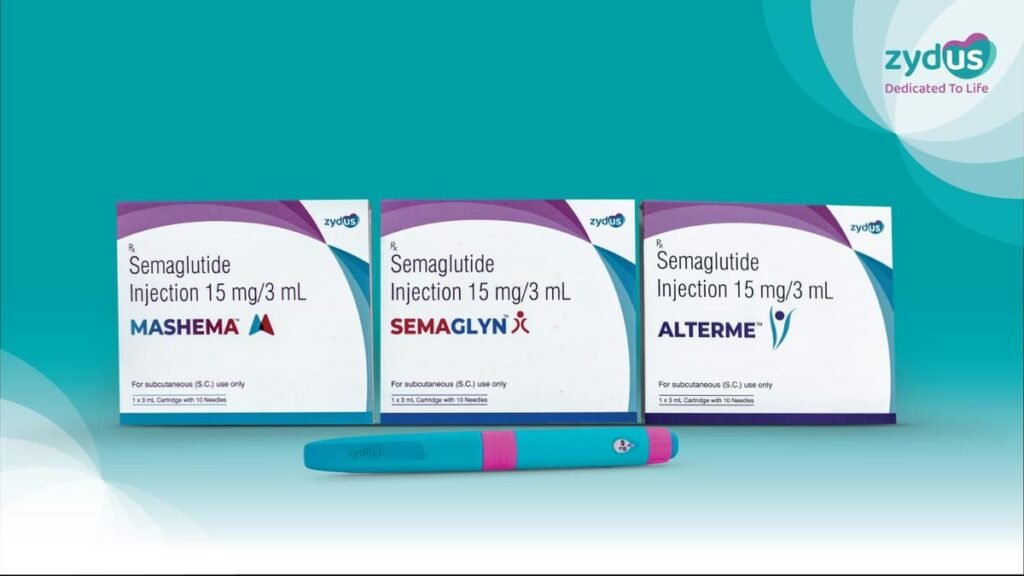
* Brands: Semaglyn, Mashema, Alterme
* cost: ~₹2,200
### Key feature:
* -dose reusable pen device
* Manufacturing in India
### (D) Glenmark Pharmaceuticals
* Brand: Glipiq
* in:
+ Vials
+ Pre-filled pens
* Cost: ₹325–₹440 per week
### Focus:
* Lower-cost delivery options
### (E) Other players
* Torrent Pharma
* Natco Pharma
* Eris Lifesciences
* Alkem Labs
Together they create a -competitive market.
## 4. Massive Price Reduction: The Biggest Impact
Before generics:
* cost: ₹10,000 – ₹15,000
After generics:
* As low as ₹1,300 – ₹5,000/month
* Some cases lower (~₹1,290)
### Price drop:
* 50% to 90% reduction
Why prices fell sharply:
* Intense competition
* India’s generic manufacturing
* No R&D cost burden for generics
* patient base → economies of scale
## 5. Why This Matters for India
India faces a dual burden:
### (A) Diabetes Crisis
* 2nd largest diabetic population globally
* Millions undiagnosed
### (B) Obesity Epidemic
* Rising urban lifestyle diseases
* Increasing cardiovascular risk
Semaglutide directly addresses both.
### Impact on Patients:
Before:
* Only rich patients could afford treatment
After:
* Middle-class access improves
* Even lower-income patients may benefit
This could become a mass-market therapy.
## 6. Market Opportunity: A Multi-Billion Dollar Industry
Current obesity drug market: ~₹15 billion
Expected growth: ₹80 billion by 2030
### Growth drivers:
* Rising obesity
* Lifestyle diseases
* Increasing awareness
* pharma marketing
## 7. Competitive Dynamics: A “Price War”
The entry of companies has created:
1. Price competition
* Discounting
* Different pricing tiers
2. Product differentiation
Companies compete through:
* Injection devices (pen vs vial)
* Dosing convenience
* Patient support programs
3. Branding strategies
* brand names
* Targeted segments (diabetes vs weight loss)
## 8. Beyond Price: What Doctors Say
Doctors caution that “Price alone won’t determine success”.
Important factors include:
1. Cold chain infrastructure
* Drug requires storage
2. Device quality
* Injection pens must be user-
3. Patient adherence
* Long-term treatment required
4. Side-effect management
* Nausea, vomiting, GI issues
## 9. Risks and Concerns
### (A) Misuse for Weight Loss
* -diabetic users using for quick weight loss
* Cosmetic use increasing
### (B) Side Effects
* Gastrointestinal issues
* Rare complications
### (C) market
* Many brands → confusion
* Quality differences
### (D) Regulatory challenges
* Need strict monitoring
## 10. Innovation in Delivery Systems
Companies are offering:
* Pre-filled pens
* -dose cartridges
* Vials (cheaper option)
### Goal:
* Improve comfort
* Reduce dosing errors
## 11. Global Context
India is not alone:
* Patent expiry happening globally
* Generics expected in countries
### India’s advantage:
* Strong generic manufacturing ecosystem
* Lower production costs
## 12. Strategic Importance for Indian Pharma
This launch strengthens India’s position as the “Pharmacy of the World”.
Benefits for companies:
* Huge domestic demand
* Export opportunities
* Brand building
## 13. Economic Impact
Positive effects:
* Lower healthcare costs
* Increased productivity
* Reduced disease burden
Industry benefits:
* Revenue growth
* Job creation
* Export expansion
## 14. Future Outlook
### Short-term (1–2 years)
* Rapid market expansion
* Price stabilization
### term (3–5 years)
* Consolidation of players
* Brand leaders emerge
### Long-term (5–10 years)
* Semaglutide becomes mainstream therapy
* insurance coverage
## 15. Takeaways
* Patent expiry triggered a generic revolution
* Prices dropped by 50–90%
* Major companies: Sun Pharma, Dr. Reddy’s Zydus, Glenmark
* Huge boost to affordability and access
* Competition → innovation + price war
* Challenges: misuse, regulation, patient awareness
The rollout of generic semaglutide by leading Indian pharmaceutical companies is one of the most significant healthcare developments, in recent years. It represents an intersection of science (advanced metabolic therapy) economics (massive price reduction) and public health (diabetes & obesity control).
For India this could become a game-changing moment. To how generic antiretrovirals transformed HIV treatment.
However the true success of this revolution will depend not on affordability but on responsible usage, strong regulation, patient education and healthcare infrastructure.
If managed well generic semaglutide could dramatically improve the quality of life for millions of Indians. Reshape the future of chronic disease treatment.