Asian shares decline as hopes dim for resolution in Iran
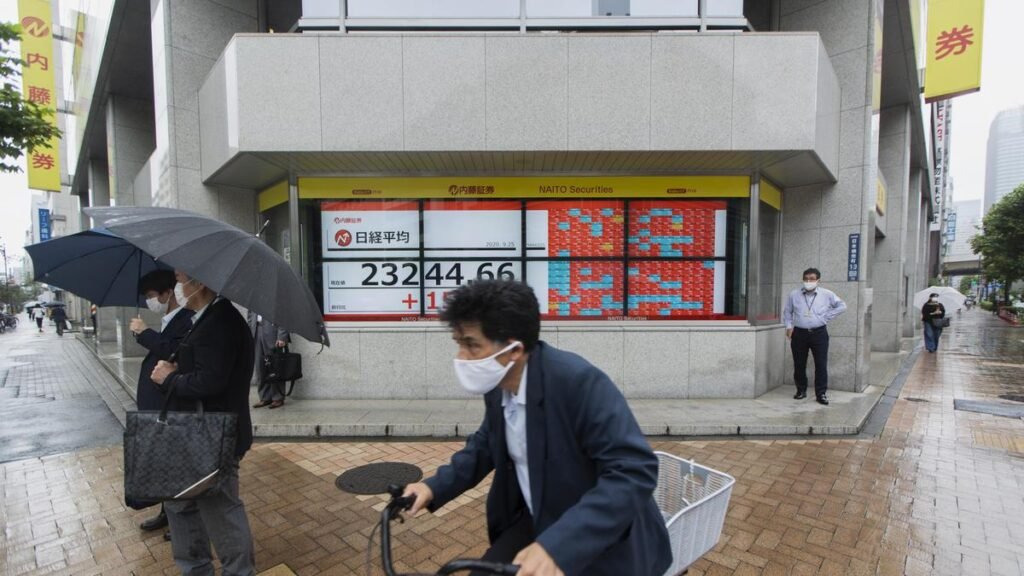
The headline “Asian shares decline as hopes dim for resolution in Iran” refers to a global financial development where stock markets across Asia fell sharply due to rising tensions in the Middle East—especially involving Iran.
Lets break this down.
🌍 1. What does the headline mean?
* Asian shares decline means stock markets in countries like Japan, China, South Korea and India are falling.
* Hopes dim for resolution in Iran means investors are losing confidence that the conflict involving Iran will end soon.
In terms because the Iran conflict is getting worse or uncertain investors are worried—and they are selling stocks.
⚔️ 2. Background: What is happening with Iran?
The situation centers around a conflict in the Middle East involving Iran and other global powers.
Key developments:
* Threats of attacks on energy infrastructure
* Disruption in oil supply routes the Strait of Hormuz
* Conflicting signals about peace talks vs escalation
This uncertainty is the reason markets are reacting negatively.
The Strait of Hormuz is critical because:
* Around 20% of oil passes through it
* Any disruption affects the entire world economy
📉 3. Why did Asian stock markets fall?
Asian markets reacted strongly due to three fears:
* Fear of prolonged war. Investors initially hoped for a resolution but now signs indicate the conflict could last longer.
* Result: People sell assets like stocks.
* Rising oil prices. Oil prices surged to around $110+ per barrel. Asia depends heavily on imported oil.
* Why this is bad: oil = higher inflation, higher costs for businesses lower profits → falling stock prices.
* Global investor panic. Investors are moving money to assets (cash, energy stocks).
* Result: Stock markets decline sharply.
📊 4. How different Asian markets reacted
* Japan: Nikkei fell around 3.5%
* China: CSI300 index dropped significantly. Worst performance linked to trade + war fears.
* South Korea: KOSPI fell over 6% ( sharp fall). Currency hit 17-year low.
* India: Sensex & Nifty dropped over 2% in a day. Rupee hit record low (₹93.98/USD).
This shows the impact was broad across Asia.
💰 5. Why global investors are worried
The Iran conflict affects three economic pillars:
* Energy supply shock. Damage to gas and oil infrastructure. LNG exports disrupted. Oil flow reduced through routes.
* This can cause an energy crisis.
* Inflation risk. Higher fuel prices → cost of transport, food, manufacturing.
* Central banks may delay interest rate cuts keep borrowing costs
* Economic slowdown. High. Uncertainty = less investment. Companies reduce spending.
* Risk of recession stagflation ( growth + high inflation).
🔄 6. Why markets are so volatile now
Markets are not just falling—they are swinging wildly.
Example: Asian markets fell sharply.. Later US markets rose after news of possible talks between US and Iran. Oil prices suddenly dropped.
However Iran denied negotiations. So uncertainty continues.
🧠 7. Investor psychology
Stock markets are driven by expectations, not reality. When investors think “War will end soon” → markets rise. “War will continue” → markets fall.
Now hope is fading → fear is increasing → markets falling.
🏦 8. Sector- impact
Worst affected sectors: Airlines (fuel cost ↑) Tech (investor risk-off mood) Metals (global slowdown fear).
Performing sectors: Oil & gas companies, Defense stocks, Energy-related firms.
🌏 9. Why Asia is hit harder than others
Asia’s more vulnerable because:
* Heavy oil dependence. Countries like India Japan import most of their oil.
* Export-driven economies. War reduces trade demand.
* Currency pressure. Foreign investors pulling out weakens currencies.
💵 10. Currency impact
* Rupee → record low
* Korean Won → lowest since 2009
Investors convert local currency → USD (safe asset).
⚠️ 11. Long-term risks
If the conflict continues, consequences: Global recession, Persistent high inflation, Energy shortages, Trade disruptions.
Experts say this could resemble 1970s oil crisis-level impact.
🔮 12. What can happen next?
Scenario 1: Peace talks succeed. Oil prices fall. Markets recover strongly.
Scenario 2: War escalates. Oil prices surge again. Markets fall further.
Scenario 3: stalemate. Continued volatility. Slow economic growth globally.
The decline in shares is mainly due to rising tensions in Iran fear of prolonged conflict surging oil prices and investor panic and capital outflows.
In one line: Markets are falling because uncertainty, about the Iran conflict is increasing risks worldwide.