Rupee slumps 50 paise to settle at fresh record low of 94.03 against U.S. dollar
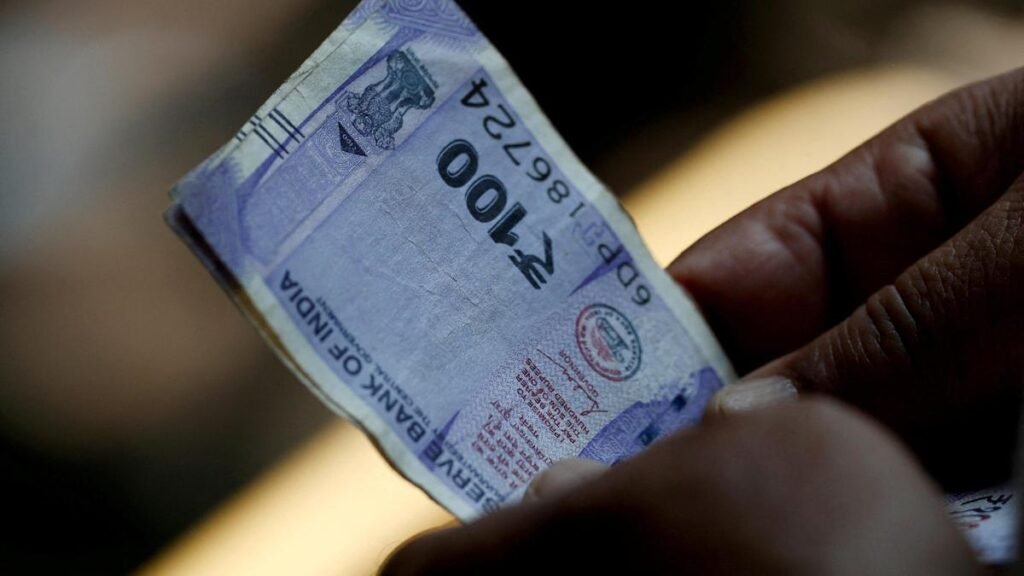
The Indian Rupee has fallen to a new record low of 94.03 against the US dollar.
📉 1. What exactly happened to the Rupee?
On March 23 2026 the Indian Rupee fell very sharply.
It went down by 50 paise.
The Indian Rupee closed at 94.03 per US dollar which is a record low.
This is the time in history that the Indian Rupee has gone below 94 per US dollar.
During the day the Indian Rupee started around 93.84.
It kept getting weaker because people were selling the Rupee continuously.
Finally the Indian Rupee settled at its closing level ever.
👉 This shows that the Indian Rupee is very weak in markets.
📊 2. What is Currency Depreciation?
When we say the Indian Rupee has fallen to 94 per dollar it means that the Indian Rupee has lost value.
Let us understand this with an example.
Earlier one US dollar was equal to 90 Rupees.
Now one US dollar is equal to 94 Indian Rupees.
👉 So the Indian Rupee has lost value compared to the US dollar.
Why does this matter to us?
When the Indian Rupee loses value imports become expensive.
This means that the things we buy from countries will cost more.
Inflation also increases, which means that the prices of things will go up.
The economy will also face pressure.
🌍 3. Why did the Indian Rupee Fall?
The Indian Rupee did not fall because of one reason.
It fell because of a combination of domestic pressures.
🔥 One of the reasons is the conflict in the Middle East and the rise in oil prices.
There is a lot of tension in West Asia because of the conflict in Iran.
Oil prices have gone up by 40-50% in weeks.
Brent crude has crossed 110-120 dollars per barrel.
India imports than 80% of its oil needs.
👉 What does this mean for the Rupee?
India needs US dollars to buy oil.
This increases the demand for US dollars.
As a result the Indian Rupee becomes weaker.
✔ This is called import-led currency pressure.
💸 Another reason is that foreign investors are pulling their money out of India.
They have been selling stocks heavily.
There have been outflows of than 9-11 billion dollars in March.
In a session more than 5,500 crore rupees were sold.
👉 Why does this weaken the Rupee?
When foreign investors sell assets they convert their Indian Rupees to US dollars.
This increases the demand for US dollars.
As a result the Indian Rupee becomes weaker.
✔ This is called capital outflow pressure.
💲 The US dollar is also becoming stronger globally.
Investors prefer to invest in assets during uncertain times.
The dollar index is. Has reached 99+.
👉 What does this mean for the Rupee?
Emerging market currencies like the Rupee are becoming weaker.
✔ This is known as the safe-haven effect.
📉 The Indian stock market is also very weak.
The Sensex has fallen by around 1,800 points.
The Nifty has dropped by around 2%.
👉 What is the impact of this?
There is investor sentiment.
This leads to selling, which increases the demand for US dollars.
🛢️ The current account deficit is also rising.
When imports are more than exports India needs US dollars.
The rise in oil prices increases the import bill, which widens the account deficit.
✔ This puts pressure on the Indian Rupee.
🏦 The foreign exchange reserves are also declining.
The reserves have dropped to around 709 billion dollars.
👉 The Reserve Bank of India uses these reserves to sell US dollars and support the Rupee.
When the reserves are falling this ability is reduced.
🌐 There is also a risk-off sentiment.
Due to the war and uncertainty investors are moving their money to US bonds, gold and the US dollar.
👉 Emerging markets like India are facing outflows.
🧠 4. How does the Indian Rupee Fall?
Let us simplify this.
The process is as follows:
Oil prices rise.
India imports oil, so it needs more US dollars.
Foreign investors exit, which increases the demand for US dollars.
The US dollar becomes stronger globally.
The supply of US dollars is less than the demand.
👉 What is the result?
The Indian Rupee. Reaches 94 per US dollar.
📉 5. What is the Impact of the Rupee Depreciation?
🔺 One of the impacts is that inflation increases.
Imported goods become expensive.
Petrol and diesel prices rise.
Transport costs also increase.
👉 This leads to a price rise.
⛽ Fuel prices also go up.
India imports oil and pays for it in US dollars.
When the Indian Rupee is weak oil becomes more expensive.
👉 This has an impact on petrol, diesel and LPG.
🏭 The impact on businesses is also negative.
Import-dependent industries suffer.
The cost of raw materials increases.
However exporters like the IT and pharma sectors benefit.
💳 Foreign debt also becomes costlier.
Companies with US dollar loans need Indian Rupees to repay their debts.
This increases their debt burden.
📊 The stock market also becomes volatile.
Investors panic and markets fall.
There is wealth erosion.
🛍️ Imported goods become expensive.
Examples include electronics, gold and machinery.
📈 6. Is There Any Positive Side to the Rupee Depreciation?
Yes the depreciation of the Rupee is not always bad.
There are some benefits.
Exports become cheaper.
The IT and service sector gains.
Tourism inflows also increase.
👉 However currently the negatives outweigh the positives due to the oil shock.
🏦 7. What is the Role of the Reserve Bank of India?
The Reserve Bank of India tries to control the fall of the Rupee through various measures.
These include selling US dollars from its reserves.
This increases the supply of US dollars. Supports the Indian Rupee.
The Reserve Bank of India also uses interest rate policy to attract capital.
It intervenes in the market to control volatility. Not the exact rate.
👉 The Reserve Bank of India has been intervening,. It is being cautious.
🔮 8. What is the Future Outlook for the Rupee?
Experts believe that the Indian Rupee may trade between 93.60 and 94.40.
It could even touch 95 if the crisis worsens.
The key factors to watch are oil prices, the Middle East situation US interest rates and foreign investor flows.
📊 9. How Does the Indian Rupee Compare with Currencies?
The Korean won has fallen by 5%.
The Thai baht has fallen by around 6%.
👉 So the Indian Rupee is weak. It is not the worst performer globally.
🧾 10. What is the Timeline of the Indian Rupee Fall?
On February 28 the Indian Rupee was at 91.08.
In mid-March it was at 93+.
On March 23 it reached 94.03.
👉 This is a depreciation of around 3% in a few weeks.
🧠 11. Summary
The causes of the Rupee fall are the surge in oil prices the Middle East conflict, foreign investor outflows, a strong US dollar and weak stock markets.
The effects are inflation, costlier imports, Indian Rupee depreciation and market volatility.
The solutions are Reserve Bank of India intervention, stable oil prices and capital inflows.
The fall of the Rupee to 94.03 per US dollar is a serious macroeconomic signal.
It reflects geopolitical instability, Indias dependence on oil imports and vulnerability to foreign capital flows.
While the Indian economy remains resilient continued pressure, from oil prices and global uncertainty could keep the Indian Rupee weak in the near term.