Parliament’s Budget session likely to go into recess, to reconvene on April 16 to debate amendments to Women’s Reservation Act
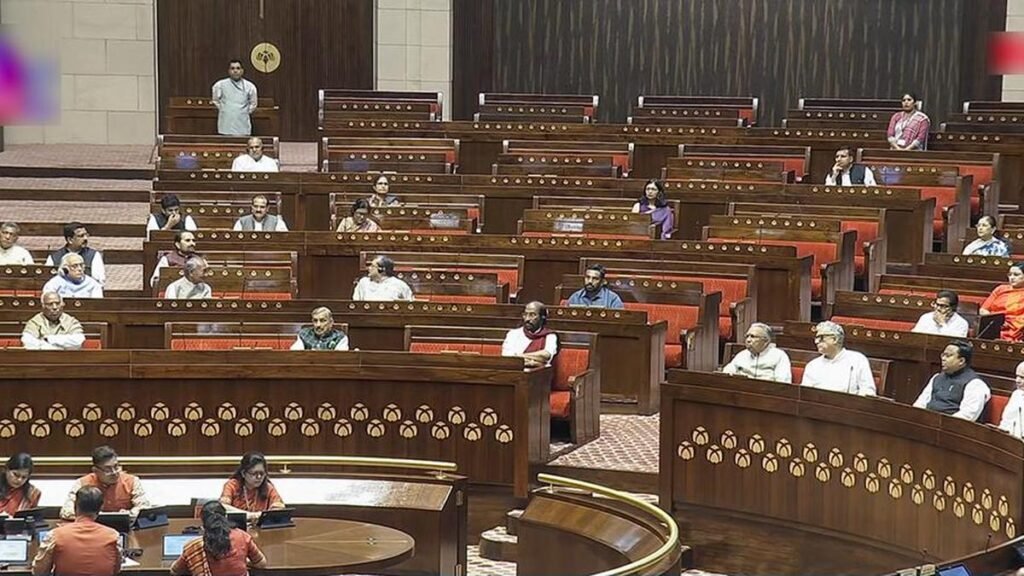
The reported development that Parliaments Budget Session is likely to go into recess and reconvene on April 16 to debate changes to the Womens Reservation Act is a moment in Indias democratic process. It shows not how Parliament works but also bigger issues like representation, equality for women, fair balance between states and changes to voting rules.
1. Understanding the Budget Session of Parliament
The Budget Session is the longest and one of the important sessions of the Parliament of India. It usually starts in January or early February and is divided into two parts:
– First Part – Focuses on the presentation of the Union Budget and the Presidents Address.
– Second Part – Dedicated to discussions voting on demands for grants and passage of financial bills.
Parliament usually takes a break between these two parts. This break allows committees to examine budget proposals in detail.
Why a Break Happens
The break is not a pause from work but a shift in focus:
– Committees examine budget allocations.
– Ministries present detailed reports and justifications.
– MPs engage in in-depth analysis outside the main parliamentary chambers.
The decision to reconvene on April 16 is part of the parliamentary calendar.. It gains special importance because of the planned debate on changes to the Womens Reservation Act.
2. What is the Womens Reservation Act?
The Womens Reservation Act aims to reserve a fixed percentage of seats in bodies for women. The recent version is the Nari Shakti Vandan Adhiniyam (2023). It seeks to reserve 33% of seats in the Lok Sabha and State Legislative Assemblies for women.
Key Features of the Act
– 33% Reservation for women in Lok Sabha and state assemblies.
– Sub-reservation for SC/ST women within the quota.
– Rotation of seats across constituencies.
– Implementation linked to delimitation and census exercises.
Historical Background
The idea of womens reservation is not new:
– First introduced as a bill in 1996.
– Passed in the Rajya Sabha in 2010. Lapsed in the Lok Sabha.
-. Passed in 2023 with strong political consensus.
Despite agreement on the need for womens representation debates have persisted over how the reservation should be implemented.
3. Why Changes Are Being Considered
The upcoming debate suggests that there are still concerns or evolving demands. These require changes to the existing framework.
Major Issues Driving Changes
(a) Implementation Timeline
One of the criticisms of the current law is its implementation. It is conditional on:
– The next Census
– Subsequent delimitation exercise
This means reservation may not be implemented until after 2026 or even later.
Demand: implementation without waiting for delimitation.
(b) Sub-Quota Within Womens Reservation
Several political parties have demanded a quota within a quota for:
– OBC (Other Backward Classes) women
– Minority women
Currently the Act provides sub-reservation only for SC/ST women.
Debate Point: Should OBC women also get a share?
(c) Rotation of Seats
The Act proposes rotating constituencies across elections.
Concerns:
– MPs may not be able to build long-term voter relationships.
– Frequent rotation may disrupt continuity.
Change: Fix reservation in certain constituencies for longer periods.
(d) Federal Concerns
States have raised concerns about how delimitation and reservation will affect:
– Representation balance between northern and southern states
– Population-based seat allocation
This links the Womens Reservation Act with federal political debates.
4. Political Context Behind the Debate
The reconvening of Parliament specifically to discuss changes reflects heightened interest.
Governments Position
The ruling government has projected the Act as a historic reform promoting:
– Gender justice
– democracy
– Women-led development
However the delay in implementation has drawn criticism.
Oppositions Stand
Opposition parties broadly support womens reservation. Raise concerns about:
– Delayed rollout
– Lack of OBC sub-quota
– Political timing of the legislation
Some argue that the government is using the issue symbolically rather than substantively.
Regional Parties Role
Regional parties are particularly vocal on:
– OBC representation
– State- political implications
– Electoral balance post-delimitation
Their support or opposition could significantly shape the changes.
5. Legislative Process for Changes
Changing a law like the Womens Reservation Act involves a process:
– Introduction of Change Bill
– Debate in Lok Sabha and Rajya Sabha
– Voting and Passage
– Presidential Assent
Given that the original Act involved constitutional provisions changes may require:
– Special majority
– Possibly ratification by states
This makes the April 16 debate crucial in determining the future course.
6. Impact on Democracy
(a) Gender Representation
India currently has:
– Around 15% women in Lok Sabha
– Lower representation in many state assemblies
A 33% reservation would:
– Dramatically increase womens participation
– Bring India closer to global benchmarks
(b) Policy Outcomes
Studies show that increased womens representation leads to:
– Better focus on health, education and welfare
– More inclusive policymaking
– Greater attention to grassroots issues
(c) Political Culture
Womens reservation could:
– Reduce male-dominated political structures
– Encourage new leadership styles
– Increase diversity in political discourse
7. Challenges Ahead
Despite its potential several challenges remain:
– Administrative Challenges
Conducting Census
Delimitation of constituencies
Updating rolls
– Political Resistance
Internal party dynamics
Ticket distribution conflicts
Resistance from incumbent male politicians
– Social Barriers
Patriarchal norms
Limited access to resources for women candidates
Political violence and intimidation
8. Link with Delimitation Debate
The Womens Reservation Act is closely tied to delimitation. Delimitation is the process of redrawing constituency boundaries.
Why This Matters
– Delimitation affects seat allocation among states
– states with higher population growth may gain more seats
– Southern states fear losing relative representation
This makes the issue politically sensitive. Adds complexity to the change debate.
9. Significance of April 16 Reconvening
The decision to reconvene Parliament on April 16 is not just procedural. It signals:
– Urgency in addressing pending concerns
– willingness to refine the law
– Recognition of widespread demand for clarity and fairness
It also provides an opportunity for:
– Consensus building
– Addressing opposition concerns
– Strengthening the legitimacy of the reform
10. Possible Outcomes of the Debate
Several scenarios may emerge:
– Scenario 1: Minor Changes
Clarifications on implementation timeline
Procedural adjustments
– Scenario 2: Major Revisions
Inclusion of OBC sub-quota
Changes in rotation policy
Faster implementation mechanism
– Scenario 3: Deadlock
Political disagreements delay changes
Status quo continues
11. Broader Socio-Political Implications
The debate goes beyond legislation. It reflects:
– Indias evolving democratic maturity
– Growing demand for inclusive governance
– Changing role of women in life
It also intersects with:
– Electoral reforms
– Social justice movements
– Economic empowerment of women
The likely recess of Parliaments Budget Session followed by its reconvene on April 16 to debate changes to the Womens Reservation Act marks a critical juncture in Indias legislative and political landscape. While the recess is a procedural step the agenda for the next phase signals a deeper engagement with one of the most transformative reforms in Indian democracy.
The Womens Reservation Act represents a standing aspiration to ensure equitable political representation for women. However its current structure – the delayed implementation and absence of broader sub-quotas – has triggered fresh debates and demands for changes.
The upcoming parliamentary discussions will therefore play a role in shaping not only the future of womens representation but also the broader contours of Indias democratic system. Whether through consensus or contention the outcome will have lasting implications for governance, electoral politics and social equity, in the country.