Rupee falls 10 paise to close at 93 against USD
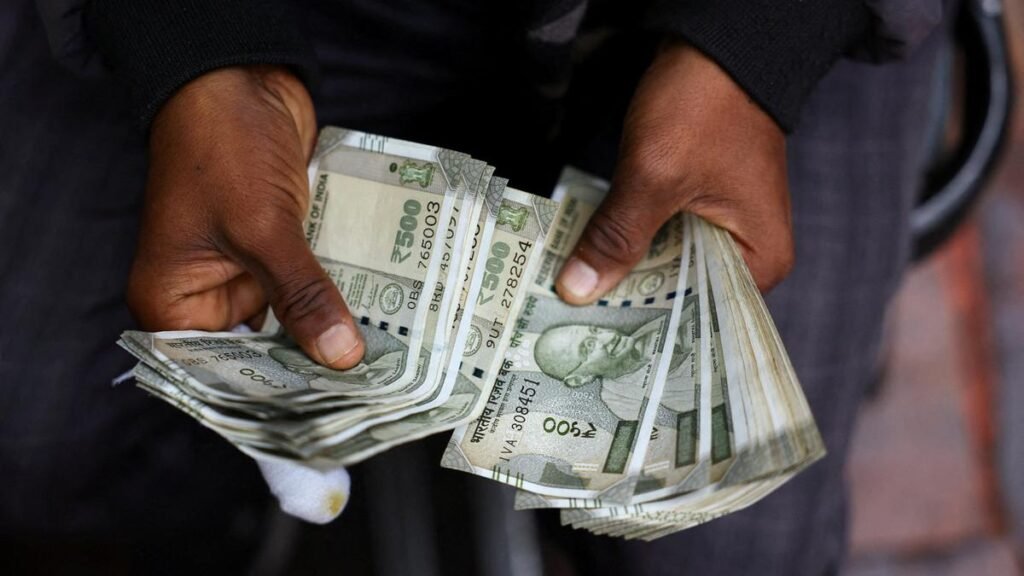
The statement “Rupee falls 10 paise to close at 93 against USD” refers to the currency losing value compared to the US dollar. This means that at the end of the trading session 1 US dollar equals ₹93 compared to ₹92.90
Even though a 10 paise fall might seem small it can have effects on trade, inflation and investments. Exchange rates affect how much we pay for imports how much foreign investors invest and overall economic stability.
## 2. Understanding Exchange Rates
### What is an Exchange Rate?
An exchange rate is how much one currency is worth compared to another. For example:
* ₹93/USD means you need ₹93 to buy $1
### Types of Exchange Rate Systems
* **Fixed Exchange Rate**: The government controls the currency value.
* **Floating Exchange Rate**: The market decides the value (India uses this).
* **Managed Float**: The RBI intervenes occasionally.
India uses a managed floating exchange rate so the market decides rates but the Reserve Bank of India steps in when needed.
## 3. What Does “Rupee Depreciation” Mean?
When the rupee falls from ₹92.90 to ₹93:
* It loses value.
* More rupees are needed to buy dollars.
Example:
* Earlier: $100 = ₹9,290
* Now: $100 = ₹9,300
This makes imports costlier.
## 4. Key Reasons Behind Rupee Depreciation
### 4.1 Rising Demand for US Dollar
The US dollar is the world’s reserve currency. Demand increases due to:
* Import payments (oil, electronics).
* Foreign debt repayments.
* Global uncertainty.
When demand for USD rises the rupee weakens.
### 4.2 Crude Oil Prices
India imports most of its oil needs. Oil is traded globally in dollars.
* Higher oil prices mean dollar demand.
* This weakens the rupee.
Major suppliers include countries like Saudi Arabia and Iraq.
### 4.3 Foreign Institutional Investor (FII) Outflows
FIIs invest in markets. When they withdraw money:
* They sell assets.
* Convert rupees into dollars.
* Increase dollar demand → rupee falls.
### 4.4 Global Economic Conditions
Events like:
* War tensions.
* Interest rate hikes in the US.
* Global recession fears.
Impact currency markets.
For example rate hikes by the Federal Reserve attract investors to the US strengthening the dollar.
### 4.5 Trade Deficit
India often imports more than it exports.
* Imports > Exports → more dollar demand.
* This creates pressure on the rupee.
### 4.6 Inflation Differences
If inflation in India is higher than in the US:
* Rupee loses purchasing power.
* Currency weakens.
## 5. Role of RBI in Currency Management
The Reserve Bank of India plays a role:
* Tools used: Forex intervention (selling dollars) interest rate changes and monetary policy control.
However RBI does not fix the rupee; it only stabilizes volatility.
## 6. Impact of Rupee Falling to ₹93/USD
### 6.1 Impact on Imports
Imports become expensive:
* oil.
* Electronics.
* Machinery.
Leads to inflation.
### 6.2 Impact on Exports
Exports become cheaper globally:
* Indian goods become competitive.
* Boost to IT textiles, pharma sectors.
### 6.3 Impact on Inflation
rupee → costly imports → higher prices:
* Fuel prices increase.
* Transportation costs rise.
* Food prices may increase.
### 6.4 Impact on Common People
* Petrol/diesel prices may rise.
* Imported goods become expensive (phones, laptops).
* Foreign travel becomes costlier.
### 6.5 Impact on Students Abroad
Students studying in countries like the United States:
* Pay fees in rupees.
* Cost of living increases.
### 6.6 Impact on Companies
Negative:
* Import-dependent companies suffer.
Positive:
* Export-oriented companies gain.
## 7. Is 10 Paise Fall Significant?
At glance 10 paise seems small but:
* Currency markets deal in billions.
* Even small changes affect trade balances.
Example:
* $10 billion trade → ₹100 crore difference.
## 8. Historical Perspective of Rupee
The rupee has steadily depreciated over decades:
* 1991: ₹17/USD.
* 2000: ₹45/USD.
* 2010: ₹46/USD.
* 2020: ₹75/USD.
* 2026: ₹93/USD.
Reasons:
* Inflation.
* Trade deficits.
* Economic development stage.
## 9. Comparison with Currencies
Many emerging market currencies face similar pressure:
* Chinese Yuan.
* Brazilian Real.
* Turkish Lira.
The US dollar strengthens globally during uncertainty.
## 10. Link with Stock Market
Rupee depreciation affects markets like:
* BSE Sensex.
* Nifty 50.
Effects:
* FII outflows → market fall.
* Export stocks rise.
## 11. Government Measures to Control Rupee Fall
Government and RBI can:
* Increase interest rates.
* Reduce imports.
* Promote exports.
* Attract investment.
* Use reserves.
## 12. Forex Reserves and Their Importance
India holds foreign exchange reserves (~$600 billion range typically).
Uses:
* Stabilize rupee.
* Pay for imports.
* Boost investor confidence.
## 13. Future Outlook
The rupee’s movement depends on:
* Oil prices.
* US interest rates.
* Global geopolitical situation.
* India’s economic growth.
If conditions improve:
* Rupee may. Strengthen.
The fall of the rupee by 10 paise to ₹93 per dollar reflects economic forces rather than an isolated event. It highlights:
* Global dependence on the US dollar.
* India’s import-heavy economy.
* Sensitivity to financial conditions.
While a weaker rupee has both advantages and disadvantages managing it effectively is crucial, for stability.
## 15. Takeaways
* Rupee depreciation means it loses value against USD.
* Driven by oil prices, factors and capital flows.
* Impacts inflation, imports, exports and daily life.
* RBI plays a stabilizing role.
* Small changes can have economic effects.