Indigo beats Air India duo to be country’s top international carrier
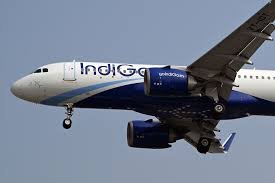
The monumental shift in the aviation industry in India with IndiGo emerging as the number one carrier in international traffic, surpassing the Air India + Air India Express duo, is more than just a symbolism, with a set of definitive events at play in 2025. Following is the detailed explanation in the format of a story about just that.
1) What the headline actually means
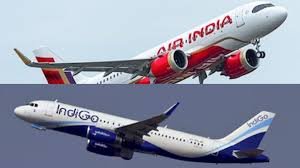
When news stories state “IndiGo beats Air India duo to be country’s top international carrier,” they are usually basing the ranking of international passenger traffic of Indian carriers within a set timeframe according to traffic statistics from the DGCA (Directorate General of Civil Aviation).
For the period July to September 2025, data from the DGCA revealed
IndiGo transported 41.36 lakh international passengers
Air India group (Air India + Air India Express), carrying 41 lakh international passengers
Hence, IndiGo edged ahead with a slender lead—though the relevance is that this has been the first time for this kind of group comparative analysis framework.
This is not a statement that Air India suddenly turned “small.” Rather, it is a statement that the international expansion by IndiGo plus the temporary limitation on Air India swung the quarterly rankings.
2) Why it happened NOW: The largest contributing factor
A) Air India’s June 12 crash and the aftermath
There have been quite a few instances that have been attributed to this turning point with respect to the June 12, 2025, AI 171 Dreamliner incident (Ahmedabad), which claimed 260 lives. Air India has been alleged to have cut back on 15% of its flight operations in the following weeks, mostly on wide-body long-haul services, while there has been some reluctance on the part of passengers to travel on Air India, especially on its 787 aircraft.
Why that matters for market leadership:
International passenger numbers are very responsive to:
1) VariationsCapacity (number of seats that are offered in the market)
“Type of aircraft (In wide-bodied aircraft, much larger numbers of passengers are carried compared to narrow-bodied aircraft
Consumer confidence (Even a temporary decline can shift volume quickly.)
If Air India withdraws from the long-haul market for now, the numbers can really change for passengers in a short quarter.
C) And what does Modi have now? He has Air India!
B) IndiGo didn’t
IndiGo did not become the number one global carrier simply due to the downturn in Air India. IndiGo has been creating the foundation for strong global competition for years now. That starts with its feeder system. This is simply the highest number of frequencies it operates on any given route.
Mode Sailors <a href
However, it all depends upon the timing of these figures. The decline of Air India opened the opportunity for the growth of IndiGo to “show up” in the figures.
1) The high-flying story: AirAsia’s international entry strategy*
2) The
IndiGo has always been an established domestic carrier but is rapidly shifting into a regional and international network carrier model in 2025, albeit maintaining its low-cost gene.
- Winning frequently: This is one quality whereby a player
The key overseas competitive advantage of IndiGo is not “one huge long-haul flight.” Rather, there are several flights, which are, in some cases, short and/or medium
multiple departures per day,
high aircraft utilization,
good domestic connectivity to feed international hubs (Delhi, Mumbai, Bengaluru, Hyderabad, et cetera
Such an architecture could register staggering numbers of passengers even without typical long-haul dominance.
B) “Winter schedule” data reveals how aggressively IndiGo operates
DGCA’s separate tally of passengers, in contrast, shows IndiGo’s international expansion through schedule analysis (or aviation data providers), particularly during the winter months of October to March.
According to Business Standard quoting Cirium, IndiGo enhanced its international winter schedule by 14.5 percent, comprising 44,035 flights (Oct 26 – Mar 27), up from 38,481 flights during the previous winter schedule. Business Standard further reported that international seats offered by IndiGo grew from 7.4 million to 8.6 million.
Business Standard
That’s not a marginal increase—that’s scale building.
4) Why Air India group couldn’t immediately “defend” the #1 position
Air India’s parent company has large global expansion plans, although it is currently confronted with many factors that make an impact in the short term in the year 2025:
A) Wide-body dependence cuts both ways
Air India has a more depends on long-haul aircraft. On reduced wide-body networks, you say goodbye to a large chunk of passengers rapidly. The reports say it was on wide-body international services, mainly, that services were reduced following the crash.
B) Fleet transitions may affect capacity temporarily
It is also reported that Air India has an older wide-bodied aircraft fleet that may be recalled for renovation or returned to lessors, thus temporarily cutting long-haul capacity.
Even if the end game involves growth and/ormodernization, short-term circumstances could include fewer planes to choose from.
C) Air India group is “two airlines” with different roles
Air India Express is relatively more short haul/medium haul focused (West Asia and vicinity), whereas Air India handles more of the long haul business. They both cover well, but coordination is important, and aircraft availability is crucial, more so in a quarter where they cut back on capacity.
5) Parallel storyline number two: IndiGo’s domestic turbulence versus international stability
One interesting, albeit controversial, fact within the same reports is that the change in the management of IndiGo outside the country took place when the airline was struggling through an operations crisis within the country in the earlier part of December 2025.
A) The numbers on cancellations (Dec 1-9)
As per reporting citing DGCA data:
Indigo has canceled only 2.4% of 2,702 international flights between Dec 1 and 9.
But canceled almost 25% of 17,404 planned domestic flights during the same period
This gave the impression that IndiGo “protected” international services even when local passengers were left in chaos—even though this was examined by the DGCA.
B) Why would an airline protect its international routes?
Because international cancellations may be even more harmful and costly:
more complex passenger reaccommodation,
higher regulatory and airport hurdles,
tighter bilateral/slot commitments,
reputational damage on global routes,
potential cascading disruptions with partner services.
Therefore, from the cold operational perspective, an airline can decide to focus on maintaining international operations, particularly if the international routes are of high importance for the carrier.
C) What were the reasons behind the December cancellations?
According to Reuters news reports, the mass cancellations were attributed to changes in the rules regarding duties and the airline’s pilots’ planning mismatch, causing the DGCA to review and investigate closely to the extent of deploying officials to the IndiGo headquarters.
This is important because it introduces a broader struggle between:
• “Our emphasis
“IndiGo is growing very fast,
but functional complexity is playing catch-up,
This is particularly observed among consumers and regulators, who are demanding stronger adherence
(6) Government and Regulatory Response: “too big to fail” issues
It seems that the aviation market in India is being steadily shaped by the IndiGo and Air India group of airlines. When a large airline stumbles, the effect is noticed in the whole sector.
There are several reasons why something so seemingly simple as
According to Reuters, the DGCA had placed their staff at the headquarters of this airline provider, IndiGo, to observe their crew employment, on-time performance and customer refund levels and other related performance indicators.
Reuters
B) Reducing IndiGo flights by 10% as planned
Reports also indicated that a obligatory reduction of at least 10% in IndiGo operations was being finalised in order to compensate for operational shortcomings, though information on distribution between domestic and foreign operations was pending.
A) Customers planning a trip
B) Employees of
According to an report by The Times of India, Air India was gearing up to operate as many as 275 more flights in December 2025 to meet the IndiGo reduction in capacity.
The Times of India
It’s thus while the IndiGo airline is taking the lead in the international airline services competition that the regulations are also conveying the message that ‘dominance means responsibility too’.
7) So… is IndiGo now ‘better’ than Air India abroad?
No, not automatically. It just depends on what “better” means.
IndiGo’s strengths in Internationally (Present scenarios
International short & medium haul – Frequency & Scale
- Powerful domestic feeder (passengers from smaller Indian cities to the I.Gates),
Cost discipline and aircraft utilization
Fast expansion in Scheduled International flying and seats
Air India group’s strengths abroad (presently)
Network and Product Positioning for Long-haul
Wide Body, Premium Traffic Volume
Strategy rebuild by Tata (fleet renewal, brand refresh, albeit possibly cutting capacity in the short term)
In brief:
IndiGo can capture market share with appropriate capacity and network planning. Air India can be stronger on the longer-haul breadth of international operations and on premium internationals—if capacity and confidence follow.
Opportunities/Threats
8) What it means for passengers (the practical impact)
A) Increased opportunities, especially within local foreign markets
With regards to travelling, for many passengers flying to
Gulf,
Southeast Asia,
South Asia,
some East Asia routes,
The growth of IndiGo overall translates to
more frequencies,
potentially lower fares (competition),
more direct links from more Indian cities.
B) But disruptions become national problems
The episode in December 2025 presented the other side of the concept of focus. When an operator with massive reach decides to cancel thousands of flights, the effect is felt chainwide by the passengers.
C) Regulators may enforce more stringent consumer protection policies
Where the aims of
Heavy monitoring, possible capacity restrictions, and the media glare consequently result in:
stronger refund enforcement,
clearer passenger communication guidelines,
“pressure to enhance operational buffers such as standby crews, improved rostering, and so forth.”
9) What it means for the aviation industry (bigger picture)
A) The “international crown” is strategic, rather than solely symbolic
International leadership adds the following benefits to an airline:
negotiate airport slots more strongly,
justify the deployment of more ships
attracting corporate accounts,
enhance loyalty programs and partnerships,
thus needs to position itself as an international brand and not an Indian carrier.
In the case of IndiGo, the airline’s achievement of surpassing the Air India group in international passengers in a DGCA quarter marks a notable point in the story the airline seeks to convey to its investors and the international airline industry
B) Expect a competitive counter-move from Air India group
Air India’s long-term strategy abroad is probably unaffected by one quarter—but short-term, it could very well worsen by being:
route adds where possible,
more flights where aircraft are available,
tactical pricing and schedule competition,.
brand trust rebuilding after a crash.
On the other hand, IndiGo’s strategy would be to retain its top spot through measured expansion and preventing instances like operational failures, thus incurring penalties from regulatory bodies.
10) What to watch next (2026 and beyond)
Depending on the current reports which emphasize, the watchpoints could be as follows:
Air India wide-body aircraft availability and refurb/lessor returns A fall in capacity will help IndiGo further enlarge its lead. But if Air India manages to stabilise itself by adding capacity, the lead may shift back. Times of India 1 ### How the IndiGo capacity cut is implemented