Asia equity markets climb, led by tech, while the Japanese yen stays under pressure despite rate hikes.

- Introduction: Market Snapshot and the Paradox of Rising Stocks + Weak Currency
Lately, equity markets across Asia have risen, as the gains from technology-driven rallies on Wall Street extend to regional markets in the Asian region. Against major currencies, however, the yen has continued its weakness through historic lows, even in the face of a Bank of Japan’s interest rate increases targeted at normalizing monetary policy.
Reuters
Taken at face value, this is a contradictory combination-higher interest rates usually strengthen a currency and weaken stocks. But today’s market behavior represents an abnormal incidence of structural, cyclical, and global influences, which has decoupled the relationship between these financial variables. Herein, we will be looking at:
Why the equity markets of Asia, in particular those of tech stocks, are rallying
Why the Japanese yen stays weak despite rate hikes
The macroeconomic and monetary context setting this dynamic
Implications for investors, currencies, and future policy
- Why Asia’s Equity Markets Are Rising: The Tech Leadership
Stock markets in Asia do not move on their own; most of their movement is related to the global sentiment and the performance of major indexes, especially from the U.S.
2.1 Global Risk Appetite and U.S. Tech Rally
The technology sector has been a main driver of global equity markets, strengthened by robust earnings, strong momentum of AI, semiconductor demand, and resilient corporate profit trends. US technology indices-impacted most by the trend of AI-related stocks-have repeatedly lifted broader markets, with that positive spillover surfacing in Asia.
Investors tend to chase returns, and in a world where tech is outperforming, that would normally mean capital flows rotate into the distinctly tech-heavy markets of South Korea, Taiwan, and parts of China. These are seen as beneficiaries of global tech demand.
2.2 Wall Street’s Lehman Effect on Asia
In many instances, markets in Tokyo, Seoul, and Taiwan open well after U.S. markets have already traded, which provides Asian investors with a lead indicator from Wall Street. Gains in the U.S.-particularly tech-increase risk tolerance and confidence, driving advances in Asian stock markets even before local news breaks.
2.3 Export-Led Economies Like Weak Currencies* (Except Japan)
The export-oriented economies enjoy whenever their currencies are soft in relation to the trading partners.
Exports become cheaper and more competitive with a weaker currency.
Companies receiving huge portions of revenue from abroad benefit in local currency terms.
For much of Asia ex Japan, currency weakness has supported exporters, everything from electronics to industrials, which in turn is supportive of equity performance.
2.4 Structural Drivers: AI, Innovation, and Investment Flows
Artificial Intelligence and digital transformation have become structural growth stories.
Software and cloud services
Semiconductor equipment manufacturers
These have been attracting substantial investment in recent times, both domestic and international. The leadership at the sectoral level often pulls up wider regional indices, even when other parts of the economy are more moderate.
- The Bank of Japan’s Rate Hikes and the Weak Yen
Now let’s go back to Japan: though the central bank, Bank of Japan, recently raised the interest rates-the first prolonged tightening cycle in decades-the yen is still weak compared to the dollar, the euro, and other major currencies.
3.1 The Recent Hike in Context
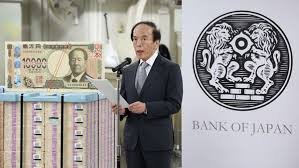
In December 2025, the BoJ increased its policy rate to 0.75%, the highest in about 30 years, reversing years of ultra-accommodative policy aimed at fighting deflation and sluggish growth.
Yet, the yen did not stop from continually weakening and setting new lows without the ability for a far-reaching rebound.
Reuters
In theory, higher interest rates should attract foreign capital in search of yield, placing upward pressure on the currency. For the yen, though, other forces are more influential than the headline rate in isolation.
3.2 Structural Factors Dampening Yen Strength
Various indicators continue to weigh on the yen, things that are at least long-term structural:
3.2.1 Divergence in Monetary Policy
Even with recent rate hikes, the BoJ’s policy remains fairly loose set against other major central banks, such as the Federal Reserve or the European Central Bank. The difference in yields on Japanese assets relative to those in the U.S. or Europe continues to favor investors selling yen to buy higher-yielding currencies.
What they do is called the yen carry trade: traders borrow in low-yielding yen to invest in higher-yielding assets elsewhere. And that continues to put downward pressure on the yen.
3.2.2 Market Skepticism and ‘No Surprises’ Messaging
Markets reacted with disappointment after the BoJ’s hike because the central bank’s messaging was neutral, cautious, and non-committal on future tightening. Clearly, investors were expecting clearer hawkish guidance. The absence of strong forward guidance has emboldened yen bears.
In a nutshell, the hike was expected and priced in; however, the BoJ didn’t deliver the robust follow-through signals that markets needed to dramatically shift sentiment.
3.2.3 Large Government Debt and Fiscal Constraints
Japan has one of the highest ratios of debt to GDP globally, hence limiting BoJ’s move to tighten hard without unnerving markets:
High leverage is a concern for financing costs and stability.
Aggressive rate increases beyond a pace of caution could stress both the banking system and government finances.
Markets still remain wary that structural fiscal issues may limit how far and how fast the BoJ is able to raise rates.
3.2.4 Japan’s Historical Policy Context
Two decades of battling deforestation, low growth, and a weak currency as its path of economic recovery have been Japan’s nemesis. The long period of ultra-accommodation-negative rates among them-has reset expectations.
Even though inflation has finally pierced the BoJ’s 2% target unserialize, thereby prompting tightening, many investors still question how sustainable and vigorous future rate hikes will be. It is a legacy effect that affects currency markets.
- Connecting the Dots: Stocks Up, Yen Down — How It Happens
Let’s summarize the key trends:
4.1 Stock Markets Are Forward-Looking
Equities often reflect expected future earnings and not current conditions. If investors anticipate continued tech innovation, rising profits, and global growth, markets climb even if current macro data is mixed.
Positive U.S. tech earnings and global growth expectations have given a boost for Asian equities. When technology performs strongly, it tends to raise exchange-traded funds, indices, and main market benchmarks.
4.2 Currencies Reflect Risk, Rate Differentials, and Capital Flows
Currency markets price:
Interest rate differentials
Risk Sentiment
Growth expectations
Flows to safe havens
In the case of Japan:
Interest rate differentials with the U.S. and Europe remain tilted toward higher yields abroad.
The continuous carry trade flows weaken the yen.
The political and fiscal considerations reduce conviction in the long-term tightening.
Thus, the yen weakens – even as stocks sometimes rise due to other forces.
4.3 Export Competitiveness and Equity Valuations
A weaker yen can boost Japan’s export-oriented companies, improving their earnings in yen terms when foreign sales are converted back, further elevating stock prices even as the currency weakens.
This dynamic can partly explain the ostensibly counter-intuitive combination of weak currency and rising equities seen in Japan.
- Wider Asian Setting: Regional Variations and External Drivers
While it may be a focus, Asian equity markets are indeed heterogeneous:
5.1 Korea and Taiwan: the technology giants
South Korea and Taiwan have substantial exposure to semiconductor manufacturing, electronic components, and tech exports. Valuations and market performance in these economies have been driven by global demand for chips and AI technologies.
This is one of the most powerful forces behind Asia’s equity rally and overshadows weaker economic data elsewhere.
5.2 China: A Mixed Picture
In China, the corresponding stock performance has been more mixed-solid annual returns but cooling in recent months due to weak economic data and policy uncertainty. The overall index for the Asia-Pacific still shows gains.
5.3 Domestic Monetary Policy Interactions
Other Asian central banks are finding their own way-with a delicate balance between inflation, growth, and currency stability-a balancing act, so to speak. The Monetary Authority of Singapore and the Reserve Bank of India are examples of financial institutions that change policies based on local conditions.
These movements of currency feed into export competitiveness and stock valuations, such as weak Indian rupee or strong Thai baht.
- The Larger Macro and Financial Environment
6.1 Interest Rate Expectations and Yield Curves
While the BoJ raises rates, markets globally are pricing in potential rate cuts from the Federal Reserve if U.S. inflation continues to cool. This dynamic further supports equity markets through lowering global borrowing costs.
Lower global yields can also force investors to look at equities for returns, reinforcing stock rallies.
6.2 Safe Haven versus Riskier Assets
Normally, in periods of risk aversion, investors buy safe-haven assets such as the yen and Japanese government bonds. But today’s rally reflects:
A risk-on environment
Investor preference for growth sectors like technology
High expectations regarding the continuation of earnings growth
This reduces demand for the yen as a safe haven.
- The Role of Sentiment and Market Psychology
Investor sentiment is self-reinforcing.
Strong tech performance builds momentum
Positive outlooks attract more capital
Fear of missing future gains encourages buyers
This is particularly true during the year-end period, when portfolio rebalancing, window dressing, and holiday liquidity can amplify rallies.
On the other hand, sentiment towards the yen was negative because of structural concerns, weak forward guidance by policymakers, and speculative positioning.
- Risks, Challenges, and Market Fragility
While this rally is strong, there are some risks and limitations:
8.1 Potential Policy Shocks
Unforeseen changes in US rates, acts by Asian central banks, or geopolitical events might spark turbulence.
8.2 Overbought Conditions and Pullbacks
Analysts have warned of extreme bullish positioning, which can precede sharper corrections if investor expectations are disappointed.
8.3 Currency Intervention Risks
Should the yen weaken too much, government intervention to prop up the currency may have a sudden effect on markets.
8.4 Mixed Economic Data
Some Asian economies, however, reveal mixed data-for example, China-which could be a dampener of future gains if structural issues persist.
- What This Means for Investors 9.1 Equity Investors Equity markets are still appealing, mainly in the technology and export-oriented sectors. Diversification and risk management are important because of the potential for volatility. 9.2 Currency Traders Unless there’s a decisive policy shift, the yen may continue to trade weakly. Carry trade positions still have an impact on FX markets. 9.3 Global Portfolio Allocation The balancing of growth assets-investors should balance growth assets, such as equities, against risk assets like bonds-and consideration of macro trends such as yield differentials become important. Conclusion: A Nuanced, Multi-Layered Market Dynamic Equity markets in Asia are on the rise, led by technology, driven by global tech leadership, positive sentiment, improved earnings expectations, and export advantages. In the meantime, the Japanese yen stays under pressure, even considering rate hikes, due to monetary policy divergence, structural currency dynamics, cautious BoJ guidance, and fiscal constraints. Put another way, today’s markets reflect a complex interaction between global optimism in equities and skepticism in currency markets — an interaction rooted in basic structural economic realities and policy differentials. This is not a contradiction; rather, it’s a multi-dimensional financial landscape in which equities, currencies, and monetary policy interact in dynamic and sometimes counterintuitive ways.