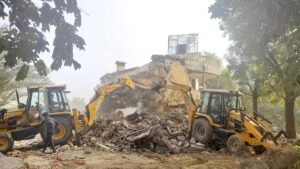
Delhi local updates: Enforcement drives for non-BSVI vehicles continue, and pollution remains a concern in peak hours.
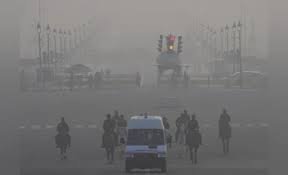
Delhi Local Updates: The crackdown on non-BSVI vehicles persists as air pollution remains a concern during peak hours in Delhi.
Introduction
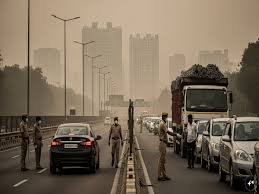
The national capital city, Delhi in India, has faced the challenges of both urbanization and pollution. Of the many challenges that the city faces today, air pollution topping the list as the pollution often becomes life-threatening during peak hours. In a move aimed at reducing the pollution in the city, the government began an enforcement campaign against Vehicles Not Meeting Bharat Stage VI emission standards. Notably, the pollution levels have still surged during the peak hours.
In this report, the present crackdown campaigns on non-BSVI vehicles in Delhi, reasons for pollution during peak hours, future strategies, aspects on government policies, and their response, with respect to the air quality in Delhi, shall be analyzed.
Learning BSVI Norms
BSVI Emission Standards
What Are Bharat Stage VI (BSVI
The Bharat StageVI standards are equivalent to Euro 6 standards and were implemented from April 1, 2020. The main objective of these standards is to reduce emissions from vehicles by:
Reducing nitrogen oxide (NOx) emissions
Reducing particulate matter (PM2.5 and PM
Reduction of the sulfur component in fuel oil
Promoting the use of advanced emission control technologies
BSVI vehicles are capable of releasing up to 80% less emissions when compared to the older models of BS III and IV vehicles.
The Problem with Non-BSVI Vehicles
BSVI stands
Non-BSVI vehicles, such as aged Diesel trucks and Buses/Commercial Vehicles, are major air polluters. The characteristics of such vehicles are:
Do not have current exhaust systems
Emit greater amounts of black carbon particles and particulate matter
Frequently function without adequate maintenance.
Are often employed during peak logistics and transportation times
This is because Delhi’s traffic is already congested; therefore, a few vehicles with this emission capability will greatly contribute to pollution.
Enforcement Drives: What Is Happening on the Ground | |
Extent of Enforcement
In
Delhi Traffic Police, the Transport Department, and civic bodies are conducting jointly aimed at:
Non-BSVI Vehicles
Impose fines and penalties
Impound vehicles when required
Old vehicles should not be allowed to enter the city
This ensures that the number of vehicles crossing
These drives are especially strong in:
Border crossing points
Freight corridors
Industrial zones
Early Morning Peaks and Evening Peaks
Penalties and Legal Proceedings
Penalties
Under the Motor Vehicles Act and pollution control legislation:
Non-compliance vehicles are liable for heavy fines
Re-offenders to lose their transportation
Commercial Permits may be cancelled
Drivers may be taken to court
Although all these are in place, enforcing these rules remains difficult owing to the large number of vehicles that enter Delhi every day.
Peak Hour Pollution: Why It Persists
Introduction
Traffic Congestion
Peak hours, which include 8-11am and 5-9 pm, face enormous traffic congestion because of:
Office commute
School traffic
In
Commercial deliveries
This
Metro overcrowding
Even BSVI-emitted vehicles will cause pollution in cases where they get congested in traffic jams for longer periods of
High Vehicle Density
The estimated total number of registered vehicles in Delhi is over 1 crore. It
Transportation: Private Vehicle
Two-wheel
Auto-r
Buses
Transportation networks
With the emergence of applications for delivering goods, the number of vehicles moving is also increasing rapidly, particularly during peak times.
Slow Transition from Old Vehicles
Though the BSVI norms are compulsory in new vehicles, there are many old vehicles in use, especially in the following categories:
Small transport operators
Formal sector workers
Inter-state commercial fleets
Sometimes, economic conditions may not allow the owner to buy a newer car.
Meteorological Factors
Delhi’s geographical position and climatic conditions accelerate pollution:
Low Wind Speed – This is one factor that causes
Inversions in temperature during the winter season inhibit dispersion. This
The dust in this region is compounded by dust from other areas
Potential risk factor
Emissions build up quickly during peak hours under such circumstances.
Effect on Public Health
Short-Term Health Effects
High levels of pollution during peak periods result in:
Eye irritation
Breathing difficulty
Headaches
Aggravation of asthma
The major affected groups are children, the elderly, and outdoor workers.
Long-Term Health Danger
Exposure to polluted air may result in the following:
Respiratory diseases that are chronic
Cardiovascular
Decreased lung capacity
|
—–|
Increased
Experts say that Delhi’s pollution problem has become a hidden public health crisis.
Public Response and Awareness
Because the project
BOTH SIDES REACT
The public response to drives concerning enforcement has been variable, because in many countries,
Ecological NGOs support tightened law enforcement
_pluginsof
There are also complaints from car owners about harassment by
“Small businesses fear economic loss.”
Transport users call for improved transport
Awareness Campaigns
The government and NGOs are conducting awareness programs on the following:
Advantages of BSVI vehicles
Carpooling and public transport
Reducing unnecessary uses of the vehicle
Regular vehicle maintenance
According to
Nonetheless, the pace of behavioral change has not been
The Role of Public Transportation
Public transport
Delhi Metro
Delhi Metro has been quite important for decreasing vehicle emissions in the following ways:
Providing a clean, electric option
Reducing private car use
Linking the suburbs
However, during peak hours, overcrowding hinders the effort.
Buses & Electric Mobility
Measures are being taken to:
Increase the number of electric buses.
Use cleaner fuels
Enhance last mile connectivity
Switching to electric mobility in public transportation systems is also identified as a long-term strategy.
Challenges in Enforcement
According to
Inter-State Vehicle Movement
The city is encircled by Haryana and Uttar Pradesh, resulting in the following:
Unhindered flow of Non-Compliant Vehicles
Coordinação de jurisdi
Enforcement loopholes
Economic and Social Issues
Many drivers rely on old vehicles as a means of livelihood. The following are some of the effects of imposing a ban immediately, inasmuch
Impact Incomes
Increase Unemployment
Trigger public resistance
But the challenge of striking a balance between environmental necessities and social realities still persists.
Government’s Long-Term Strategy
Scrappage Policy
The government has introduced a vehicle scrappage scheme whereby:
The government is promoting a vehicle
Promotes the scrapping of old vehicles
Provides financial incentives
Reduces pollution load
However, there have been some delays in its implementation
TOC \o \t
Delhi aims to be an EV-friendly city through:
Providing subsidies for EVs
Adding more charging points
Electrifying public transport fleets
The uptake of EVs is rising, still constrained by high costs and a lack of infrastructure.
However, until more charging
Urban Planning Reforms
Urban
Also, long-term pollution control requires:
Improved road designs
Traffic management systems
Traffic flow
Decentralisation of Offices
Promotion of Telecommuting
If the
Technological Interv
A.I. & Surveillance
Authorities are employing:
1)
Automatic Number Plate Recognition (ANPR)
Pollution sensors
Environment
The cameras installed in
These increase efficiencies in enforcement, but privacy worries have been voiced.
Real-time
RT-AQI information assists with:
Publish health advisories
Control traffic flow during critical periods of high pollution.
Develop emergency response plans
Criticism and Policy Gaps
The
Although enforcement campaigns were conducted, it has also been argued that
Too much emphasis is placed on vehicles
Construction dust and industrial pollution are inadequately regulated
Enforcement being selective
Long-term planning is inadequate
It must be emphasized that pollution from transport is just part of the problem.
Citizens’ Role
=””
Citizens can make contributions in the following ways Using public transport
Links: >Car Maintaining vehicles properly
Pro Encouraging clean energy projects Reducing needless travel during peak periods The key to bringing change is the concept of collective responsibility. Conclusion The sustained crackdowns on non-BSVI vehicles in Delhi demonstrate the government’s resolve to address the pollution issue. Yet the continued high pollution levels in peak hours prove that it is not a straightforward issue to address. Addressing the issue of air pollution in Delhi cannot be achieved through enforcement actions alone. A holistic strategy combining policy changes, technology development, and cooperation at the regional level is needed. Delhi finds itself at a very critical point today. Although certain progress has happened, the future requires a lot of effort, commitment, and cooperation on the part of society to help the capital move towards cleaner air.