Maruti Fronx recently received a low safety star rating in crash tests.
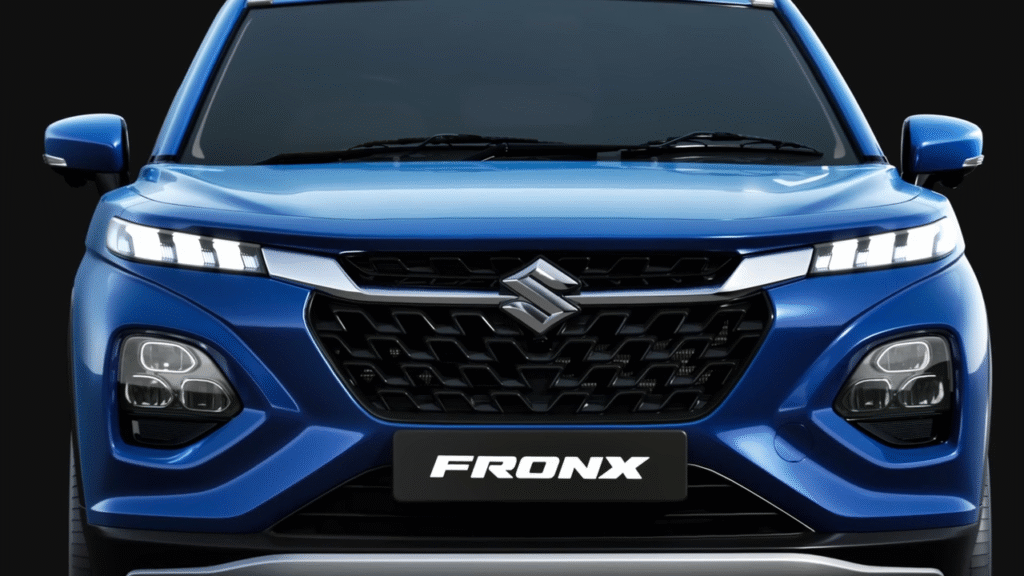
1) What happened: “Fronx got only 1 star” — but where and from whom?
News of the “low safety star rating” mainly refers to ANCAP, which conducts tests on cars sold in Australia and New Zealand. In late December 2025, ANCAP tested the Suzuki Fronx manufactured in India, an export model, and it received a 1-star rating.
This became a big talking point because:
Fronx is one of the popular models in India.
The cars tested here are “Made in India” exports.
A “1-star” result looks alarming for any buyer.
Meanwhile, it is important to be informed that NCAP ratings apply to the specific variant/spec that has been tested under that particular program’s rules and not automatically to every version that might be sold in every country.
2) Low rating explanation: the main problem was a severe failure of the seat belt (rear),
According to reports covering ANCAP’s findings, one big factor behind the poor rating was reportedly a problem with the rear seatbelt in a crash test. In a full-width frontal test, the rear seat belt retractor reportedly failed to hold onto the occupant, allowing excessive forward movement of the rear dummy. That is a big red flag in any assessment regarding occupant safety.
Why this matters so much
Airbags and structure are important features in modern crash assessment, yet restraint systems-things like seat belts, pretensioners, load limiters, and child restraints-really form the foundation. If a seat belt doesn’t perform right, crash forces can throw an occupant forward with much higher injury risk-even if that car otherwise boasts advanced safety tech.
That’s why a restraint-system failure can “tank” the overall rating.
3) The scoring: Adult + child protection numbers that contributed to 1 star
One summary of coverage of the finding reported these marks:
Adult Occupant Protection: 19.30 points
Child Occupant Protection: 20.06 points
ANCAP ratings typically combine multipliers for different key areas such as Adult Occupation Protection, Child Occupation Protection, Vulnerable Road User Protection, and Safety Assist. A poor performing area critically, such as seat belts, brings the final star rating down greatly.
4) Why you’re seeing confusion online: Fronx had higher ratings elsewhere (Japan NCAP, etc.)
A big reason for people’s surprise is perhaps that Fronx has not always “performed low” in the evaluation of every market.
Media reports, for instance, underlined that Fronx scored 4 stars in Japan NCAP-JNCAP-earlier for the model/assessment conditions there.
So, the question is:
“How can it be 4 stars in Japan but 1 star in ANCAP?”
Common reasons ratings differ (very important)
Different test protocols and thresholds
ANCAP might be able to be more stern in some other areas or even request more performance, like the availability of certain safety-assist tech, pedestrian safety, and so forth.
Variant differences
Even under the same model name, the exported version can be different in:
airbags – number and type
ADAS / AEB(‘{{}}’ vailability)
reminders to fasten your seat belt
ISOFIX & child restraint compatibility
structure or reinforcement changes
Specific failure event
The result can be severely damaged by just one critical defect such as the failure of seat belt retractor observed during its test by ANCAP.
So, this “1-star” isn’t automatically saying the Fronx is “always unsafe everywhere,” but it does raise serious questions, most especially about rear-seat safety performance under that tested configuration.
5) What happened in New Zealand: reports of sales being halted (why it’s a big deal)
The story became even bigger, it was reported, when Suzuki allegedly stopped Fronx sales in New Zealand after the poor ANCAP result; there was also mention of an advisory on already-registered vehicles regarding the seat belt issue.
Such an action-stoppage of sales-typically occurs when:
A safety concern becomes high-profile
The company would like to understand if the following needs assessment and response: technical fix, updated parts, updated variant, retest, etc.
Regulators and consumer pressure mount.
Even when the problem is confined to a specific batch/part/configuration, companies very often stop sales to prevent further proliferation of the problem.
6) Understanding star ratings: What “1-star” really means
A modern NCAP star rating is not just “car hits wall = star score.
It’s a combined safety evaluation that can include:
Frontal offset crash
Full-width frontal crash
Side impact
Pole test
Whiplash
Child occupant tests
Pedestrian/cyclist protection
Safety Assist features such as:
AEB – Autonomous Emergency Braking
lane support
Speed assistance
seatbelt reminders
Because of this, a car is able to:
Good structure, but lower scores for safety assist tech → few stars
have good airbags but poor child-restraint performance → fewer stars
have serious restraint failure → very few stars
ANCAP is peculiarly renowned for publishing results from its consumer-friendly testing program in Australia and New Zealand, and it has been since the early 1990s.
7) What this means for the Indian buyer: should you panic?
The practical, sensible view:
A) Don’t look the other way.
A restraint failure in the rear seat is no “small thing.” If the report shows that the back belt acted improperly in a simulated crash environment, then it is worth paying attention to.
B) But don’t assume “same star rating in India” automatically
The mix of variants and safety equipment in Fronx sold in India may also be different from the export version tested by ANCAP. Additionally, India currently has:
Bharat NCAP is the national program, which is on a voluntary basis and aligned with global-style crash assessment methodologies.
If/when the India-spec Fronx is tested under Bharat NCAP (or Global NCAP), that would give the most directly comparable answer for Indian buyers.
C) Actual take away for a buyer
If you’re considering a Fronx-or already own one-focus on:
Which variant you have, airbag count, ESC, etc.
Usage of rear-seat belts and proper installation of child seats
Waiting for official responses/updates – part changes, fixes, retests
8) Why rear-seat safety is a big deal in India
While in India, rear-seat usage is still not as consistent as front seats, statistically and medically, in crash safety terms, rear passengers unrestrained can be at very high risk—and can also injure front occupants by “loading” the front seatbacks in a severe crash.
So, when a crash test report talks about rear-seat restraint performance, it is a big factor in typical Indian family usage-parents + kids + elders in the rear.
9) What normally happens after a poor NCAP result by the manufacturers
When a model receives low ratings, especially due to a specific component failure, it is common for manufacturers to:
Identifying the precise part failure-supplier batch, design tolerance, installation method.
Replace the module, (seat belt retractor/pretensioner-anchor point-load limiter).
Rolling change in production means there were new parts used from a certain VIN on.
Service actions or recalls depending on severity and regulator requirements.
Retest to restore rating and consumer confidence.
In that vein, the reports of a sales halt in NZ seem to indicate that it is indeed an important issue to be taken seriously by the company.
10) If you own a Fronx: smart safety steps (practical checklist)
Not panic, just practical:
Wear seatbelts at all seats always, including the rear.
Make sure the strap isn’t twisted and latches when tugged abruptly.
In case you use a child seat:
Use correct ISOFIX/top tether points if supported.
Properly follow child seat angle and belt routing.
Drive with
ESC enabled (if available)
Correct tyre pressure (Stability + Braking)
If any advisory or inspection program is issued by your country/market, do not wait but get it checked right away.
And if buying ask dealer about variant safety kit – airbags, ESC, ISOFIX, seat belt reminders.
11) The bigger picture: Maruti and rising safety pressure in India
The Indian market is moving fast in terms of safety expectations. We have already seen big headlines around Bharat NCAP ratings for popular cars. For example, Reuters reported how Maruti has scored a 5-star Bharat NCAP rating for its Dzire in 2025.
So, a high-profile “1-star ANCAP” story puts on the pressure—because consumers now compare stars, not just mileage and features.
12) Takeaway of the story: crystal clear conclusion The “low star” news refers to Suzuki Fronx export model tested by ANCAP which obtained 1 star. A central reported reason was a rear seat belt retractor failure in a frontal test that would lead to poor occupant outcomes. That does not automatically prove that the India-spec Fronx carries the same rating, but it is a serious warning sign-especially on rear-seat safety. Reports also indicate it was taken off the market in New Zealand, meaning the issue is being treated with urgency in that market.