Adani Group plans ₹1.5 lakh crore investment in Kutch over five years
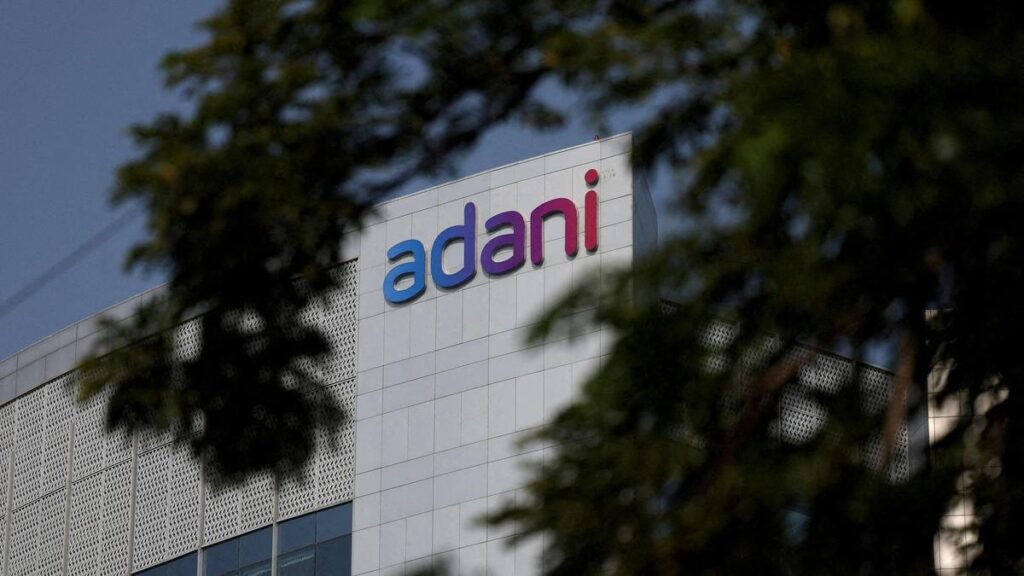
Adani Group’s announcement that it plans to invest ₹1.5 lakh crore in Gujarat’s Kutch region over the next five years is a big statement for both the company and the state’s development story. It’s not just a single factory or one new project—this kind of figure usually signals a multi-project expansion across infrastructure, energy, logistics, industrial facilities, and supporting ecosystems that make large-scale investment viable (roads, power evacuation, ports, warehousing, townships, vendor clusters, and skill development).
The commitment was announced by Karan Adani (Managing Director of Adani Ports & Special Economic Zone) at a Vibrant Gujarat Regional Conference tied to the state’s investment outreach.
1) Why Kutch is central to Adani’s strategy
A) Geography that suits energy + logistics
Kutch is one of those rare regions where multiple strategic advantages come together:
- Vast land availability (useful for utility-scale solar/wind parks, industrial estates, and logistics zones).
- High solar irradiance and strong wind corridors in parts of western Gujarat—ideal for renewable generation at scale.
- Coastal access and proximity to major ports—especially Mundra, which is among India’s most significant private ports and already a key node for Adani’s logistics network.
- Connectivity to northern and western India, and the ability to serve as a gateway for trade routes.
When you put these pieces together, Kutch can function like a combined energy factory + logistics corridor, which is precisely the kind of integrated model the Adani Group has built across ports, power, transmission, and industrial assets.
B) “Cluster economics” (the real reason mega-investments happen)
Large investment announcements are rarely about one standalone asset. They’re about building an entire cluster where each piece strengthens the other:
- Renewable generation needs: land, transmission, storage, demand (industrial offtake), policy support.
- Ports need: cargo demand, manufacturing, warehouses, rail/road links.
- Manufacturing needs: reliable power, water, skilled labor, supplier networks, export routes.
Kutch is suited to become that kind of clustered industrial ecosystem, where renewable energy doesn’t just feed the grid—it also powers nearby manufacturing and logistics operations, lowering costs and improving reliability.
2) The two anchor pillars: Khavda renewables + Mundra port expansion
Most coverage of this ₹1.5 lakh crore plan highlights two major anchor items, because they are already big, long-horizon projects that can absorb enormous capital.
A) The Khavda renewable energy project (37 GW by 2030)
Karan Adani has said the group will complete the Khavda project and commission the full 37 gigawatts (GW) by 2030.
To understand scale:
37 GW is not a normal power project—it’s closer to “national infrastructure” size. Achieving it requires:
- Massive solar and wind installations
- High-voltage transmission lines and grid integration
- Substations, power management systems, forecasting systems
- Possibly large energy storage deployments over time (battery, pumped hydro, or other solutions)
- A robust supply chain: modules, turbines, inverters, cables, transformers
If Khavda ramps successfully, it can make Kutch one of the most important renewable power hubs not just in India, but globally in terms of concentrated capacity in a single region.
B) Mundra port capacity to double in the next 10 years
Alongside renewables, Karan Adani also stated that the group plans to double port capacity at Mundra over the next 10 years.
Port capacity expansion typically involves:
- New berths/terminals (container, bulk, liquid, Ro-Ro depending on strategy)
- Dredging and channel improvements
- Yard expansion, mechanization, automation
- Rail sidings and road upgrades to improve evacuation
- Warehousing, FTWZ (free trade warehousing zones), cold chains, value-added logistics
A larger Mundra is not only about more ships—it’s about turning the surrounding region into a trade-and-manufacturing platform, where imports of raw materials and exports of finished goods become cheaper and faster.
3) What “₹1.5 lakh crore over five years” could include (beyond headlines)
News reports often summarize the headline figure, but the investment likely spans multiple verticals. The most logical buckets are:
A) Renewable generation buildout (solar/wind/hybrid)
This is the obvious large-ticket item due to Khavda’s scale. It can include:
- New capacity additions each year
- Hybrid plants (solar + wind) to improve load profiles
- Power forecasting and grid tech
- Land development and internal infrastructure
B) Transmission and evacuation infrastructure
Even if power generation is built, it’s useless without evacuation. Ultra-large renewable parks require:
- High-capacity transmission corridors
- Grid stabilization investments
- Substations and reactive power management
This is often a hidden but very large part of CapEx.
C) Storage, grid services, and “firm power” solutions
As renewables grow, storage becomes essential—especially if the goal is to supply industry with reliable power and not just feed variable energy into the grid.
Even if the immediate plan is not storage-heavy, long-term commissioning toward 2030 strongly suggests increasing storage and balancing investments.
D) Port + logistics + industrial real estate around Mundra
Doubling port capacity is usually accompanied by:
- Logistics parks
- Warehousing clusters
- Industrial plots for tenants
- Trucking terminals and container freight stations
- Rail/road upgrades in coordination with government agencies
E) Manufacturing ecosystems linked to green power
Once a region can offer large, stable renewable energy supply, it becomes attractive for:
- Green hydrogen/ammonia value chains (if policy and economics align)
- Metals and materials industries attempting “green” production
- Data centers and large industrial loads seeking cheaper power
(Some of this depends heavily on demand visibility and long-term offtake contracts.)
4) Why these investments matter for Gujarat and India
A) Employment: direct, indirect, and “construction-to-operations” shifts
Mega projects produce jobs in waves:
- Construction phase jobs
Civil works, electrical works, transport, assembly, mechanical installation, security, site services. - Supply chain jobs
Manufacturing of components, trucking, ports cargo handling, warehousing, fabrication. - Operations phase jobs
Fewer than construction, but longer-term: plant operations, grid operations, port operations, maintenance, safety, IT systems, compliance.
The bigger impact often comes from the ecosystem: small and mid-sized vendors, contractors, service providers, equipment repair, catering, housing, and training institutes.
B) Export competitiveness and “logistics cost reduction”
Ports and logistics upgrades can reduce:
- Dwell time
- Transportation friction
- Cost per container/ton
- Uncertainty (which is a hidden cost for businesses)
For manufacturers, reliable logistics and power are often the deciding factors for where they locate production.
C) Energy transition at industrial scale
A 37 GW renewable plan is aligned with India’s broader push to scale clean energy. It signals that large private groups are willing to deploy capital at scale, which helps:
- Add capacity faster
- Encourage supplier ecosystems
- Improve grid modernization urgency
- Create conditions for new “green industries”
Karan Adani framed this in the context of India becoming an attractive destination for manufacturing and investment.
5) The policy and “Vibrant Gujarat” context
This announcement did not happen in isolation; it was made at a Vibrant Gujarat regional conference, where major groups often declare multi-year commitments.
At the same event cycle, other industrial announcements (like large commitments from Reliance) were also reported, reinforcing that Gujarat is actively positioning itself as an investment hub.
This matters because mega projects depend on:
- Faster clearances and predictable regulation
- Coordinated infrastructure planning (roads, transmission corridors, water, housing)
- State support for skilling and local employment
- Long-term policy stability
6) What could realistically change on the ground in Kutch
If the planned CapEx translates into execution, you could see visible changes in several areas:
A) Infrastructure acceleration
Even unrelated infrastructure often improves around mega projects—new roads, better last-mile connectivity, upgraded substations, improved telecom networks, and more frequent transport services.
Government road investments in Gujarat (including Kutch) have also been reported recently, which can complement private industrial spending.
B) Urbanization pressures and local economy shifts
Large industrial buildouts can lead to:
- Increased housing demand and rents
- Expansion of local markets and services
- Migration inflows for construction and operations jobs
- Higher pressure on public services (health, water, sanitation)
This is why planning matters: unmanaged growth can create stress even while the economy expands.
C) Skills and training demand
Renewables and port logistics require trained manpower:
- Electricians and high-voltage technicians
- Safety and compliance staff
- Crane operators, logistics planners, warehouse techs
- Drone surveying, GIS mapping, and instrumentation roles
Regions that build strong training pipelines tend to capture more of the long-term benefit.
7) Key challenges and risks to watch
Big investment announcements are important—but execution is where the real story is. Here are the most practical constraints:
A) Land, environment, and local community concerns
Ultra-large renewable parks and port expansions must manage:
- Land acquisition/lease complexities
- Biodiversity and ecological sensitivities
- Community livelihoods (especially where grazing and traditional land use exists)
- Compensation and rehabilitation mechanisms
If these issues are not handled transparently and fairly, projects can face delays, litigation, or reputational damage.
B) Water availability in an arid region
Kutch has water stress in many areas. Industrial growth increases water demand, and even renewables (though relatively water-light compared to thermal plants) still require water for:
- Construction
- Cleaning/maintenance (solar panel cleaning)
- Supporting townships and services
Expect water strategy (pipelines, desalination, recycling) to become a key part of industrial planning.
C) Grid integration and curtailment risk
Adding huge renewables quickly can trigger:
- Grid congestion
- Curtailment (power not evacuated despite generation)
- Need for storage and balancing services
The success of 37 GW by 2030 depends not only on panels and turbines but also on the grid’s ability to absorb and distribute that power efficiently.
D) Financing, timing, and macro conditions
₹1.5 lakh crore over five years implies a steady pipeline of project-ready investments. Risks include:
- Interest rate cycles affecting cost of capital
- Supply chain disruptions (modules, transformers, turbines)
- Global commodity price volatility
- Demand uncertainty (industrial offtake not ramping as expected)
E) Regulatory and trade policy shifts
Renewables and ports are policy-sensitive sectors—tariffs, grid regulations, land rules, environmental norms, and import/export regulations can all influence timelines and economics.
8) How to track whether this plan is “real progress” over the next 12–24 months
If you want to judge this investment plan beyond headlines, watch for measurable markers:
- Quarterly/annual CapEx disclosures in Adani group company filings
- Commissioning milestones at Khavda (GW added each year)
- Transmission corridor progress (new lines, substations, evacuation capacity)
- Port expansion contracts at Mundra (new terminals, equipment orders)
- New industrial tenants or manufacturing announcements around the port/SEZ
- Job and skill initiatives in Kutch—training centers, local hiring programs
- Clearances and environmental compliance updates
When these become visible, the commitment is translating into real economic activity.
9) The bigger meaning of the Kutch investment story
In simple terms, Adani’s ₹1.5 lakh crore commitment is about building Kutch into a combined green energy powerhouse and logistics export platform anchored by two mega assets: the Khavda renewable project and Mundra port’s expansion.
If executed well, this can:
- Strengthen Gujarat’s industrial base
- Improve India’s logistics competitiveness
- Add large volumes of renewable power
- Create jobs and supporting ecosystems
But the outcome depends on:
- Execution discipline and timelines
- Grid readiness and storage/balancing investments
- Environmental and community management
- Sustainable planning for water and urban growth
So, the headline number is impressive, but the real impact will be measured project by project, milestone by milestone.