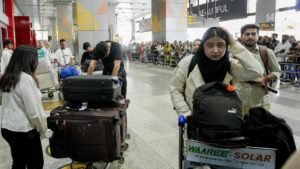
Air India CEO warns of travel demand hit as fuel costs surge, flags possible flight cuts
The Air India CEO Campbell Wilson has given a warning about a decrease in travel demand rising fuel costs and potential flight cuts. This is part of a crisis that is affecting the entire global aviation industry in 2026. The main reason for this crisis is the tensions in the Middle East especially the conflict related to Iran, which has disrupted oil supply chains, increased fuel prices, changed flight routes and created uncertainty in passenger demand.
Here is a detailed explanation of the issue covering the causes airline economics, demand impact, operational challenges, global trends and future outlook.
1. Background: What did the Air India CEO say?
The Air India CEO Campbell Wilson has issued a warning that says:
Fuel costs have increased a lot even doubling in the few weeks.
The full financial impact of this increase has not been felt yet. It is expected to be bad in the coming months.
Airlines, including Air India may need to cut flights depending on demand and costs.
There is a limit to how much fares can be increased because if they are too high customers may stop traveling.
Travel demand could weaken as economic uncertainty rises and passengers avoid trips.
This is not a warning it is a real crisis that is happening in the aviation industry.
2. Root Cause: Why are fuel costs rising?
The main reason for the increase in fuel costs is the tension involving Iran and the surrounding regions.
Oil supply routes like the Strait of Hormuz are under threat.
Tanker disruptions and military activity have increased oil prices.
Brent crude has gone up beyond $100-$120 per barrel.
Since jet fuel is made from oil airlines are directly affected by this increase.
2.2 Fuel is the cost for airlines
Fuel accounts for around 30-40% of airline operating costs.
So even a small increase in oil prices leads to an increase in expenses, reduced profitability and pressure on ticket pricing.
3. Why Air India is especially affected
Air India operates flights to Gulf countries via Middle East airspace and connecting India to Europe and North America.
Because of the conflict many flights have already been. Only about 30% of normal Middle East operations are running.
Flights are being rerouted, which increases travel time and fuel consumption.
For example India to Europe flights now take routes, which means more fuel and higher costs per flight.
The Indian rupee is also weak which means that aviation fuel, which is priced in US dollars is more expensive to import.
This adds to the problems for airlines.
4. Impact on passengers
Airlines have already increased ticket prices. Introduced fuel surcharges.
For example Air India added surcharges starting around ₹400 for flights and global airlines added $50-$290 extra fares.
The demand for air travel is sensitive to price so if fares increase much people may cancel their trips.
This is especially true for leisure travel and budget travelers.
The CEO warning highlights this saying that not every customer is willing to pay fares.
There may be a drop in travel demand due to ticket prices economic uncertainty and war-related fears.
People may. Cancel their travel plans.
5. Why airlines may cut flights
Airlines do not operate flights just to fill seats they operate to make a profit.
When costs rise and demand falls airlines respond by cancelling routes reducing frequency and cutting night or low-demand flights.
Air India may reduce Middle East flights adjust capacity and focus on profitable long-haul routes.
Even major airlines like United Airlines are cutting flights to the fuel surge.
6. Industry-wide impact
Airlines globally are facing fuel price shocks, route disruptions, rising insurance and risk costs and capacity shortages.
Common strategies airlines are using include fare increases, fuel surcharges, capacity discipline and route optimization.
Some airlines are still seeing demand, like U.S. Airlines, which report strong demand despite high fuel prices.
This shows that demand varies by region and premium travel remains strong while budget travel is more affected.
7. Economic concept behind the crisis
This situation can be explained using cost-push inflation, where oil prices rise, fuel costs increase airline costs rise, ticket prices increase and demand falls.
This creates a feedback loop, where lower demand leads to fewer flights, which leads to higher per-seat costs.
8. Operational challenges beyond fuel
routes are restricted due to airspace closures and airlines must avoid conflict zones.
There are also safety concerns and airlines avoid high-risk areas, which increases insurance costs.
Scheduling disruptions, flight delays and crew scheduling issues are also a problem.
9. Opportunities for Air India
Despite the challenges the CEO also highlighted opportunities for growth in -stop flights bypassing the Middle East and increased demand for India-Europe and India-North America routes.
Air India is adding flights on routes and trying to capture new demand.
10. Future outlook
In the term fuel prices are likely to remain high which may lead to more fare hikes, possible flight reductions and demand volatility.
In the term if the conflict continues airlines may restructure their networks and long-haul routes may become more expensive.
Budget airlines may suffer more. There may be investment in fuel-efficient aircraft and alternative fuels.
11. What this means for passengers
Passengers can expect higher ticket prices, fewer flight options longer travel times and sudden cancellations.
To be smart passengers should book early avoid peak travel dates use tickets and track fare changes.
The Air India CEOs warning is an indicator of stress in the aviation industry.
Fuel prices have surged due, to tensions and airlines cannot fully pass costs to passengers.
Travel demand may. Flight cuts are a likely response.
The crisis is global affecting all airlines.
In terms high fuel costs and limited fare increases put pressure on airlines, which leads to fewer flights and a risk to travel demand.
This situation shows how global politics, oil markets and aviation are interconnected.