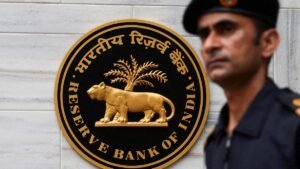
Asian stock markets slipped ahead of a looming Federal Reserve (Fed) interest-rate decision, with investors cautious even though a rate cut is widely anticipated
???? Asian Markets Slip Ahead of Fed Decision — The Longer Story Behind the Headlines
When Asian stock markets slipped ahead of a looming Fed interest-rate decision, the easy thing to say is that investors are on edge. But take a step back, and this moment is part of a bigger global puzzle: a delicate choreography between expectations, uncertainty, and the Fed’s enormous influence on global liquidity.
Let’s unfold the full picture.
- Why Asian Markets Move Even Before the Fed Speaks
Although the Federal Reserve is a United States institution, the effects of its decisions reverberate throughout the world.
Asian markets open hours before Wall Street does.
Investors here try to “price in” what the Fed might do.
And because markets abhor surprises more than bad news, even a widely EXPECTED rate cut triggers caution.
The Psychology:
Investors ask themselves:
“What if the rate cut is smaller than expected?”
-“What if the Fed indicates fewer cuts for 2025?
“What if the economic outlook weakens?”
This uncertainty turns into
Profit-taking-investors sell stocks while prices are at an all-time high.
Reduced risk appetite,
Temporary volatility across Asia.
- A Rate Cut Is Expected — So Why Are Markets Still Down?
Counterintuitive, right? You would think rate cuts mean:
Cheaper borrowing
Higher spending
Stronger stock markets
But markets look not only at the action… they look at the tone, language and long-term guidance.
The investors have concerns about:
How many more cuts will follow in 2025?
Will the Fed signal that economic growth is slowing?
Is inflation in the U.S. still stubborn?
Even a single line in the Fed’s policy statement can move billions of dollars around the world.
- Asian markets are closely linked with monetary policy set by the US.
Different Asian economies, especially export-oriented ones like:
Japan
South Korea
China
Taiwan
depend heavily on
US consumer demand
Dollar Liquidity
Global supply chain stability
So when the Fed adjusts its interest rates, Asian markets move to anticipate:
Exchange rate fluctuations
Capital inflows/outflows
Impact on the Tech Sector, Manufacturing, and Commodities
Example:
If the Fed cuts rates →
Dollar weakens →
↑ Asian currencies strengthen →
Exports may become less competitive →
Negative market reaction
This is why even “good news” can cause short-term dips.
???? 4. Which Markets Reacted the Most?
These three usually drive the reaction:
Japan (Nikkei 225)
Often sensitive to changes in the yen.
A weaker yen bolsters exporters, but a Fed cut could strengthen yen → slight drag on stocks.
Hong Kong / China (Hang Seng, CSI 300)
The Chinese markets are juggling between:
Slow Economic Recovery
Property sector issues
Poor domestic consumption
Any global uncertainty adds to the pressure.
KOSPI- South Korea
Deeply linked with tech, namely Samsung and SK Hynix.
Tech stocks are highly sensitive to interest-rate expectations.
- The Global Domino Effect
This decision by the Fed is not in isolation; it connects to a number of ongoing global changes:
U.S. economy cooling, but not collapsing
The Fed is poised to balance its desire to support growth without unleashing inflation anew.
내 thiết sui: Europe is slowing.
Mixed signals from the ECB add to global uncertainty.
→ China’s economic recovery is uneven.
Foreign investors remain skeptical about investing again in Chinese markets.
Mid-East Tensions & Oil Price Swings
Higher world oil prices worsen inflation around the world.
All of these factors combine to create a cautious tone on Asian trading floors.
- What Investors Are Really Waiting For
The decision of the Fed is significant, but what really moves the markets is the forward guidance:
Will the Fed say inflation is under control?
Will they predict more rate cuts in 2025?
Will they signal recession worries?
How will they balance growth versus stability?
One dovish line can send the markets rallying: “inflation is easing faster than expected.”
One hawkish line (“further cuts may be limited”) can send them tumbling.
- What happens after the Fed decision?
Here is the usual pattern :
If the Fed cuts rates AND sounds dovish:
✔ Rebound in Asian markets
✔ Tech and Financial Stocks Surge
✔ Bond yields decline
If the cut is smaller or is accompanied by cautious language:
✘ Markets may fall further
Strangely enough, the dollar strengthened
✘ Export-heavy Asian markets under pressure
If the Fed surprises with no cut:
⚠ Sharp volatility
⚠ Funds may flow out of emerging markets ⚠ Central banks in Asia may move on rate policies more quickly Bottom Line — It’s Less About the Cut, More About the Message ???? 8. Asian markets slipping is less a sign of fear than it is one of strategic patience. Investors are essentially holding their breath, awaiting clues about: inflation trajectory global economic slowdown U.S. recession risks monetary easing cycle timeline The expectations very often outweigh the reality in global finance.