Comex gold closed well below the psychological $5,000-mark and settled at $4,678.6 by end March, representing a 10.85% fall last month
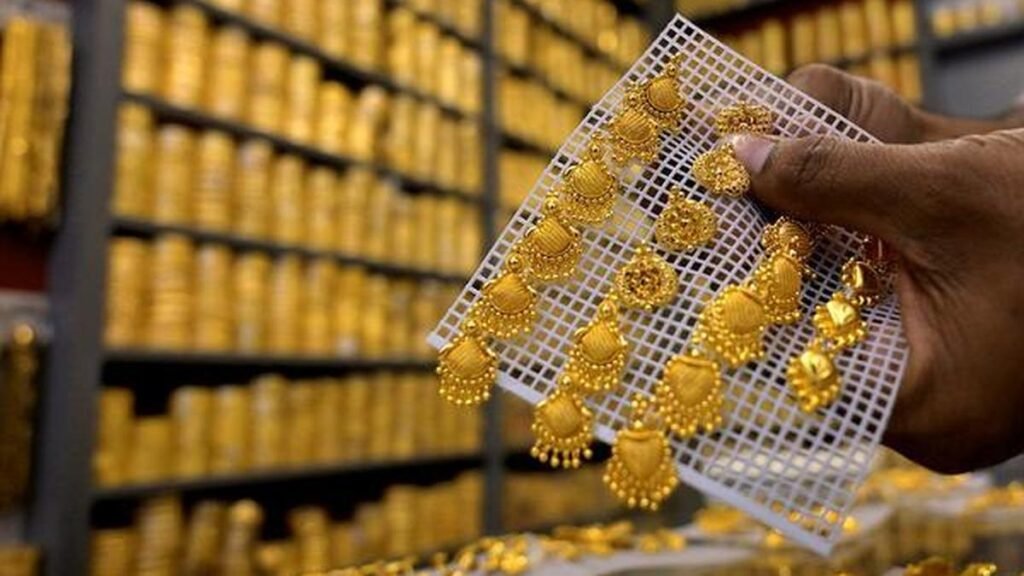
The sharp decline in Comex gold prices is a deal in global financial markets. Gold prices fell below $5,000. Settled at $4,678.6 by the end of March. This is a 10.85% drop in one month.
To understand this movement we need to look at it from angles. These include market psychology, macroeconomic factors, monetary policy, currency movements, geopolitical influences and investor behavior.
* **Understanding COMEX Gold and Its Importance**
Gold traded on COMEX is a benchmark for global gold prices. It reflects futures contracts, not gold. So prices are influenced by supply and demand speculation, hedging and macroeconomic expectations.
Gold is seen as:
* A safe-haven asset
* A hedge against inflation
* A store of value during uncertainty
A decline like this 10.85% drop is noteworthy.
* **The $5,000 Level**
The $5,000 level is a psychological resistance/support level. These levels matter because:
+ Traders often place buy/sell orders around round numbers.
. Breaking below such a level can trigger panic selling.
. It signals a shift in market sentiment.
When gold fell below $5,000:
. Many investors thought it was a bearish signal.
. Stop-loss orders were triggered.
. Momentum traders accelerated the downward move.
* **Key Reasons Behind the 10.85% Decline**
+ **(A) Strengthening of the US Dollar**
– Gold and the US dollar typically have an inverse relationship.
– When the dollar strengthens gold becomes more expensive for currency holders.
– This reduces demand.
+ **(B) Rising Bond Yields**
– Gold does not pay interest or dividends so it competes with interest-bearing assets like bonds.
– Rising yields on US Treasury Bonds make them more attractive.
– Investors shift from gold to bonds.
. *(C) Hawkish Monetary Policy**
– Central banks, especially the Federal Reserve play a crucial role.
– A hawkish stance (higher interest rates) hurts gold.
– Higher rates increase opportunity cost of holding gold.
. *(D) Profit Booking After Previous Rally**
– Gold had previously seen a strong rally.
– Investors who bought at levels began to book profits.
– Large institutional investors exited positions.
. *(E) Reduced Geopolitical Risk Premium**
– Gold often rises during geopolitical uncertainty.
– Recent developments: Some easing of tensions in conflicts reduced fear premium in markets.
. *(F) Inflation Expectations Stabilizing**
– Gold is a hedge against inflation.
– When inflation fears decrease gold demand weakens.
+ **(G) Speculative Liquidation**
– Gold futures marketsre heavily influenced by speculative positions.
– Hedge funds and traders often use leverage.
– When prices fall margin calls force further selling.
* **Technical Factors Behind the Decline**
+ **(A) Breakdown of Support Levels**
– Technical traders monitor charts.
– Once gold broke $5,000: Next support levels were lower selling intensified.
. *(B) Moving Averages**
– Gold likely fell below key moving averages (50-day, 200-day).
– This triggered selling.
. *(C) Momentum Indicators**
– Indicators like RSI signaled: Overbought conditions earlier then rapid reversal.
* **Global Economic Context**
. *(A) Strong US Economy**
– Robust GDP growth, strong employment data.
– This reduces the need for safe-haven assets.
+ **(B) Equity Market Strength**
– Stock markets performed well: Investors moved capital into equities reduced allocation to gold.
. **(C) Central Bank Actions**
– Although central banks have been buying gold in years: Short-term fluctuations still depend on market sentiment.
* **Impact on Stakeholders**
+ **(A) Investors**
– Short-term traders faced losses.
– Long-term investors may see this as a buying opportunity.
. *(B) Jewelry Market**
– Lower prices can: Boost demand in countries like India and China increase retail purchases.
. *(C) Mining Companies**
– Lower gold prices reduce profit margins, stock prices of gold miners may decline.
. *(D) Central Banks**
– Some central banks may take advantage of lower prices to accumulate reserves.
* **Comparison with Historical Gold Corrections**
Gold has historically experienced corrections during bull markets.
* **Is This a Temporary Correction or Trend Reversal?**
. *Bullish Arguments (Gold may rise again)**
– Geopolitical tensions can resurface.
– Inflation could rebound.
– Central bank buying remains strong.
+ **Bearish Arguments ( decline possible)**
– Continued high interest rates.
– Strong US dollar.
– Stable global economy.
* **Outlook for the Coming Months**
Gold’s future direction depends on:
+ **(A) Interest Rates**
– If rates fall → gold may rise.
– If rates stay high → pressure continues.
. **(B) Inflation**
– Rising inflation → bullish for gold.
– inflation → bearish/neutral.
+ **(C) Currency Movements**
– dollar → gold rises.
– Strong dollar → gold falls.
. *(D) Global Uncertainty**
– More uncertainty → higher gold demand.
* **Key Takeaways**
The 10.85% drop is driven by a combination of technical and psychological factors.
The break below $5,000 acted as a trigger for selling.
Rising bond yields, dollar and hawkish monetary policy were the primary drivers.
This decline does not necessarily indicate a long-term collapse. Reflects a market correction phase.
The fall in Comex gold prices to $4,678.6 by the end of March represents how interconnected global financial systems are. Gold, despite being a safe-haven asset is highly sensitive to modern economic forces such as interest rates, currency strength and investor sentiment.
While the drop may appear alarming it is essential to view it in the context of market cycles. Gold has always moved in waves—rising during uncertainty and falling during stability. The current decline reflects a phase where economic confidence, strong currency performance and tighter monetary policies have temporarily reduced its appeal.
However gold’s fundamental role in the financial system remains intact. Any shift, in inflation interest rates or geopolitical stability could quickly reverse the trend. Therefore than signaling the end of gold’s relevance this correction highlights its dynamic nature in an ever-changing economic landscape.