Delhi chokes on ‘severe plus’ AQI: smog engulfs city, low visibility; key points
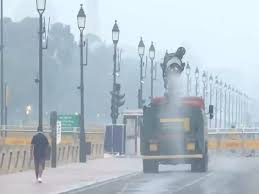
Smog once again has Delhi–NCR under a thick blanket. The air quality slips into the “severe-plus” or the emergency zone in many locations, while visibility falls sharply in many pockets. According to CPCB readings, on Sunday, Dec 14, 2025, Delhi’s morning AQI lay around 491, a very high level even for otherwise healthy people.
Times of India
AQI in “severe-plus”: AQI 450+ is generally treated as severe-plus for emergency mitigation actions, and CPCB AQI values are capped at 500.
Hindustan Times
+1
Smog + fog = worse visibility: Winter conditions-high humidity, low wind, temperature inversion-trap pollution near the ground, and also create fog, together forming dense “smog.”
Times of India
+1
GRAP Stage IV invoked: Authorities triggered Stage IV-highest-restrictions as air turned “severe-plus.”
Reuters
+1
Construction curbs-truck curbs-vehicle restrictions: Stage IV typically tightens rules on construction/demolition, truck entry, and diesel/older vehicles, among other measures.
Reuters
+1
Impacted Schools/Education: Most reports bring in the news of hybrid learning, as opposed to physical classroom learning, with reduced outdoor exposure under the GRAP-IV action plan if pollution worsens further.
The Times of India
+1
Why now? A spike in pollution often occurs when local emissions remain steady, but the atmosphere stops being able to disperse them, such as by stagnant winds, higher moisture, colder nights.
Times of India
+1
1) What is “severe-plus” AQI?
AQI, or the Air Quality Index, translates a range of pollutant readings, in particular PM2.5 and PM10, into a single number that’s easier to communicate publicly.
Under common Indian AQI categories, 401– 450 is “severe” and above 450 is treated as “severe-plus” (often called “emergency” for response planning).
Scroll.in
+1
“Severe-plus” is not just “bad air.” It’s where even short exposure can trigger symptoms, and high-risk groups may face serious complications: children, the elderly, those who are pregnant, people with asthma, COPD, or heart disease.
Also important: when you see AQI near 480–500, that doesn’t mean risk “stops increasing.” It usually means the index is at/near the reporting ceiling, while the real pollutant concentration can still vary significantly.
Hindustan Times
+1
On Dec 14, media reports quoting CPCB put Delhi’s AQI around 491 in the morning, well into severe-plus territory.
Times of India
2) Why is smog in Delhi so thick during winter?
Delhi’s winter pollution is a classic mix of emissions-meteorology.
A) Temperature inversion: the “lid” effect
The ground rapidly cools down on many nights during winter. Cold air becomes heavier and stays near the surface, with a slightly warmer layer above it. A temperature inversion somewhat like putting a lid on the city is thus created. Pollution from vehicles, cooking, waste burning, and industry gets trapped close to where people breathe.
B) Low wind + high humidity = trapped particles and thicker haze
Reports and expert commentary often attribute this to stagnant conditions of low wind speeds and high humidity, which reduce dispersion and encourage the formation of fog/smog.
Times of India
+1
Humidity matters because particles can absorb moisture, grow in size, and scatter light more strongly-the air takes on a milkier appearance and visibility is worse.
C) Fog and smog can combine
Fog consists of water droplets; smog is a mixture of smoke/chemicals and fine particles. In Delhi winters, you often get to have it both ways. IMD bulletins around this period also indicated fog/shallow to moderate fog in and around Delhi, especially during morning hours-exactly when commuters are out.
IMD Mausam
+1
Therefore, even if the emissions were “only” at a high baseline, weather can push the city into a sudden “very poor → severe → severe-plus” spiral.
3) What are the main sources of pollution during these episodes?
It’s very seldom that a severe-plus day is generated by one factor alone. It’s the cumulative effect, really:
1) Road transport emissions + congestion
Vehicles emit directly by exhaust, especially diesel, and indirectly by resuspension of road dust. When visibility is low and traffic slows, idling increases, adding more emissions per kilometer.
2) Construction and demolition dust
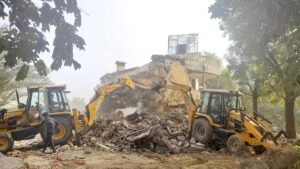
Dust is a major contributor to PM10 and also adds to PM2.5 after breaking down; that’s why GRAP escalations frequently include restrictions on construction/demolition.
Reuters
+1
3) Industrial sources and generators
This is particularly because some industrial fuels, stand-by diesel generators, and local pockets can markedly increase emissions when enforcement is uneven.
4) Waste/biomass burning
Local burning garbage, leaves, biomass can very badly deteriorate the neighborhood AQI. Even when stubble burning outside Delhi is not the only driver on a particular day, any regional smoke plus local emissions plus trapped air can escalate the smog.
- Regional transport of pollution
Delhi is located in a very large airshed. If the winds are blowing in those directions, pollutants from surrounding regions can easily be transported and then be trapped.
It’s for this reason that severe-plus episodes are dealt with as a regional emergency and not only as an isolated city problem.
Reuters
4) Why did the visibility get so low?
As people say, “Is it fog or pollution?” In severe-plus episodes, frequently it is both.
Fine particles, especially PM2.5, scatter and absorb light, reducing visibility.
The humid air also helps to form fog droplets and makes particles “grow,” thus making the haze thicker.
There were reports of visibility dropping drastically in parts of NCR during this episode-some reports even cited it at around a few hundred meters in pockets-slowing down traffic and increasing the risk of accidents.
Times of India
+1
The IMD bulletins around this window also talk about shallow to moderate fog and morning visibility impacts, which compounds the issue.
IMD Mausam
5) What is GRAP, and what happens under Stage IV?
GRAP-Graded Response Action Plan-is an emergency action framework in Delhi-NCR that escalates restrictions as the air worsens. Stage IV is its highest level invoked when air quality reaches the severe-plus range and authorities expect conditions to remain critical.
During this severe-plus spell, reports confirm Stage IV was implemented.
The Times of India
+1
Typical GRAP-IV actions (what it means in real life)
Different stages and orders can vary, but Stage IV commonly brings:
Construction and demolition stops (often wider in scope and more stringent than Stage III)
Stronger entry restrictions on trucks, particularly those that are older and more polluting.
Tighter curbs on diesel vehicles/older categories in parts of NCR
Administrative measures such as work-from-home recommendations/requirements for part of the offices
Reduced children’s outdoor exposure because of the need for education measures, such as hybrid classes or online options.
The report by Reuters, therefore, featured this episode and especially focused on restriction highlights such as a ban on older diesel trucks, the halting of construction projects, and a move toward hybrid education under Stage IV.
Reuters
Various reports also said that 50% work-from-home guidance and vehicle curbs are planned in the escalation of GRAP.
The Times of India
+1
- Impact on schools and children
Children are some of the most vulnerable during severe-plus days because:
Their lungs are still developing.
they inhale more air per kg of body mass compared to adults.
Outdoor assembly, sports, walking to transport, etc., are also included in school routines.
During this episode, media reports said that Delhi schools shifted to hybrid mode for several classes as the action plan GRAP-IV came into play. Its purpose would be to reduce exposure without necessarily ceasing learning altogether.
Times of India
+1
Practical takeaway: On severe-plus days, the goal is not “carry on normally with a mask.” The goal is reduce exposure time as much as possible, especially for kids.
7) Transportation and airport advisories
When visibility falls and smog thickens, the effect becomes visibly widespread and extends beyond health into daily operations:
Traffic slows down due to limited visibility for drivers, and as well fog and smog give the road surfaces an even more dangerous feel.
Times of India
+1
Even when airports do have instrument landing systems installed, flights can be delayed or diverted if visibility is below landing minima.
Delhi airport issued advisories asking passengers to check with airlines due to heavy smog conditions during this broader pollution spell.
The Economic Times
8) Health effects: what people may feel (and who is at highest risk)
Common symptoms people report during severe-plus AQI
Burning/itchy eyes, sore throat
Cough, chest tightness
headaches, weakness
shortness of breath during even light walking
worsening asthma/COPD symptoms, such as wheezing, needing inhaler more often
High-risk populations
Children and the elderly
pregnant individuals
those with asthma, COPD, or bronchitis
heart disease, hypertension
diabetics (specifically due to the fact that pollution can enhance inflammation and cardiovascular stress)
Important nuance: it’s not only people with prior illness but even healthy adults who can be affected at severe-plus AQI. That’s the whole point of calling it “emergency.”
If one experiences severe shortness of breath, pain in the chest, discoloration of lips to blue, confusion, or fainting, that is urgent—get to seek medical care quickly.
9) What you can do today – practical safety steps
These are some very realistic steps one might take with minimal financial investment in gadgets to cut exposure:
A) Reduce outdoor exposure time-biggest benefit
Avoid morning walks/exercise outdoors when smog + fog is thickest.
Shift activity indoors until AQI improves.
B) Wear a good mask in the open air.
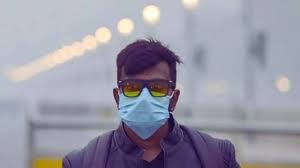
If you must go out, a well-fitting N95/FFP2/KN95 provides much better particle filtration than cloth masks.
C) Indoor: create one “cleaner air room
Keep the doors and windows closed during peak smog hours.
Run it in the room you spend the most time in, if you have an air purifier.
If you don’t, even the simple steps count: seal obvious gaps, avoid incense/candles, and don’t fry/smoke indoors.
D) Not to create pollution indoors
Don’t smoke indoors.
Do not burn mosquito coils or incense in closed rooms during severe attacks of the disease.
E) For asthma/COPD patients
Keep rescue inhaler available.
Follow your doctor’s action plan; don’t wait until symptoms become severe.
Consider tele-consult if symptoms are worsening.
10) Why constraints may seem extreme, yet are nevertheless applied.
People say: “Why should construction be stopped?” “Why are trucks being banned?” “Why be so hostile towards vehicles?” The reasoning behind it is:
Under severe-plus conditions, the atmosphere isn’t dispersing pollution.
The only way to prevent further buildup, then, is to reduce emissions quickly, particularly the largest and most easily controlled sources in the short term, such as dust-heavy activities and heavy diesel traffic. GRAP measures are “damage control” to prevent the situation from becoming even graver in the next 24-72 hours. According to Reuters, this moment is the worst air of the season, meriting the highest level of anti-pollution action, showing just how seriously authorities treat Stage IV. Reuters 11) When will relief come to Delhi? Relief is caused by weather changes, not by local actions alone: Stronger winds to disperse pollutants rainfall to wash away particles less humidity, fewer inversions an alteration in the wind direction for better ventilation IMD bulletins suggesting fog patterns also hint that unless wind picks up, it would remain difficult till morning. IMD Mausam So, constraints can prevent things from deteriorating further, but the actual improvement usually comes with changes in meteorology. 12) The bigger picture: why this repeats every year Delhi’s winter smog is recurring because the city-region has: high baseline emissions from traffic volume, dust, industry, and burning of garbage/waste, seasonal meteorology that captures the pollution, and a very large, interconnected airshed over the NCR and neighboring states. GRAP helps to keep emergencies at bay but generally needs long-term improvement: cleaner transport, and strict vehicle emission enforcement Dusting at the construction site+paved/clean roads Industrial fuel switching and compliance better waste management without open burning. region-wide coordination; air knows no borders.