‘Dhurandhar’: Secret behind Ranveer’s Hazma Ali Mazari’s look
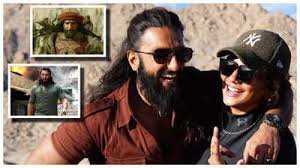
Dhurandhar’: The Secret Behind Ranveer Singh’s Hazma Ali Mazari Look
Ranveer Singh has carved a niche for himself in Indian cinema as an actor who fully dissolves into his characters. From the raw aggression of Padmaavat’s Alauddin Khilji to the restrained vulnerability of Gully Boy’s Murad, Ranveer’s performances are often as remembered for their physical transformation as for their emotional depth. With Dhurandhar, the actor pushes the envelope once again, unveiling a striking new avatar as Hazma Ali Mazari—a look that has sparked intense curiosity, speculation, and discussion among fans and film critics alike.
First things first, Hazma Ali Mazari’s look is so understated when pitched against Ranveer’s flamboyant public persona. And yet, it is precisely this restrained, solemn, and multidimensional look that renders it so powerful. There is a studied amalgam of historical research, character psychology, costume design, body language training, and Ranveer’s own identifiable obsessive commitment to veracity that lies at the root of this transformation. The look is not merely about the way in which the character appears onscreen but also what Hazma Ali Mazari represents in the greater schematic of Dhurandhar.
Understanding ‘Dhurandhar’ and Hazma Ali Mazari
Dhurandhar is packaged as a brooding, political drama about power, ideology, and the battle for survival in a gray world. The word itself suggests a shrewd, strategic person with the wherewithal to manipulate a situation—an extremely calculated “mastermind” who works silently rather than loudly. Hazma Ali Mazari, essayed by Ranveer Singh, fits that bill with absolute perfection.
Hazma is not a flamboyant hero; instead, he is a nonhero, who projects his charisma not through loud speech but silence, through stillness, and an intense gaze into your inner being. His character reportedly draws inspiration from some real-life figures in the shadows—people whose presence was felt more than seen. This thematic foundation directly influenced Ranveer’s look, a visual representation of inner restraint and psychological depth.
The less is more look is behind the philosophy.
One of the biggest surprises about Ranveer’s Hazma Ali Mazari look is how restrained it is. Known for bold fashion choices off-screen, Ranveer deliberately chose to steer clear of anything flashy for this role. The creative team subscribed to a “less is more” philosophy to ensure that every visual detail served a purpose.
The very muted color palette, predominantly characterized by earthy browns, faded blacks, greys, and olive tones, speaks volumes of a man who merges with his surroundings. He is not one to draw attention to himself; survival exists in the form of not being noticed at all. His clothes are worn down, practical, and lived-in, telling tales of years spent struggling, on the move, and in inner turmoil. This befits the wider aesthetic of the film, aiming for rawness, authenticity, and more earthly rather than cinematic appeal.
Costume Design: The Art of Telling the Unspoken
The costume designers working on Dhurandhar reportedly spent months researching regional attire, historical references, and socio-political contexts relevant to Hazma’s background. The goal was not to create a “heroic” costume but to design clothing that feels organic to the character’s life.
Hazma Ali Mazari’s wardrobe was devoid of sharp tailoring or pristine fabrics; rather, it was about rough textures, loose silhouettes, and subtle layering. This spoke of practicality and adaptability— qualities that must come in handy when traveling through dangerous and unpredictable terrain. Even the hang of the clothes from Ranveer’s body became a subconscious part of the character’s psychology, looking quite enclosed, almost drawn within, like he was protecting himself from the world.
Hair and Grooming: Controlled Chaos
One of the most spoken-about aspects of Hazma Ali Mazari’s appearance would be his hair and beard. Different from Ranveer’s usual well-styled appearances, this look enjoys imperfection. The hair looks a little disheveled and yet not careless. The beard is rugged, uneven, and as natural as possible, hinting at a man who puts survival before appearance.
This is a grooming choice that speaks a lot about Hazma’s interior. He is not uncaring about his appearance; he simply does not have the luxury for it. The controlled chaos of his appearance mirrors the turmoil inside him, a man who is balancing strategy, fear, and conviction all the time. Ranveer reportedly avoided frequent grooming during the filming to let his hair and beard grow and fall naturally with the journey of the character.
Physical Change and Body Expression
Beyond costumes and grooming, Ranveer Singh’s physicality does a lot of heavy lifting in selling Hazma Ali Mazari. This actor has repeatedly used his body as a tool for telling stories, but never as much as he does in Dhurandhar.
Ranveer takes on a slightly bent structure of the torso, subtly rounded shoulders, and measured movements. Hazma doesn’t walk with swagger; he moves cautiously, as if he is constantly judging his surroundings. There is minimum gesticulation and his expressions are controlled. This is in complete contrast to Ranveer’s energetic real-life persona, which just elevates this transformation.
The way Hazma sits, stands, or even looks towards other characters speaks to authority without the need for aggression. That is to say, it speaks of a man who, very deeply, understands power and knows generally that true control lies not in noise but in silence.
Eyes as an Emotional Anchor
Perhaps the most striking element of Hazma Ali Mazari’s look has to be Ranveer Singh’s usage of the eyes. In many stills and teaser visuals, Hazma’s gaze looks intense, watchful, and deeply introspective, as if he is always thinking several steps ahead and observing rather than reacting.
By account, Ranveer worked closely with the director to develop this aspect of the character. Without succumbing to dramatic dialogue delivery, he uses interminable silences and steadfast eye contact to convey tension and authority. He allows Hazma to feel unpredictable and dangerous-not because of overt violence, but because of his calculated calm.
Psychological Preparation: Becoming Hazma
Ranveer Singh’s transformations are never superficial. For Dhurandhar, he reportedly delved deep into the psychological world of Hazma Ali Mazari. This meant much study of political figures, revolutionaries, and strategists who worked under pressure and threat at all times.
By knowing the mental load such a person may carry within, Ranveer could design the look of Hazma as an extension of his inner life. The tired eyes, guarding posture, and subdued attire result from this psychological work at the back. In fact, the look is not imposed on the character but effortlessly flows out from what Hazma is.
Director’s Vision and Combined Effort
Another parallel that supports the success of Hazma Ali Mazari’s look is the perfect clarity of the director’s vision. Rather than making him appear stylized or more glorified, the director opted for realism and subtlety. This alone would call for intense collaboration between the actor, costume designers, makeup artists, and cinematographers.
As far as the context goes, lightning also plays a huge role. Hazma can often be seen in low light, shrouded in shadows, and dull settings, which enhances the mystery surrounding him. The visual language of the film ensures that his look never feels theatrical; it feels lived-in and believable.
Breaking the ‘Ranveer Singh Image’
One of the most significant achievements in Hazma Ali Mazari’s look is how well it removes Ranveer Singh from his star persona. Audiences accustomed to Ranveer’s high-energy roles and flamboyant style may initially struggle to recognize him. This is a well thought out creative decision which reinforces the seriousness of Dhurandhar.
Shedding his star image, Ranveer lets the audience think of Hazma as a character and not a celebrity. This becomes an important way to address the film, which relies a lot on immersion and emotional realism. The look acts as a bridge to pull the audience into Hazma’s world without distraction.
Symbolism inbuilt into an appearance
Every aspect of Hazma Ali Mazari’s appearance is symbolic of something. The use of subdued colors reflects moral ambiguity. The worn textures reflect sacrifice and endurance. The restricted grooming reflects the discipline of a man Inside, hardened by the realities. These various elements together present a visual metaphor of a man shaped by conflict, ideology, and survival.
In that sense, Hazma’s look is not about realism; it’s about storytelling. It speaks of power, invisibility, and resilience without even a line of dialogue.
Audience Reaction and Expectations
Ever since the first visuals from Dhurandhar came out, the look of Hazma Ali Mazari has been the talk of the town. While fans have been all praise for Ranveer’s commitment to transformation, critics have pointed out maturity and restraint in the design. For many, this role may just prove to be the turning point in Ranveer’s career, a deeper foray into complex, morally layered characters.
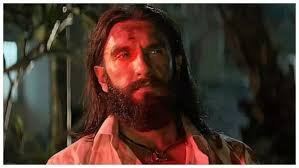
This look has raised expectations about the film itself. If the way it looks is anything to go by, Dhurandhar assures a sensitive narrative that’s high on content rather than spectacle value. Conclusion: A look that redefines transformation. What makes Ranveer Singh transform into Hazma Ali Mazari in Dhurandhar is not some inspired dramatic makeup or a radically changed physical on-screen appearance; it is restraint, and deep understanding of the character, required for dealing with the said subject. Here, transformation is based on psyche, realism, and collaboration rather than superficial spectacles. Hazma Ali Mazari’s appearance is a silent statement, a reminder that the most powerful characters are often the ones that do not loudly announce their arrival. Through this look, Ranveer Singh once again proves that true transformation in cinema is not about looking different but being different. As audiences await the release of Dhurandhar, one thing is already clear: Hazma Ali Mazari will be remembered not just for how he looks but for what that look reveals about the soul of the character. If you wish, I can also: