India an ‘essential’ U.S. partner in Indo-Pacific, its rise is good for American interests, says top Pentagon official
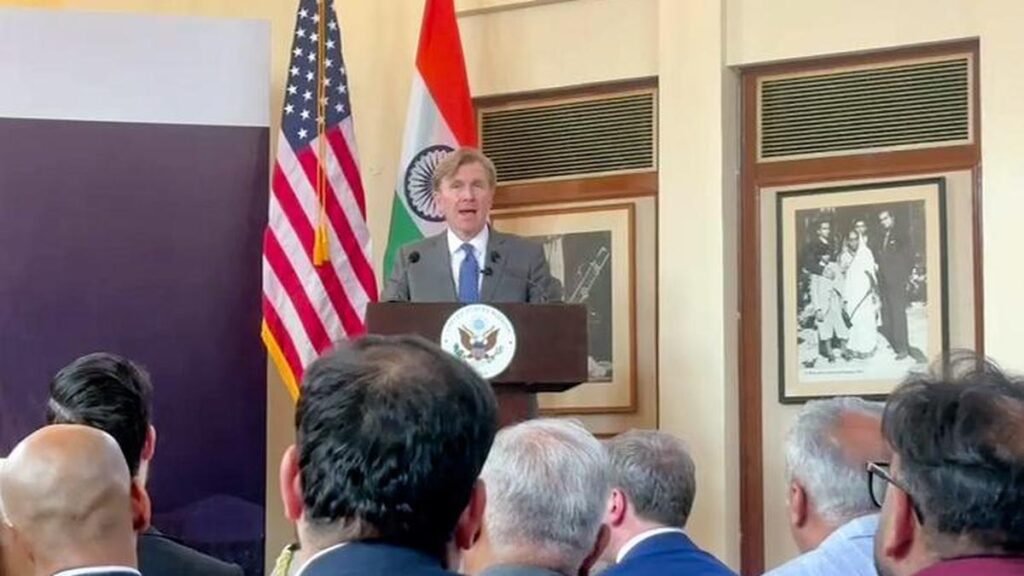
India being described as an “essential partner” of the United States in the Indo-Pacific reflects a major shift in global geopolitics. This statement—often made by senior officials at the Pentagon—is not just diplomatic language. It highlights how deeply interconnected U.S. and Indian strategic, economic, and security interests have become in recent years.
Below is a detailed, structured explanation of this development, covering historical context, strategic motivations, economic ties, military cooperation, regional implications, and future prospects.
1. Understanding the Indo-Pacific Concept
The term Indo-Pacific refers to a vast geographic region stretching from the eastern coast of Africa to the western shores of the Americas. It includes major maritime routes, emerging economies, and key global chokepoints.
Why the Indo-Pacific matters
- It carries over 60% of global trade
- It includes rising powers like India and China
- It is central to global supply chains and energy flows
The U.S. has increasingly focused on this region, especially as China’s influence has grown.
2. Why the U.S. Calls India an “Essential Partner”
2.1 Strategic Location
India sits at the crossroads of major sea lanes:
- Near the Indian Ocean
- Close to critical trade routes like the Strait of Hormuz and Malacca Strait
This makes India crucial for:
- Maritime security
- Trade protection
- Naval cooperation
2.2 Democratic Values
Both the U.S. and India are democracies. This shared political framework helps:
- Build trust
- Promote a rules-based international order
- Counter authoritarian influence
2.3 Balancing China
A major reason for the partnership is the rise of China:
- China’s military expansion
- Territorial disputes in South China Sea
- Increasing influence in Asia
The U.S. sees India as a counterbalance to China’s power.
3. Historical Evolution of U.S.-India Relations
3.1 Cold War Era
- India followed a policy of non-alignment
- The U.S. was closer to Pakistan
- Relations were limited and sometimes tense
3.2 Post-1991 Economic Reforms
After India liberalized its economy:
- Trade and investment increased
- Diplomatic relations improved
3.3 Civil Nuclear Agreement (2008)
A turning point:
- The U.S. recognized India as a responsible nuclear power
- Opened doors for deeper strategic ties
3.4 Modern Era
Today, the partnership includes:
- Defense cooperation
- Technology sharing
- Joint military exercises
4. Defense and Military Cooperation
4.1 Key Agreements
India and the U.S. have signed major defense agreements:
- LEMOA (Logistics Exchange Memorandum of Agreement)
- COMCASA (Communications Compatibility and Security Agreement)
- BECA (Basic Exchange and Cooperation Agreement)
These allow:
- Sharing of logistics and intelligence
- Real-time communication
- Geospatial data exchange
4.2 Joint Military Exercises
Examples include:
- Malabar Naval Exercise
- Army and air force drills
These exercises improve:
- Interoperability
- Coordination during crises
4.3 Defense Trade
- India buys advanced U.S. equipment:
- Helicopters
- Surveillance systems
- Growing co-production and technology transfer
5. The Role of QUAD
The QUAD (Quadrilateral Security Dialogue) is a key platform involving:
- United States
- India
- Japan
- Australia
Objectives:
- Ensure a free and open Indo-Pacific
- Promote maritime security
- Counter coercive actions
India’s role in QUAD strengthens its importance for U.S. strategy.
6. Economic and Trade Relations
6.1 Trade Growth
- Bilateral trade exceeds $190 billion
- The U.S. is one of India’s largest trading partners
6.2 Technology Cooperation
Areas of collaboration:
- Artificial Intelligence
- Semiconductor manufacturing
- Space technology
6.3 Supply Chain Diversification
The U.S. wants to reduce dependence on China:
- India is seen as an alternative manufacturing hub
7. India’s Rise and Why It Benefits the U.S.
The Pentagon official’s statement that India’s rise is good for American interests reflects multiple factors:
7.1 Economic Growth
- India is one of the fastest-growing major economies
- A strong Indian economy boosts global stability
7.2 Market Opportunities
- Large consumer base
- Expanding middle class
7.3 Strategic Stability
A stronger India:
- Helps maintain balance in Asia
- Prevents dominance by any single power
8. Maritime Security and Indian Ocean Importance
The Indian Ocean is vital for:
- Energy transport
- Trade routes
India plays a key role in:
- Anti-piracy operations
- Monitoring sea lanes
- Disaster relief operations
The U.S. benefits from:
- Shared responsibility
- Reduced burden on its navy
9. Challenges in the Partnership
Despite strong ties, there are challenges:
9.1 Strategic Autonomy
India maintains independence in foreign policy:
- Does not fully align with U.S. positions
- Maintains ties with Russia
9.2 Trade Disputes
- Tariffs and market access issues
- Differences in economic policies
9.3 Human Rights Concerns
Occasional criticism from the U.S. on:
- Democratic practices
- Civil liberties
10. India’s Multi-Alignment Strategy
India follows a multi-alignment approach:
- Strong ties with the U.S.
- Continued relations with Russia
- Engagement with global south
This allows India to:
- Maximize benefits
- Avoid overdependence on any one country
11. Technology and Defense Innovation
New initiatives include:
- Co-development of defense technologies
- Semiconductor partnerships
- Space cooperation (e.g., NASA-ISRO collaboration)
These strengthen long-term strategic ties.
12. Regional Impact
12.1 South Asia
India’s rise affects:
- Pakistan
- Bangladesh
- Sri Lanka
12.2 Southeast Asia
India’s engagement:
- Strengthens ASEAN ties
- Offers alternatives to Chinese influence
12.3 Global South Leadership
India represents developing nations:
- Advocates for equitable global policies
13. Future Outlook
13.1 Deeper Defense Ties
- More joint exercises
- Advanced weapon systems cooperation
13.2 Economic Expansion
- Trade agreements
- Investment growth
13.3 Strategic Alignment
- Continued focus on Indo-Pacific stability
14. Why This Statement Matters
When a top Pentagon official calls India “essential,” it signals:
- A long-term strategic commitment
- Recognition of India as a major global power
- A shift from transactional relations to strategic partnership
The U.S.-India relationship has transformed from cautious engagement to a robust strategic partnership. In the Indo-Pacific, where global power dynamics are rapidly evolving, India plays a critical role in maintaining balance, ensuring maritime security, and supporting economic stability.
For the United States, India is not just a partner—it is a pillar of its Indo-Pacific strategy. For India, the partnership provides access to technology, defense capabilities, and global influence.
The statement by the Pentagon official reflects a broader reality:
👉 India’s rise is no longer just India’s story—it is a key part of the global strategic future.