India poised for next phase of Multi-Trillion-Doller wealth creation: MOSL
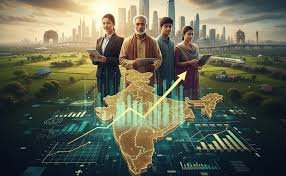
India being described as “poised for the next phase of multi-trillion-dollar wealth creation”, as underlined by Motilal Oswal Securities, reflects a strong conjunction of economic maturity, demographic strength, policy stability, corporate transformation, and deepening capital markets. This is not merely a statement born of optimism; it is steely-eyed realpolitik founded on structural changes that have been unfolding over the last two decades and are now reaching a scale where wealth creation can accelerate exponentially. India’s transition has been from a catch-up economy to a compounding growth economy, in which productivity gains, formalization, innovation, and financialization work together to result in sustained long-term value. During this phase, the creation of wealth is no longer insulated within a few sectors or family-owned enterprises; it is becoming broad-based, institutionalized, and increasingly accessible to households, entrepreneurs, and global investors alike.
At the heart of this wealth creation story lies India’s macro-economic evolution. Over the past several years, India has emerged as the fastest-growing large economy in the world, supported by prudent fiscal management, resilient domestic demand, and improving external balances. Inflation, while periodically volatile, has largely remained within manageable limits compared to many global peers. Foreign exchange reserves provide a strong buffer against external shocks, and India’s current account deficit remains structurally sustainable due to strong services exports and remittance inflows. This macro stability is critical because wealth creation thrives in predictable environments. Investors-both domestic and foreign-are willing to commit long-term capital when currency risk, inflation risk, and policy uncertainty are contained. MoSL’s assessment underlines the fact that India’s economic foundation today is far stronger than during previous growth cycles, making the upcoming wealth creation phase more durable and less speculative.
Demographics is another decisive force in shaping India’s wealth trajectory. With its median age significantly lower than that of either China, Europe, or the United States, India has the world’s youngest large population. This makes for a growing workforce, an expanding consumer base, and rising household incomes. As millions of Indians enter their prime earnings years, savings rates start to go up, consumption patterns get upgraded, and their capacity to invest increases. Over time, this sets up a virtuous cycle where rising incomes spur demand, demand drives corporate earnings, and corporate growth feeds back into employment and wages. Unlike aging economies, which struggle to sustain growth, India’s demographic structure provides a very long runway for expansion, for which multi-trillion-dollar wealth creation is not just possible but is actually structurally supported.
A very important trend highlighted by MoSL is the transformation of India’s corporate sector. Over the past decade, Indian companies have undergone a painful but necessary clean-up. Balance sheets have been repaired, leverage has fallen, governance standards have improved, and capital allocation discipline has hardened. The aftermath of the NPA crisis brought in a stronger banking system and pushed inefficient businesses out of the market. Today, corporate India is leaner and more competitive, better prepared to scale. Profitability metrics have improved, RoE has stabilized at healthier levels, and cash flows are increasingly being reinvested into capacity expansion, technology, and global market penetration. Wealth creation in equity markets, after all, depends on earnings growth. India’s corporate earnings cycle seems to be entering a long-term uptrend.
In this narrative of wealth creation, the role of government policy cannot be overstated. Over the last ten years, India has pursued a set of structural reforms that have altered the very fabric of the way the economy works. The Goods and Services Tax melded the domestic market, minimized distortions, and hastened formalization. The Insolvency and Bankruptcy Code ensured better credit discipline and recycling of capital. Digital public infrastructure like Aadhaar, UPI, and the JAM trinity (Jan Dhan, Aadhaar, Mobile) has cut down transaction costs, widened financial inclusion, and spurred innovation at scale. Production-Linked Incentive schemes are encouraging domestic manufacturing and global supply chain integration. Together, these reforms are laying the foundation for sustained gains in productivity-a prerequisite for long-term wealth creation.
Another potent driver of India’s multi-trillion-dollar wealth potential is the financialization of household savings. Traditionally, Indian households favored physical assets such as gold and real estate. While these assets provided protection against inflation, they often lacked liquidity and transparency and scalability of wealth-creation potential. Over the last decade, there has emerged a clear shift toward financial assets, particularly equities, mutual funds, insurance, and pension products. Systematic Investment Plans have democratized equity investing, bringing millions of first-time investors into capital markets. This steady flow of domestic capital has reduced India’s dependence on volatile foreign flows and created a stable base for long-term market growth. MoSL hence highlights that as financial literacy improves and trust in capital markets deepens, household participation will continue to rise and fuel sustained wealth creation.
The equity markets of India are themselves seeing a structural re-rating. Market capitalization has increased manifold, driven both by price appreciation and the listing of several new-age companies from areas such as technology, fintech, renewable energy, healthcare, and consumer services. The market is getting broader, with mid-cap and small-cap companies emerging as meaningful contributors to value creation. Importantly, India is no longer just a cyclical emerging market trade; it is fast being perceived as a structural growth story. The world is allocating capital to India not for mere diversification but as a source of long-term compounding. This mindset change justifies higher valuation multiples and continued capital inflows, which in turn feed into the virtuous wealth creation cycle.
Another foundation stone of MoSL’s optimism is the manufacturing renaissance underway in India. Geopolitical realignments, supply chain diversification, and the “China+1” strategy are offering India unprecedented opportunities to integrate with global manufacturing networks. Fresh investments are coming up in electronics, semiconductors, automobiles, defense, chemicals, and renewable energy equipment. As manufacturing scales up, it generates employment, boosts exports, and deepens industrial capabilities. Manufacturing-led growth has traditionally been a strong wealth creation engine in countries such as Japan, South Korea, and China. India seems to be entering a similar phase but with its own unique model that stitches together services strength with industrial expansion.
The services sector has for long been India’s growth engine and continues to evolve and move up the value chain. Information technology services are transitioning from cost-arbitrage models to digital transformation, artificial intelligence, cloud computing, and platform-based offerings. Financial services are growing beyond traditional banking into fintech, wealth management, insurance, and capital markets. Healthcare, education, logistics, and professional services are scaling both domestically and globally. These high-value services assure strong margins, intellectual capital, and global competitiveness-all combining to ensure sustained wealth creation. According to MoSL, there is also a view that dominance in services complements India’s thrust on manufacturing, thus making its growth model not only balanced but also resilient.

The other pillar supporting the next wealth creation phase in India would be Infrastructure Development. Massively, roads, railways, ports, airports, power, and digital connectivity are receiving investments that reduce logistics costs and boost productivity across all sectors. Public capital expenditure acts as a catalyst to crowd in private investment and unlock new growth opportunities. Infrastructure increases not only the pace of short-term economic activity but also enhances long-term economic growth potential. With improved connectivity, regional disparities go down, enabling more inclusive wealth creation across states and districts. Such broadening of economic participation strengthens social stability and expands the base of consumers and investors. Technology and innovation are increasingly central to India’s economic transformation. Start-ups and new-age enterprises disrupt traditional business models, improving efficiency and creating new markets altogether. India’s start-up ecosystem is amongst the largest in the world, supported by a growing pool of skilled talent, venture capital, and supportive regulation. Not all start-ups will succeed, but the overall innovation ecosystem enhances productivity, encourages entrepreneurship, and accelerates wealth creation. Many of these companies are now reaching scale and profitability, transitioning from speculative growth stories to sustainable value creators. From a global perspective, India’s growing geopolitical and economic relevance also strengthens the case for wealth creation. With the dynamics of power fast-changing in the world, India has emerged as the strategic partner of choice for most major economies. This implies greater relationships in trade, technology transfer, defense, and investment flows. Global firms are not just selling to India; they are investing in India as a production base and center for innovation. This integration into world value chains leads to enhanced earnings visibility for the companies of India and long-term capital formation. MoSL also underlines the fact that the creation of wealth in this second phase will be much more inclusive and diversified. In none of the previous cycles, where gains were very concentrated in a few sectors or urban hubs, is the current phase diffusing across industries, regions, and market capitalizations. Rural consumption is strengthening, tier-2 and tier-3 cities are emerging as growth hubs, and smaller enterprises are beneficiaries of formalization and digital access. Such broad-based growth reduces systemic risk and enhances the sustainability of wealth creation over time. Equally, one must concede this journey carries its own set of risks: Global economic slowdowns, geopolitical tensions, climate challenges, and domestic policy execution risks can make the ride volatile. The corrective phases of the market are a given, and all investments will not yield outsize returns. What MoSL foresaw is not a linear path but a long-term trajectory at which disciplined investing, along with earnings growth and structural reforms, drives compounding of wealth over decades. For investors, this implies adhering to quality businesses with strong balance sheets, governance, and long-term themes rather than mere speculation for the near term. A multi-trillion-dollar wealth creation phase that India stands at the cusp of today is the consequence of deep structural changes rather than cyclical optimism. Convergence of strong macro fundamentals, favorable demographics, corporate transformation, policy reforms, financialization of savings, infrastructure expansion, and global integration into a powerful growth ecosystem presents a compelling opportunity in this market. According to Motilal Oswal Securities, this phase has the potential to reshape not only capital markets but also household prosperity, entrepreneurial opportunity, and India’s position in the global economic order. The next chapter of India’s growth story-in case discipline, inclusivity, and long-term vision are maintained-may mark one of the most significant wealth creation periods in the nation’s history.