Indian Rupee Dips — The Indian rupee weakened slightly despite a softer U.S. dollar, as hedging and corporate dollar demand persisted.
The recent fall in the value of the Indian rupee, even when the U.S. dollar appears to be weakening in the global market, underscores the mixed and paradoxical nature of the global foreign exchange market. On the face of it, a weak U.S. dollar generally has a positive effect on the value of the rupee, as there are underlying capital outflows from the dollar to more lucrative markets, which in this case are the growth markets. But, the reality is that the foreign exchange markets are never driven by single-variable influences. In this instance, the collective effect of market participants’ constant hedging activities, along with dollar demands from corporates, has trumped the positive effect of the falling U.S. dollar, pressuring the rupee to fall, albeit marginally. In this instance, an understanding of the various global influences, market conditions, and activities of the rupee’s domestic market participants can help derive the rationale for this phenomenon.
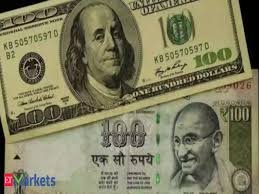
Globally, the U.S. dollar has come under pressure as there is an expectation that the U.S. Federal Reserve may soon conclude its sharply hawkish monetary cycle. With the expectation that U.S. interest rates may stabilize or eventually decrease, the relative value of dollar-denominated assets is expected to decline. This is because the dollar is expected to come under pressure against the euro, yen, and pound, and eventually support the Indian rupee and the currencies of other emerging economies. For the Indian economy, a weakening dollar is expected to ease inflation and secure more foreign inflows into the Indian stock market. But the Indian rupee is not going strong in the international market despite these favorable conditions because market microstructures can affect the entire process.
Hedging has been identified as another major factor for the weakness of the rupee. It has been observed that most Indian corporates with exposure to foreign currencies, especially importers, exporters, and those with foreign loans, hedge their currency exposure to mitigate exchange rate risks. When market uncertainties rise or corporates feel that uncertainties in the rupee’s movement may be around the corner, they usually turn to hedging. This usually includes purchasing dollars either in the forward market or in the current market, thus increasing demand for the dollar and hence weakening the rupee. Even if the dollar has been weakening in international markets, demand for the dollar due to hedging activities within India has caused pressure on the rupee. Recently, fears for growth imbalances and different growth recovery patterns for major economies have caused corporates in India to be cautious, thereby promoting hedging demand and hence holding back any appreciation for the rupee.
There have been demands for corporate dollars as well, which have been causing a decline for the rupee. As already stated, India is a net-importer country for commodities such as crude oil imports, gas imports, coal imports, components imports, and capital goods imports. Every time these imports are paid for, those who are required to make these purchases are forced to acquire dollars, thereby triggering demand in foreign markets. Even if oil pricing may vary from time to time, due to their sheer magnitude in India’s imports, oil-related demands for dollars continue to exist in markets. Additionally, most corporate companies in India may have foreign operations or may have acquired companies or may have to pay off foreign loans within which they are required to pay back forex; thus, their demand for dollars pulls down the rupee even if there isn’t a strong dollar in global markets.
Another significant factor that affects the rupee is the trend of foreign portfolio investors, also known as FPIs. Even though equity investments in the Indian market have been relatively steady due to the strong domestic growth story as well as earnings, bond investments have been more sensitive to global interest rate scenarios. If the yields in the U.S. remain high or remain volatile, then certain foreign investors might want to remain invested in the U.S. as opposed to investing in emerging markets. Even small-scale outflows or moderated investments can cause the rupee to react significantly considering the size of foreign exchange transactions that take place daily. Another aspect is that FPIs usually hedge their exposure to foreign exchange when investing in the Indian economy. Such activities might include buying dollars forward.
Another factor influencing foreign exchange rates is domestic monetary policies. The Reserve Bank of India (RBI) has been carefully managing the country’s monetary policies by ensuring that inflation is moderated, but supporting the growth of the economy. Though the interest rates in India seem more attractive compared to most other developed nations, the RBI has also been actively adjusting liquidity and making adjustments in the foreign exchange market to avoid foreign exchange volatility. Generally, the RBI tries to smoothly manage sharp fluctuations rather than aligning with a particular foreign exchange rate. Therefore, the Indian rupee is gradually allowed to fluctuate according to market behavior. As corporate dollar demands pile up, the RBI might deliberately avoid affecting this behavior, causing a slight depreciation of the rupee.
Dynamics related to the trade balance further underscore the recent Rupee movements. Though the Indian exports have been robust in the services, pharma, and engineering segments, the world demand patterns have been sporadic, hit by leaner growth prospects in Europe and the Asian regions. Simultaneously, import patterns, including those related to energy and technology, continue to run strong. With the increased trade deficit, the overall demand for foreign currency increases, thereby further pressuring the rupee’s strength. Though the dollar’s strength patterns might reduce globally, the core trade deficits continue to create pressure upon the Rupee, the domestic currency. While the Rupee receives support from the services exports, including the IT and the other business sectors, the dollar inflows, to a slightly larger extent, do not necessarily happen at the same time, thereby creating disturbances in the foreign exchange market.

Market sentiment and expectations can also be factors that influence changes in the value of the currency. When traders and investors feel that the rupee can experience pressures of deprecation in the short term, they start buying the US dollar, adding further pressure to the deprecation of the rupee. Market sentiment and expectations can arise due to numerous factors, including risk sentiment globally, commodity prices, announcements by central banks, and macroeconomic announcements. Looking at the present scenario, the risk of slow growth of the global economy, along with possible fluctuations in the capital flows, has resulted in a cautious approach by the markets. Another set of factors that need consideration is related to seasonal demand for the dollar. There are certain months when demand for the dollar is strong due to dividends, foreign travel, education-related expenses, and repatriation of profits realized by corporations. These seasonal outflows bring down the rupee value somewhat on a temporary basis. Also, certain corporations tend to front-load their hedging requirements or payment requirements towards the end of a financial/ calendar year; this sometimes leads to temporary spikes in dollar demand irrespective of fundamental considerations. Although it’s true that the rupee experienced a slight downturn recently, it cannot be ignored that the depreciation of the rupee is quite moderate and manageable. When compared to other emerging market currencies, it can easily be stated that the Indian rupee is quite robust and resilient in nature, and this is true because of its strong forex reserves and effective management of the Reserve Bank of India. Another key point is that it acts as a quite effective buffer for the Indian rupee during global uncertainties. Looking ahead, to some extent, the future course of the rupee will be influenced by various global as well as homeland considerations. In the global realm, US monetary policy trends, US Treasury yield curves, and overall risk appetites will be critical in influencing rupee movement. Any weakening trend in the US dollar, in addition to positive global growth outlook, could, in particular, support the rupee in the longer term. In the homeland, overall inflation, growth, management of finances, as well as trade balances would be critical in shaping rupee fortunes. With continued positive inflows and growth performance, fundamentals would, to an extent, mitigate rupee pressures of hedging and business dollar requirements. Conclusion
In light of the above points, it can safely be said that despite the weakening Indian rupee and a weak U.S. dollar, the Indian rupee’s recent decline is a complex scenario. While there have been continuous hedging, corporate dollar purchases, and other factors, these factors have clearly worked against weakening the Indian rupee, despite a weak U.S. dollar. Hence, this particular development has brought forth the realities associated with currency fluctuations. The strengths associated with the Indian economy, backed by a solid foreign exchange reserve, shall establish a supporting structure for a stable Indian rupee in the long run. The recent decline in the Indian rupee, therefore, should not come as a cause for concern, but only as a means to understand the complexities associated with currency rates.