India’s semiconductor market to reach $300 billion by 2035: Deloitte report
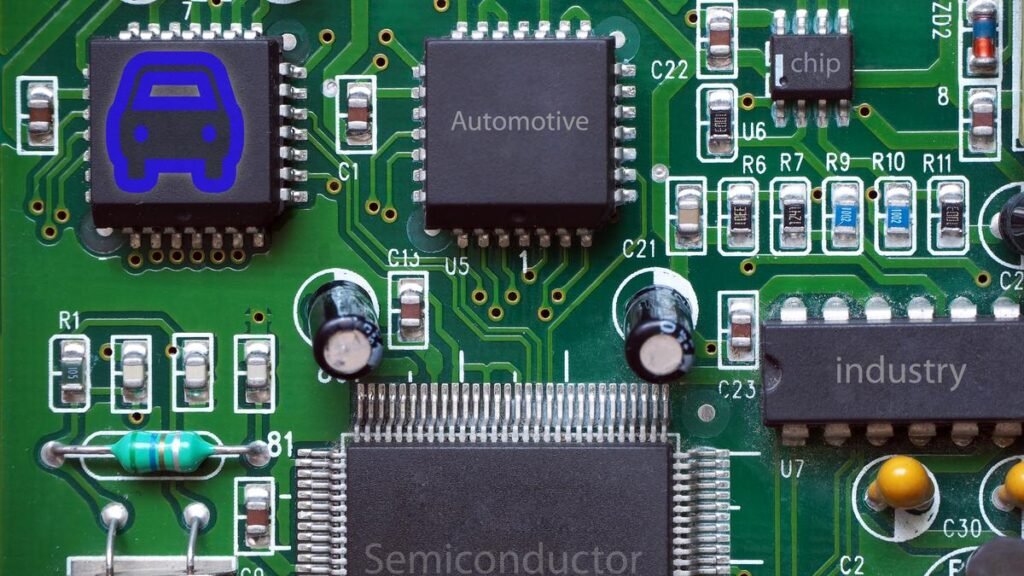
Indias semiconductor industry is going through a change. According to a projection by Deloitte the countrys semiconductor market could grow to around $300 billion by 2035. This is one of the growth rates among major economies. This growth is not just because of increasing demand in India. Also because the country wants to become a global hub for chip design, manufacturing and supply chains.
1. Why Semiconductors Matter
Semiconductors are the base of technology. They power things like:
* Smartphones and laptops
* vehicles
* Artificial intelligence systems
* Telecom networks
* Defence and space systems
In terms no digital economy can work without chips. That’s why countries around the world are trying to secure semiconductor supply chains. India, which used to be a consumer than a producer is now trying to make a big change.
2. Indias Semiconductor Market Growth Journey
Indias semiconductor market has grown fast over the past decade. It was $22 billion in 2019 and its expected to be around $64 billion by 2026. By 2030 it could be around $100-110 billion. By 2035 it could reach $300 billion. This is growth, not linear growth.
The growth pattern can be divided into three phases:
* phase: consumption growth
* Middle phase: ecosystem building
* Future phase: manufacturing and exports
3. What the $300 Billion Projection Means
A $300 billion semiconductor market includes consumption, manufacturing output, design and services and exports. India already has around 20% of the worlds chip design engineers. The projection reflects the value of the ecosystem not just chip sales.
4. Key Drivers of Growth
4.1 Explosion in Electronics Demand
Indias electronics market is booming. There is a demand for smartphones, smart TVs, wearables and IoT devices. Deloitte noted that over 60% of semiconductor demand comes from devices, automotive and computing and storage.
4.2 Rise of Artificial Intelligence
Artificial intelligence is a catalyst for growth. Data centers need high-performance chips and the demand for GPUs and AI accelerators is rising globally. India will benefit from AI adoption, data localization and cloud infrastructure growth.
4.3 Electric Vehicles
Modern electric vehicles use 2-3 times chips than traditional vehicles. Indias push for vehicles will increase semiconductor demand. This includes battery management systems, autonomous features and power electronics.
4.4 5G and Future Telecom
Telecom infrastructure requires RF chips, network processors and optical components. With India rolling 5G nationwide semiconductor demand is accelerating.
4.5 Digital Economy Expansion
Indias digital transformation includes UPI and fintech e-commerce smart cities and digital governance. All these require computing power, which means more chips.
4.6 Data Center Boom
Indias data center capacity is expected to grow from around 1.5 GW to around 9 GW by 2030. This will lead to a demand for processors, memory chips and networking semiconductors.
5. Government Initiatives Driving Growth
Indias semiconductor ambitions are backed by policy support. The government has launched initiatives like the India Semiconductor Mission, Production Linked Incentive and Design Linked Incentive. These initiatives will encourage electronics manufacturing, chip design and innovation.
6. Indias Strength in Chip Design
India already has a base in semiconductor design. Around 20% of the worlds chip designers are in India. Major companies like Intel, Qualcomm and NVIDIA have a presence in India. This gives India an advantage as it can move from design to manufacturing to an ecosystem.
7. Manufacturing Push: The Biggest Shift
Historically India lacked fabrication units. Now the focus is on building semiconductor fabs, which’re capital-intensive and require advanced technology. There is also a focus on ATMP units which’re easier to set up.
8. Global Context: Why India Matters
The semiconductor industry is highly concentrated with countries like Taiwan, South Korea and the USA dominating the market. This creates supply chain risks. After COVID-19 and geopolitical tensions countries want to diversify their supply chains. India is emerging as an alternative.
9. Challenges India Must Overcome
Despite growth India faces several challenges. These include capital costs, technology gaps and a shortage of skilled workers. India also relies on countries for equipment and technology.
10. Role of Foreign Partnerships
India is collaborating with countries like the USA, Japan and Taiwan. These partnerships will help India get access to technology, investment and skills.
11. Sector-Wise Demand Breakdown
By 2030 and beyond key demand sectors will include mobile and consumer electronics, industrial and IoT, defence and aerospace and telecom.
12. Employment and Economic Impact
A $300 billion semiconductor ecosystem could generate millions of jobs. Boost manufacturing GDP. It could also reduce import dependency. Increase strategic autonomy.
13. Import Reduction and Self-Reliance
India currently imports most of its chips. With production the trade deficit will reduce and strategic autonomy will increase. The “Make in India” initiative will strengthen.
14. Export Potential
India can become a chip design hub, packaging and export center and alternative manufacturing base. This will boost foreign exchange earnings and global competitiveness.
15. Timeline to $300 Billion
The timeline to reach $300 billion can be divided into two phases: 2025-2030 when the ecosystem will be built and 2030-2035 when manufacturing will scale up and exports will grow.
16. Comparison with Countries
Indias advantage is its large domestic demand and skilled workforce. Other countries like Taiwan, the USA and China have their strengths but India has the potential to become a major player.
17. Role of Startups
Indias semiconductor startups are growing in areas like chip design, AI processors and automotive chips. Government support is accelerating this ecosystem.
18. Future Technologies Driving Growth
By 2035 demand will be driven by technologies like AI and machine learning, quantum computing, 6G networks, autonomous systems and smart infrastructure.
19. Risks to the Projection
The $300 billion target depends on fab execution, policy consistency and global demand trends. Risks include recession, tech disruptions and supply chain shocks.
The projection that Indias semiconductor market could reach $300 billion by 2035 reflects a structural transformation. It signals a shift from importer to producer a rise as a technology hub and integration into strategic supply chains. Indias strengths are its domestic market, skilled talent pool and strong policy support. However success depends on execution of manufacturing plans, global partnerships and continuous innovation. Indias semiconductor industry is going through a change and the country has the potential to become a major player, in the global market.