Israel, the U.S. and a war to build a unipolar West Asia
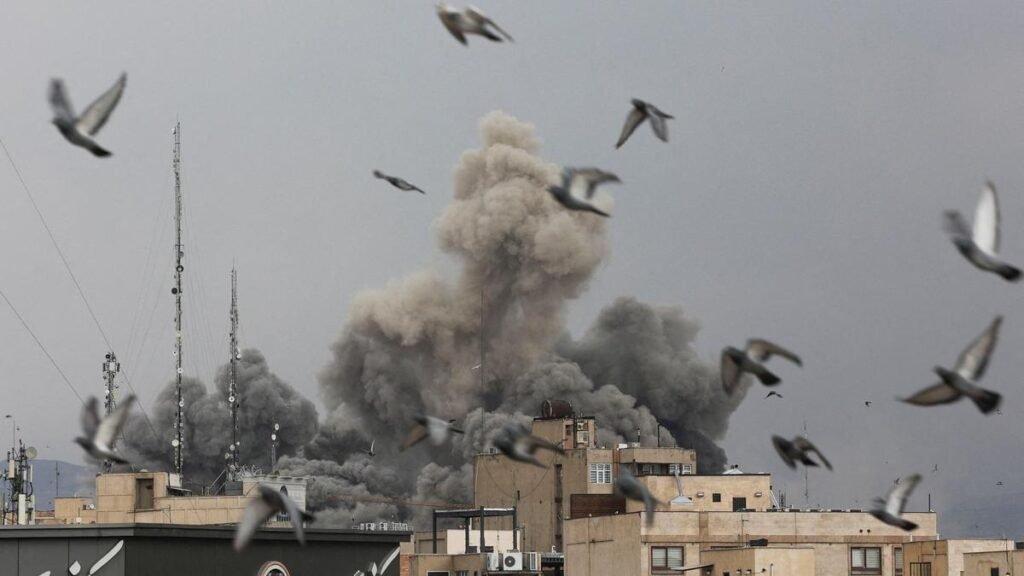
The idea that Israel and the United States are working together on a plan to control West Asia shows a long-standing debate about power, control and how countries get along in that area. To get this you have to look at the history of West Asia also known as the Middle East how the U.S. Makes foreign policy decisions Israels way of keeping safe the role Iran plays how Gulf states are forming alliances and the global competition between powers like Russia and China.
* **Understanding Unipolarity**: A unipolar system is when one powerful country or a group of aligned countries has a lot of influence over politics, military and economy in a region. Critics say Israel and the U.S. Are trying to stop powerful countries from rising in West Asia through military actions forming alliances and making diplomatic agreements.
* **What is Unipolarity?**: After the Soviet Union collapsed in 1991 the world had a moment of unipolarity led by the U.S. The U.S. Had military strength, economic power and influence in global institutions. In West Asia this meant the U.S. Was very involved from the Gulf War in 1991 to the Iraq invasion in 2003 and having bases in several countries.
* **Israels Security Doctrine**: Israel has always sought to be militarily superior in the region. Since 1948 Israel has fought wars with neighboring Arab states. Over time it shifted from wars to dealing with threats like Hezbollah in Lebanon and Hamas in Gaza. Israels strategy is based on deterrence, preemption, intelligence and strong ties with the U.S.
* **The Iran Factor**: The argument about a West Asia often focuses on containing Iran. Since Irans Islamic Revolution in 1979 Tehran has supported groups like Hezbollah in Lebanon and militias in Iraq. From the U.S. And Israels view Iran is a threat. The U.S. Withdrew from the Iran deal in 2018 and there have been sanctions, strikes and diplomatic isolation to weaken Iran.
* **Abraham Accords**: The normalization of relations between Israel and some Arab states under the Abraham Accords in 2020 is another part of the argument. Countries like the UAE and Bahrain formalized ties with Israel, which was supported by the U.S. The idea was to create a coalition of states to counter Iran.
* **Challenges to Unipolarity**: However the idea of a West Asia is contested. The region is more multipolar now than it was twenty years ago. Russias intervention in Syria and Chinas expanding influence challenge the notion that the U.S. And Israel can control the region.
* **Hedging Strategies**: Regional actors are pursuing hedging strategies. Gulf states maintain security ties with the U.S. While deepening relations with China. Turkey is balancing its NATO commitments with ambitions.
* ** Political Consequences**: Ongoing conflicts complicate the picture. Wars and instability create effects. Escalations can undermine investment flows, energy stability and global supply chains.
* **. Stability**: A unipolar order requires not military strength but also political consent from regional populations. Anti-American sentiment and perceptions of bias limit the sustainability of driven dominance. Sustainable stability often requires political settlements.
* **U.S. Dilemma**: The U.S. Faces a dilemma. It seeks to reduce military involvement in West Asia to focus on competition with China.. Instability in the region pulls Washington back into active engagement. Israel facing security concerns may take action that draws in U.S. Support.
* **Economic Integration**: Economic integration initiatives are sometimes framed as an alternative to conflict. Proposals for corridors aim to create interdependence that reduces incentives for war. However such initiatives depend on security conditions and trust among participating states.
The claim that Israel and the U.S. Are engaged in a war to build a West Asia reflects anxieties about power, security and sovereignty. There is evidence that both countries seek to maintain dominance and prevent hostile powers, particularly Iran from reshaping the regional balance. Through cooperation, alliance-building and diplomatic normalization they have attempted to construct a favorable security architecture. Yet structural realities complicate any path toward unipolar control. West Asia today is a contested arena where influence is negotiated resisted and constantly recalibrated. Whether the future brings renewed dominance by a bloc or a more complex balance, among multiple actors will depend on diplomatic choices, economic interdependence and the management of longstanding conflicts.