Nayara Energy hikes petrol price by ₹5 per litre, diesel by ₹3
The decision by Nayara Energy to increase petrol prices by ₹5 per litre and diesel by ₹3 per litre is a deal in Indias energy sector. This is not a normal price change it shows how complicated the world of energy is, with global politics, Indias economy and problems with how fuel is priced in India all playing a role.
1. What Happened?
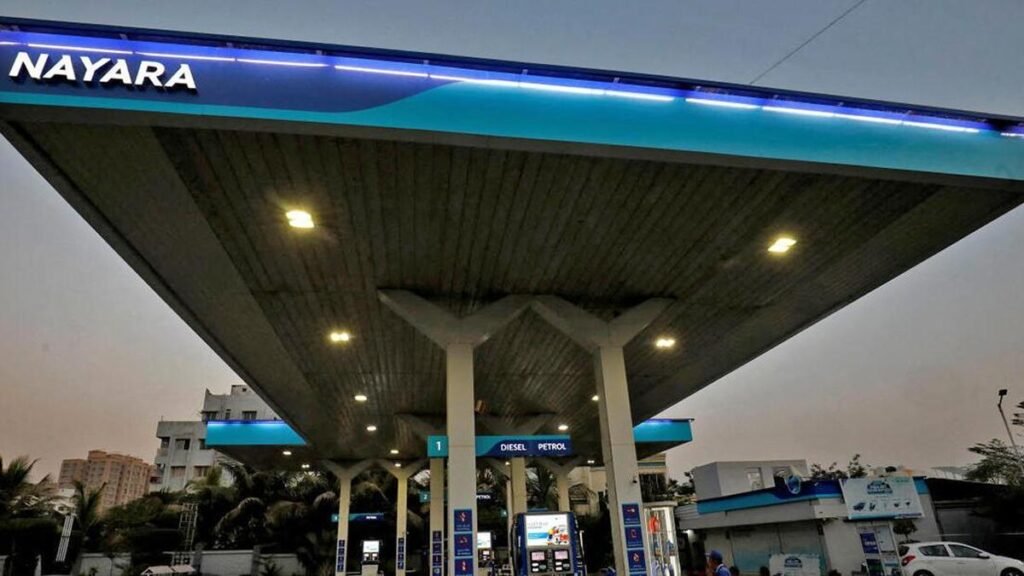
In March 2026 Nayara Energy, which is Indias private fuel seller, raised fuel prices at almost 7,000 petrol pumps across the country.
Petrol prices went up by ₹5 per litre.
Diesel prices went up by ₹3 per litre.
In some states petrol prices even went up to ₹5.30 per litre because of taxes.
This was a change after a long time of stable prices and it made Nayara the first big company in India to raise fuel prices during the global oil crisis.
2. About Nayara Energy
Nayara Energy is a private oil company in India.
It used to be called Essar Oil.
It is partly owned by Russias Rosneft.
It runs a refinery in Gujarat.
It has 6,000 to 7,000 petrol pumps over India.
Unlike government-owned oil companies Nayara Energy does not get any help from the government. It feels the effects of changes in the market more.
3. Key Reasons Behind the Price Hike
(A) Rise in Global Crude Oil Prices
The main reason for the price increase is that crude oil prices went up a lot.
Crude oil prices crossed $100 to $119 per barrel because of problems in the world and fights in West Asia.
When crude oil prices go up countries that import oil like India have to pay more.
Since India imports 85% of its crude oil any big change in the world directly affects the price of fuel in India.
(B) Geopolitical Tensions
The price hike is closely linked to the fight involving the United States, Israel and Iran.
This fight has disrupted the supply of oil made it more risky to buy oil and created uncertainty in the energy market.
As a result companies like Nayara Energy had to act
(C) Weak Rupee
Another big factor is that the value of the Indian rupee went down.
When the rupee is weak it costs more to import oil.
Oil is bought and sold in US dollars so even if crude oil prices do not change, a weak rupee means costs.
The combined effect of crude oil prices and a weak rupee is that it costs even more to buy oil.
(D) No Government Help for Private Companies
This is one of the important reasons for the price hike.
Government-owned companies often absorb losses. Private companies like Nayara Energy do not get any help.
Because of this government-owned companies kept selling fuel at prices but Nayara Energy had to pass the higher costs to the consumers.
(E) Rising Refining Costs
It has also become more expensive to turn oil into petrol and diesel.
The cost of refining has gone up a lot and the cost of running the refineries has also increased.
To stay in business Nayara Energy had to adjust the prices of petrol and diesel.
(F) Refinery Shutdown
Nayara Energy announced that it would shut down its refinery in Vadinar for some time to do maintenance work.
This created worries about whether there would be fuel and whether there would be shortages.
Such worries can make companies increase prices before the problem actually happens.
4. Why Only Nayara Energy Increased Prices?
A big question is why other companies did not increase prices.
Government-owned oil companies like Indian Oil, Bharat Petroleum and Hindustan Petroleum have not increased prices yet.
The reason is that they are under pressure from the government and they often absorb losses to control inflation.
In fact they are reportedly losing a lot of money on every litre of petrol and diesel they sell.
Private companies like Nayara Energy cannot afford to lose money for a time and they do not get any help from the government so they have to follow the market and adjust their prices.
5. Impact on Consumers
(A) Immediate Financial Burden
The price hike directly affects people who use their cars or bikes every day transport businesses and farmers who use diesel.
Even a small increase of ₹3 to ₹5 can make a difference in their monthly expenses.
(B) Rise in Inflation
Fuel is an important part of the economy.
When fuel prices go up it becomes more expensive to transport goods. The prices of goods also go up.
This can affect food prices, delivery costs and manufacturing costs.
(C) Panic Buying and Public Reaction
There have been reports of queues at petrol pumps and people are worried about shortages.
This shows how sensitive the price of fuel is in India.
6. Impact on Economy
(A) Transport Sector
The price hike will make it more expensive to transport goods and airlines may increase their fares.
Public transport may also become more expensive.
(B) Agriculture
Diesel is very important for farming and higher diesel prices will make it more expensive to farm.
(C) Industrial Sector
Manufacturing will become expensive and supply chains will be disrupted.
7. Political and Policy Implications
The price of fuel is a sensitive issue in India.
The government is in a situation.
It has to choose between controlling inflation and allowing market forces to determine the price of fuel.
Opposition leaders have said that the government was not prepared for the energy crisis and that it does not have strategic reserves.
8. Structural Issues in India’s Fuel Pricing
The situation highlights problems.
Fuel prices have been largely frozen since 2022. They are not aligned with global market trends.
There is a dual pricing system, where public companies absorb losses. Private companies follow market pricing.
This creates a market.
Fuel prices in India also include a lot of taxes which makes the retail price vary a lot from state to state.
9. Global Context
The price hike must be seen in a context.
There are disruptions in the oil supply due to war and OPECs production policies are also affecting the price of oil.
India imports 85% of its crude oil so it is very vulnerable to global shocks.
10. Future Outlook
In the term prices may continue to rise if the conflict persists and more private players may follow Nayara Energy.
In the term the government may intervene and there may be tax cuts or subsidies.
In the term India may focus on renewable energy, electric vehicles and strategic oil reserves.
The ₹5 petrol and ₹3 diesel price hike by Nayara Energy is not a routine adjustment it is a sign of stress in Indias energy system.
It reflects geopolitical tensions, rising crude oil prices, currency depreciation and structural differences between public and private oil companies.
While Nayara Energy has acted based on market realities the broader issue highlights the fragility of Indias fuel pricing system and its dependence, on energy markets.