New Delhi sees flood of migrants returning home owing to LPG crisis
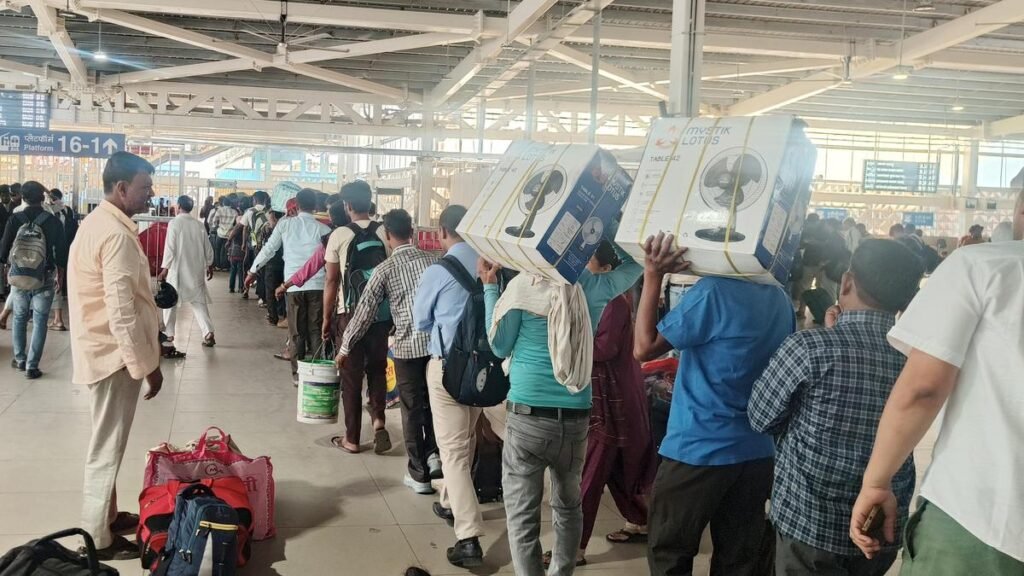
In weeks New Delhi and the broader NCR region have been seeing a quiet but alarming trend—a growing number of migrant workers leaving the city and returning to their native villages. Unlike protests or official announcements this migration is subtle: families with bags at railway stations workers abandoning jobs and entire communities disappearing from urban clusters.
At the heart of this phenomenon lies an unexpected trigger: a Liquefied Petroleum Gas (LPG) crisis.
What may appear as a fuel shortage has evolved into a multi-dimensional socio-economic crisis affecting livelihoods, food security, urban labor markets and even India’s economic stability.
## 2. What is the LPG Crisis?
LPG (Liquefied Petroleum Gas) is the cooking fuel for millions of Indian households especially in urban areas. In cities like Delhi:
* Most migrant workers depend on LPG for cooking
* Affordable food access depends on LPG availability
* Small businesses rely heavily on LPG
## Key Issues in the Current Crisis
* Supply shortages
* Delayed cylinder refills
* Skyrocketing black market prices
* access for informal workers
Reports suggest that while the official price of a domestic LPG cylinder in Delhi is around ₹900 black market rates have surged dramatically with gas being sold at ₹250–₹700 per kg. This has made cooking unaffordable for low-income households.
## 3. Root Cause: Conflict and Energy Disruption
The LPG crisis in India is not an isolated domestic issue—it is deeply tied to global geopolitical tensions, particularly the ongoing conflict involving Iran.
### Key Global Factors
* Disruption in Middle East energy supply chains
* Instability in the Strait of Hormuz (an oil & gas route)
* Increased import costs for LPG
India imports 60% of its LPG needs making it highly vulnerable to such disruptions. As a result:
* Supply chains slowed down
* Prices increased
* Distribution became
## 4. Why Migrants Are Leaving Delhi
### 4.1 Rising Cost of Survival
For workers earning ₹200–₹500 per day or ₹10,000–₹18,000 per month the sudden rise in cooking fuel costs has made survival nearly impossible. A worker explained that they are spending ₹400–₹500 on gas refill leaving little money for food, rent or healthcare.
### 4.2 Lack of Formal LPG Access
migrants live in rented rooms or slums do not have registered LPG connections and depend on small informal gas purchases. This forces them to buy fuel at rates in the black market.
### 4.3 Food Crisis in Urban Areas
The LPG shortage has directly impacted food availability:
* Families cutting down to one meal a day
* Hostels and PGs reducing food quality and quantity
* Street food vendors raising prices or shutting down
an old-age home in Delhi reportedly had to serve only bread and fruits due to lack of gas.
### 4.4 Collapse of Economy
The urban informal sector—where most migrants work—is highly sensitive to fuel costs. Affected sectors include:
* Street food vendors
* Construction workers
* Domestic helpers
* Small factories
As LPG prices rise:
* Businesses reduce operations
* Workers lose income
* Demand for labor falls
This creates a chain reaction leading to migration.
## 5. The Migration Pattern: A Reverse Urban Flow
### 5.1 Who Are Leaving?
* Daily wage labourers
* Construction workers
* workers
* Students preparing for exams
* shop owners
### 5.2 Where Are They Going?
Primarily to:
* Bihar
* Uttar Pradesh
* Haryana
* West Bengal
### 5.3 How Are They Leaving?
* Unreserved train compartments
* Carrying belongings
* Without confirmed tickets
Railway stations like New Delhi and Anand Vihar are seeing increasing crowds of such migrants.
## 6. A “Silent Exodus”
Unlike migrations (e.g. COVID-19 lockdowns) this crisis is:
* Gradual
*
* Largely undocumented
There are:
* No official numbers
* No protests
* No large-scale media coverage initially
Yet the impact is visible:
* Reduced workforce in sectors
* Empty rental rooms
* Declining urban consumption
## 7. Impact on Delhi’s Economy
### 7.1 Labour Shortage
As migrants leave:
* Construction slows down
* Domestic work becomes scarce
* Small industries face shutdowns
Similar trends have already been seen in cities like Ludhiana, where industries are suffering due to worker exodus.
### 7.2 Decline in Small Businesses
Street vendors and small eateries:
* Face fuel costs
* Lose customers (migrants leaving)
* Reduce working hours
Some businesses report a 50% drop in sales.
### 7.3 Inflationary Pressure
* Food prices increase
* Service costs rise
* Daily living becomes more expensive
This affects not migrants but also middle-class residents.
## 8. Social Impact
### 8.1 Food Insecurity
* Families skipping meals
* Children facing malnutrition
* Dietary quality
### 8.2 Health Issues
Many households have shifted to wood-fired stoves (chulhas) or cow dung or firewood. This leads to:
* air pollution
* Respiratory problems
### 8.3 Education Disruption
Students leaving coaching hubs like Mukherjee Nagar:
* exam preparation
* Shift to rural study environments
## 9. Gender Dimension
Women are disproportionately affected:
* Responsible for cooking
* Spend time arranging fuel
* Face health risks from smoke
Domestic workers also lose jobs as employers cut costs.
## 10. Comparison with COVID-19 Migration
| Factor | COVID-19 Migration | LPG Crisis Migration |
| — | — | — |
| Cause | Lockdown | Fuel shortage |
| Nature Sudden | Gradual |
| Visibility | High Low |
| Government response | Immediate | Limited so far |
This crisis is less visible but equally damaging.
## 11. Government Response
### 11.1 Short-Term Measures
* Prioritizing household LPG supply
* Increasing domestic production
* Monitoring distribution
### 11.2 Long-Term Strategy
India is now pushing for:
* Piped Natural Gas (PNG) expansion
* Reduced dependence on LPG imports
The government aims to:
* Add millions of PNG connections
* Cut LPG imports by 10–15% by 2030
## 12. Challenges in Policy Implementation
* PNG not available in migrant areas
* High installation costs
* Tenants cannot easily access connections
As one worker noted, PNG is “not practical” for renters.
## 13. Broader Economic Implications
### 13.1 Urban Growth Impact
* Reduced labor supply
* infrastructure development
### 13.2 Rural Pressure
* Increased population in villages
* Strain on resources
### 13.3 National Economy
* Lower productivity
* Increased inflation
* Fiscal pressure on subsidies
## 14. The Human Story
Behind statistics are lives:
* Families abandoning dreams of income
* Workers giving up children’s education
* People returning to subsistence farming
One migrant said, “If we cannot cook how can we survive?”
## 15. Environmental Impact
The shift from LPG to fuels leads to:
* Increased deforestation
* Higher carbon emissions
* Poor air quality
## 16. Future Outlook
### Short-Term
* Continued migration
* Rising hardship
### Medium-Term
* Expansion of PNG
* Stabilization of LPG supply
### Long-Term
* Structural shift in India’s cooking fuel ecosystem
The LPG crisis in New Delhi is not a fuel shortage—it is a systemic socio-economic crisis exposing:
* India’s dependence on global energy markets
* Vulnerability of migrant workers
* Fragility of urban informal economies
The ongoing migration reflects a harsh reality: When basic survival becomes unaffordable cities lose their workers.
Unless addressed through:
* Affordable fuel access
* urban policies
* Energy diversification
this crisis could have long-lasting consequences, on India’s economy and society.