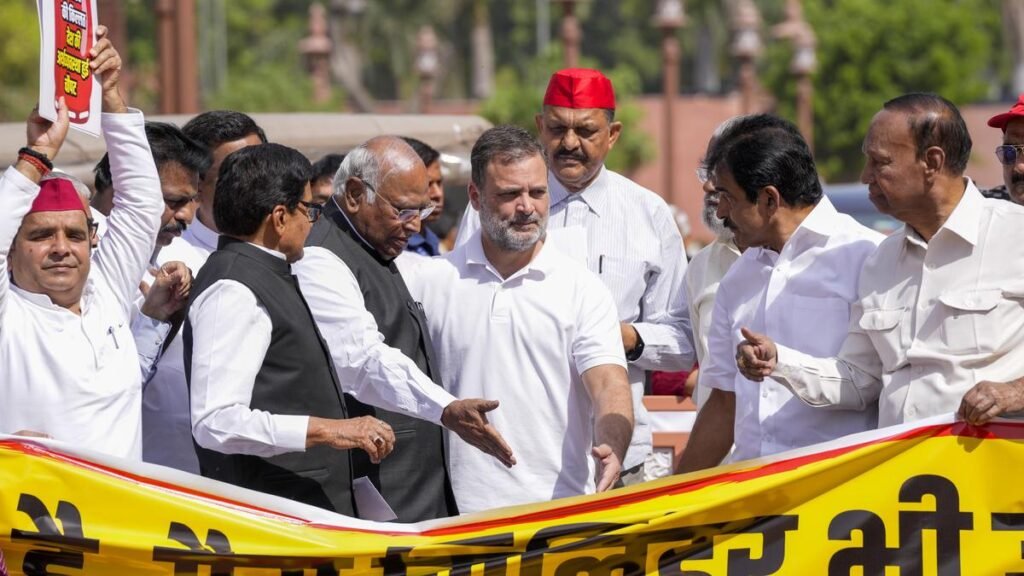
Opposition MPs protest in Parliament complex over shortage of commercial LPG cylinders
The protest by opposition Members of Parliament in the Parliament complex about the shortage of LPG cylinders became a big issue in India during the 2026 Budget Session. Opposition leaders said the central government did not handle energy supplies well. They wanted to talk about the LPG supply crisis in Parliament. This crisis affects businesses and consumers over the country. The government said there was no shortage and told citizens not to worry.
This issue is sensitive because LPG is a cooking fuel used by households, restaurants, street vendors, hotels and small businesses across India. The disruption in LPG supply especially with tensions in West Asia has raised concerns about energy security, inflation and the survival of small businesses.
1. Background of the LPG Shortage Crisis
The protests started because of reports of a shortage of LPG cylinders, especially the large 19-kg cylinders used by restaurants, hotels and catering businesses. Industry bodies and restaurant associations in cities said their operations were disrupted due to irregular supply. Commercial LPG is different from LPG cylinders, which are subsidized and used by households. The government prioritized LPG supply to households and essential institutions like hospitals and schools. This meant commercial establishments faced the supply disruption.
The shortage was linked to developments, particularly the conflict in West Asia that disrupted shipping routes and fuel supply chains. Since India imports a lot of its LPG and crude oil any geopolitical tension in energy-producing regions can affect supply and prices domestically. Restaurants and food vendors in cities faced severe difficulties with some warning they might shut down temporarily if supplies were not restored.
2. Opposition MPs Protest in Parliament Complex
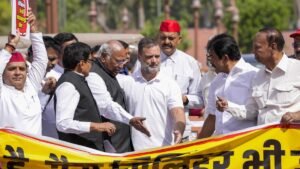
Opposition MPs from the INDIA bloc staged demonstrations in the Parliament complex to highlight the issue. The protest was led by leaders like Rahul Gandhi and several Congress MPs. They gathered inside the Parliament premises. Raised slogans demanding immediate government intervention to restore LPG supply, a detailed discussion in Parliament on the LPG shortage and clarification from the Prime Minister and the Petroleum Ministry.
The protest disrupted proceedings. Opposition members demanded that the government address the crisis of ignoring it. Some MPs held placards showing the hardships faced by businesses and ordinary citizens due to the shortage of commercial LPG cylinders.
3. Political Allegations by the Opposition
Opposition leaders criticized the government during the protest. They said the government failed to anticipate the impact of conflicts on India’s fuel supply chain. They also claimed India’s dependence on imports makes it vulnerable to crises. Opposition MPs said the LPG shortage hurts restaurants, small eateries, street vendors, catering businesses and hotels which rely heavily on LPG cylinders.
4. Demand for Parliamentary Debate
Opposition leaders demanded a discussion in Parliament about the crisis and its solutions. One leader said the crisis was so severe that it affected every kitchen in the country showing how it impacts livelihoods and daily life.
5. Rahul Gandhi’s Criticism of the Government
Rahul Gandhi criticized the government for not managing the LPG supply crisis. He questioned why the Prime Minister had not addressed the issue directly in Parliament. Rahul Gandhi also argued that the government should explain how geopolitical developments affected India’s energy security. He criticized the Prime Minister for asking citizens not to panic while the government seemed unprepared to handle the crisis.
6. Impact of LPG Shortage on Restaurants and Small Businesses
The shortage of LPG cylinders seriously impacted the hospitality sector. Many restaurants depend entirely on LPG cylinders for cooking. When supplies were disrupted some establishments had a few days of gas left. Small vendors like tea stalls, food carts and dhabas were vulnerable because they cannot easily switch to cooking fuels.
7. Restaurants Switching to Alternative Cooking Methods
Because of the shortage some businesses started using cooking methods like induction cooktops, electric stoves and microwave ovens. In some places restaurants used induction cooking to continue operations. However these alternatives are not practical for large-scale cooking for restaurants serving hundreds of customers daily.
8. Government’s Response to the Crisis
The government responded with measures and reassurances. They prioritized LPG supply for households and essential sectors like hospitals and educational institutions. The booking cycle for LPG cylinders was extended to manage supply efficiently. Authorities monitored hoarding and black marketing of LPG cylinders. Government officials said domestic LPG supply remained stable and there was no need for panic buying.
9. Role of the West Asia Conflict
The ongoing conflict in West Asia was a factor behind the LPG shortage. The region is critical for oil and gas supply and any conflict can disrupt shipping routes and energy exports. India imports a share of its LPG from international markets so these disruptions directly affected fuel availability.
10. Parliamentary Disruptions
The LPG issue affected Parliaments functioning. Opposition MPs raised slogans. Demanded a discussion on the crisis during the Budget Session. Because of the protests and disruptions parliamentary proceedings were adjourned shortly after they began on least one occasion.
11. Government vs Opposition Narrative
The LPG shortage created two competing narratives. The opposition argued that the government failed to anticipate the crisis and foreign policy decisions weakened India’s energy security. The government maintained that domestic LPG supply remains stable the situation is temporary and panic and misinformation should be avoided.
12. Broader Economic Implications
The LPG shortage could have economic consequences, including inflation, small business losses and a slowdown in the hospitality sector. Higher fuel costs can lead to increased food prices and small eateries and vendors may face losses due to higher fuel costs or supply disruptions.
13. Energy Security Debate in India
The LPG shortage revived discussions about India’s energy security. India imports over 80% of its oil and a significant share of its LPG making it vulnerable to global geopolitical conflicts. Experts argue that India should diversify energy import sources increase energy production expand renewable energy usage and improve fuel storage infrastructure.
The protest by opposition MPs over the shortage of LPG cylinders shows how energy supply issues can become major political and economic concerns in India. The crisis emerged due to geopolitical tensions disruptions in fuel supply chains and prioritization of domestic LPG supply. While the government reassured citizens that household gas supply remains stable the shortage of cylinders created difficulties for restaurants, street vendors and small businesses.
The opposition used the issue to criticize the government’s energy management and foreign policy while the ruling party insists the situation is temporary and under control. Beyond debates the episode highlighted the importance of energy security for India. As the country depends heavily on imported fuels global conflicts and supply disruptions will remain a challenge. Strengthening energy production diversifying supply sources and developing alternative energy solutions will be essential to prevent similar crises, in the future.