Prime Minister honours former PM Atal Bihari Vajpayee’s 101st birth anniversary with tribute and activities nationwide today.
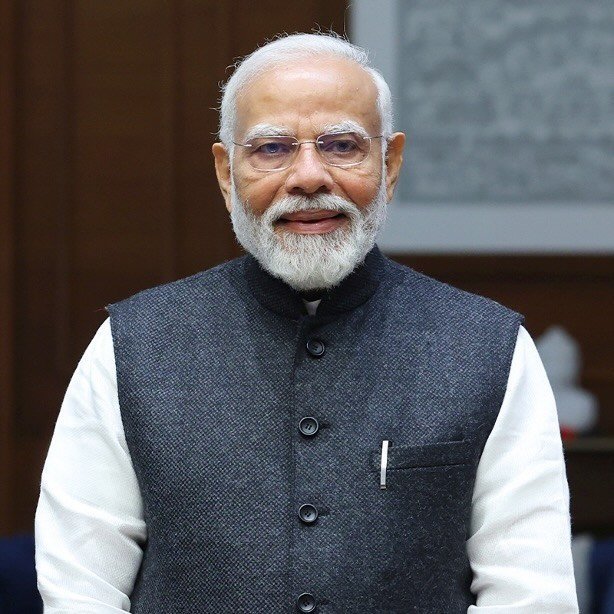
Today, the nation pays its respects to the 101st birth year of the former Prime Minister of India, one of its most respected leaders in its modern history. The day is observed by paying homage to the legend by the Prime Minister and other top leaders in the country’s polity, in association with activities that pay tribute to his invaluable contributions to governance in the fields of national politics and culture.
Good Governance Day, celebrated every year on December 25, is an important event since it is the birthday of a leader who is remembered not only for his accomplishments but also for his integrity, speech, and leadership acumen. Also, this year is very important since it is the 101st birthday anniversary of Vajpayee, and it provides an opportunity to retrospect on his life and his relevance in modern India.
EARLY LIFE AND INTELLECTUAL FOUNDATIONS
December 25, 1924, marked the birth of Atal Bihari Vajpayee in the city of Gwalior. His family environment was rich in the traditions of Indian culture and nationalism. His father was a schoolmaster and a poet. These are the qualities that would later define his unique identity as a politician and a poet.
Vajpayee is well educated in politics and laws, acquiring expertise in democracy, the constitution, and international politics. Even while he was a student, he was an active member of the nationalist movement, motivated by the principles of freedom, integrity, and social justice.
Atal Bihari Vajpayee entered Parliament for the first time at the age of 29 in 1957, marking an incredible odyssey of over five decades. Known for his oratory prowess, he won acclaim across party lines. His speech was characterized by clarity of thought, humor, sense of morality, “and a poetic flair to an extent that he stands out as one of the most remarkable figures” of Indian parliamentary history.
Though life-long membership in the Bharatiya Jan Sangh and later, in its reincarnation, the Bharatiya Janata Party (BJP), would have denoted him as a polarizing figure, Vajpayee was known to be a consensus-builder par excellence. This was because he was absolutely convinced that democracy is weakened if not nurtured through dialogue, mutual respect, and diversity.
Prime Ministership: Leading in Times of Turmoil
Atal Bihari Vajpayee was a three-time Prime Minister of India and had his most influential term as the PM of India between the years 1999 and 2004. In fact, many recall this as a developmental era in the political and economic lives of India.
- Economic Reforms and Infrastructure Development
A major thrust was given under Vajpayee on infrastructure development as a means of promoting growth because the need for development was understood to require connectivity and up-gradation. Initiatives such as the Golden Quadrilateral highway project changed the face of road infrastructure.
He advocated liberalization of the economy and made sure that it was inclusive. He was a strong advocate of growth in telecommunication and the IT sector and took steps to ensure the growth of India in the international economy.
- National Security & Strategic Decisions
One of the greatest hallmark events of Vajpayee’s leadership lessons came with the nuclear testing at Pokhran in 1998 when the government of India proved to be a nuclear nation. Although this came with global observation, Vajpayee explained and defended the Indian stance with a sense of calmness and less aggression.
During the Kargil War in 1999, Vajpayee showed strong leadership qualities with diplomatic maturity. His response to this situation had reinforced Indian sovereignty without compromising international reputation.
- Foreign Policy and Peace Initiatives
Vajpayee was a firm believer in the concept of living peacefully alongside other nations and cooperating with them within a region. The historic bus ride to Lahore is a testament to his initiative to improve relations between Indian and Pakistani citizens despite the tense relations between the two countries.
Vajpayee the Poet & Humanist
Apart from politics, Atal Bihari Vajpayee was a poet at heart. His poetry in Hindi was based on love, nationalism, pain, hope, and humankind. Even during trying political circumstances, poetry was his way of thinking and expressing his feelings.
But this humanistic aspect of Abraham Lincoln made him beloved by millions of people not only as a leader but as a compassionate person who understood the intricacies of the human situation. Today, his poetry is still read and recited.
Nationwide Tributes on the 101st Birth Anniversary
On this historic occasion, the Prime Minister paid floral tributes to Vajpayee’s memorial, associating it with his unparalleled effort towards nation-building. Through public utterances, the Prime Minister described Vajpayee as a leader who was an inspiration with his vision, humility, and commitment to the unity of India.
In India, various government departments and organizations around the nation are observing the day by:
Seminars/lectures on good governance
Competitive essay and poetry writing for students
Events portraying Vajpayee’s literary contributions
Vaj
Community debates on values for a democracy and ethics of leadership
Examples of societal projects involving transparency and the welfare of citizens
Such activities are not only a tribute to Vajpayee but also try to implement his ideals in practical governance and civic duties.
Good Governance Day: A Living Legacy
Post independence in India, the birthday of former Indian Prime Minister Atal Bihari Vajpayee is celebrated as the national ‘Good Governance Day’. It was chosen in accordance with Vajpayee’s thoughts that governance should be people-focused and accountable. Also, Vajpayee believed that power is of value only if it is
The significance of Good Governance Day is that it encourages all public institutions to re-evaluate their approach to service delivery, governance, and innovation in governance. This practice emphasizes the aspect that governance is much more than governance by authority; rather, it emphasizes the need for trust between the state and its citizens.
Across-Party Respect and National ConsensusCross-
It is one of the most remarkable features of the legacy of Atal Bihari Vajpayee that there is a universal appreciation for him across all political ideologies. This is because leaders from other political parties have been known to appreciate his character and his ability to conduct himself well during debates.
Indeed, his bipartisan admirations have more significance in today’s politically polarized environment. The life of Vajpayee reminds us that “passionate opinions must not spell an end to civility,” that “disagreement can coexist with dignity.”
Impact on Future Generations
Even years after his demise, the impact of Vajpayee is ingrained into the political culture of India. Leaders pick his lessons for inspiring and guiding them for:
Ethical leadership
Communicative Effectiveness
Strategic thinking
Respect for democratic institutions
In any democratic
Curricula in education and leadership programs as well as policy debates often invoke his style of governance as a yardstick of balanced and exemplary leadership.
Relevance in Contemporary India
In the complex scenario that India faces today—trends of economic transition, advancements in technology, international diplomacy efforts, and building harmony in society—today Vajpayee ideas remain relevant. His obsession with national unity and inclusive growth is the most important aspect in today’s context.
This belief in the strength of India’s diversity continues to remain the bedrock of the country’s democratic ideals. Remembering Vajpayee, in this sense, is not merely an exercise in paying tribute but a restatement of values that are critical for India’s future. Conclusion
A Tribute Beyond Ceremony The 101st birthday of Atal Bihari Vajpayee is not just an anniversary; it is a moment of national reflection. As the nation joins to pay tribute to Vajpayee in tribute by the current Prime Minister, it is a moment to recall the values of integrity, compassion, and visionary leadership that Vajpayee stood by all his life. His life bears testimony to the strength of words infused with wisdom, the choice born out of conscience, and leadership tempered with excellence. As we pay tribute to Atal Bihari Vajpayee today, we not only have a great leader of the past in mind, but we also recall the ideals that will shape the contours of our future.