Reliance to invest ₹7 lakh crore in Gujarat over next five years: Mukesh Ambani
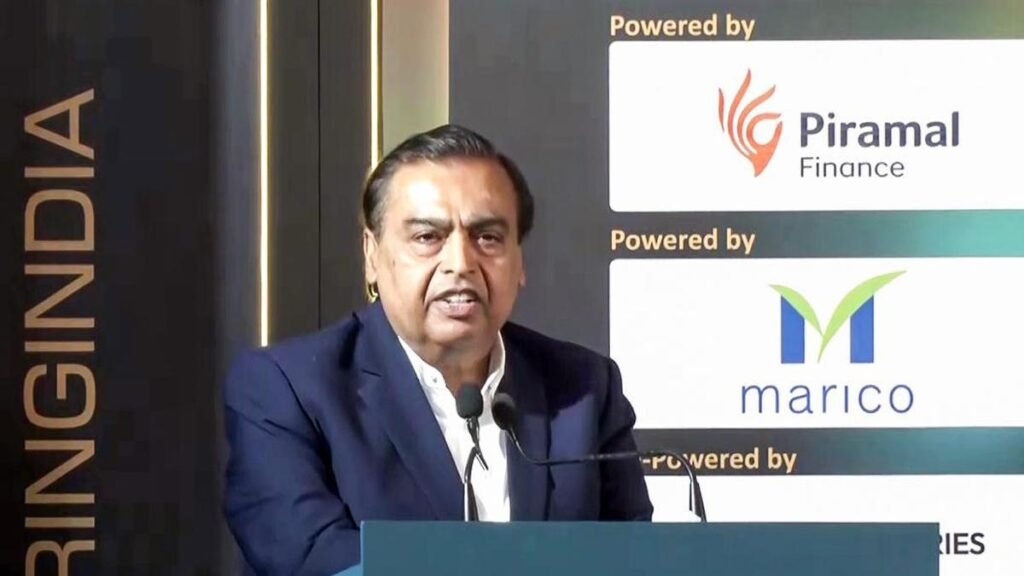
Reliance Industries’ announcement of investing ₹7 lakh crore in Gujarat over the next five years, as stated by Chairman and Managing Director Mukesh Ambani, is not just another corporate investment plan. It is a statement of confidence in India’s future, Gujarat’s industrial strength, and Reliance’s vision to shape the next phase of economic transformation. This proposed investment is among the largest by any private company in Indian history and reflects a shift toward sustainable energy, digital infrastructure, advanced manufacturing, and next-generation technology.
This massive investment comes at a time when India is positioning itself as a global manufacturing hub, a leader in renewable energy, and a digital powerhouse. Gujarat, already known as India’s industrial backbone, becomes the central stage for Reliance’s future ambitions. The move underlines the synergy between the state’s business-friendly environment and Reliance’s long-term growth strategy.
To understand the significance of this announcement, we must first understand Reliance Industries itself.
Reliance Industries Limited (RIL) began as a small textile company in the 1960s under the leadership of Dhirubhai Ambani. Over decades, it transformed into India’s largest private-sector company with businesses spanning petrochemicals, oil refining, retail, telecommunications, digital services, green energy, and more. Today, Reliance is not just a corporation but a symbol of India’s entrepreneurial strength and economic resilience.
Mukesh Ambani, who took over the leadership after his father’s passing, expanded Reliance into technology, telecom, and retail, making it a future-ready conglomerate. Projects like Jio, Reliance Retail, and now Reliance New Energy have positioned the company as a driver of India’s digital and sustainable future.
The ₹7 lakh crore investment in Gujarat is a continuation of this legacy.
Gujarat has always been central to Reliance’s journey. Jamnagar hosts the world’s largest refining complex, a crown jewel of India’s energy infrastructure. The state has provided Reliance with a robust ecosystem: strong logistics, investor-friendly policies, political stability, industrial corridors, and access to ports.
Gujarat’s strategic location on India’s western coast makes it a natural gateway to global markets. Its ports facilitate exports and imports, its infrastructure supports large-scale manufacturing, and its skilled workforce strengthens industrial productivity.
Thus, when Mukesh Ambani announces such a massive investment in Gujarat, it reflects both trust in the state’s governance and belief in its economic future.
The ₹7 lakh crore investment will likely be distributed across multiple sectors:
- Green Energy and Sustainability
- Petrochemicals and Refining
- Digital and AI Infrastructure
- Telecommunications Expansion
- Manufacturing and Advanced Materials
- Infrastructure Development
- Employment Generation and Skill Development
One of the most important components is green energy.
Reliance has committed itself to becoming a net-zero carbon company by 2035. This investment in Gujarat will play a crucial role in achieving that goal. The company has already announced plans to build the world’s largest integrated renewable energy ecosystem in Jamnagar. This includes:
- Solar photovoltaic module manufacturing
- Electrolyzers for green hydrogen
- Fuel cell systems
- Energy storage batteries
- Wind power components
Green hydrogen is expected to be a major focus. Hydrogen produced using renewable energy is considered the fuel of the future. It can replace fossil fuels in industries such as steel, chemicals, transport, and power generation. By investing heavily in green hydrogen production, Reliance aims to make India a global leader in clean energy.
This will reduce India’s dependence on imported oil and gas, save billions in foreign exchange, and help meet climate commitments.
Another major area of investment will be digital infrastructure and artificial intelligence.
Reliance Jio has already revolutionized telecommunications in India by providing affordable high-speed internet. The next phase will involve:
- AI-powered data centers
- Cloud infrastructure
- Edge computing
- Smart manufacturing solutions
- Digital public infrastructure
Gujarat could become a hub for high-capacity data centers powered by renewable energy. This aligns perfectly with India’s growing digital economy, which includes e-commerce, fintech, education technology, healthcare technology, and smart governance.
Data is the new oil of the digital age, and Reliance wants to control the infrastructure that powers this economy.
Manufacturing will also see a major boost.
India is pushing for “Make in India” and “Atmanirbhar Bharat.” Reliance’s investment will support:
- Semiconductor ecosystem support
- Advanced materials
- Electric vehicle components
- Battery manufacturing
- Specialty chemicals
This will reduce reliance on imports and create an integrated domestic supply chain.
The petrochemical and refining business will remain a strong pillar. Jamnagar’s refinery is already a global benchmark in efficiency and scale. New investments will modernize facilities, reduce emissions, and integrate bio-based and sustainable chemicals.
Another critical impact will be employment generation.
Such a massive investment is expected to create:
- Hundreds of thousands of direct jobs
- Millions of indirect jobs
- Opportunities in construction, manufacturing, IT, logistics, research, and services
From engineers and technicians to factory workers and digital specialists, this project will fuel employment across skill levels.
For Gujarat’s youth, it means better job prospects, higher incomes, and improved living standards.
Small and medium enterprises (SMEs) will also benefit. Large industrial investments create demand for:
- Raw materials
- Transport services
- Equipment supply
- Maintenance services
- IT solutions
This strengthens the local business ecosystem and boosts entrepreneurship.
From a macroeconomic perspective, ₹7 lakh crore is not just a number. It represents:
- Increased capital formation
- Boost to GDP growth
- Strengthening of industrial capacity
- Technological advancement
- Energy security
Such investments attract global investors and improve India’s reputation as a stable and scalable investment destination.
Mukesh Ambani’s vision behind this investment is deeply strategic. He believes that India is entering a golden decade of growth. With a young population, digital adoption, policy reforms, and infrastructure development, India is poised to become one of the world’s top three economies.
Reliance wants to be at the center of this transformation.
This investment also reflects a shift from traditional energy dominance to future energy leadership. While oil and gas built the foundation of Reliance’s success, renewable energy will shape its future.
The announcement sends a powerful message:
India’s private sector is ready to lead global transformation in sustainability, technology, and manufacturing.
Internationally, this investment places India alongside countries making large-scale transitions to green energy and digital economies. It also strengthens India’s negotiating power in climate diplomacy and trade discussions.
Gujarat benefits politically and economically. It reinforces its image as India’s most industrialized and investor-friendly state. The state government will gain increased tax revenues, infrastructure development, and employment growth.
In social terms, large investments improve:
- Urban development
- Education opportunities
- Healthcare facilities
- Skill training institutions
Cities around Jamnagar, Ahmedabad, Surat, and Vadodara are expected to witness accelerated growth.
This investment is not just about factories and machines. It is about creating an ecosystem of innovation, sustainability, and inclusive development.
Reliance’s ₹7 lakh crore commitment is also a signal to other corporations. It sets a benchmark and encourages similar investments from domestic and global players.
When one major company invests boldly, it creates a domino effect across industries.
In conclusion, Mukesh Ambani’s announcement of investing ₹7 lakh crore in Gujarat over the next five years is a landmark moment in India’s economic history. It blends ambition with responsibility, growth with sustainability, and profit with national development.
This is not merely a corporate expansion.
It is a blueprint for India’s future.