About 90 ships have crossed Strait of Hormuz so far as Iran exports millions of barrels of oil despite war
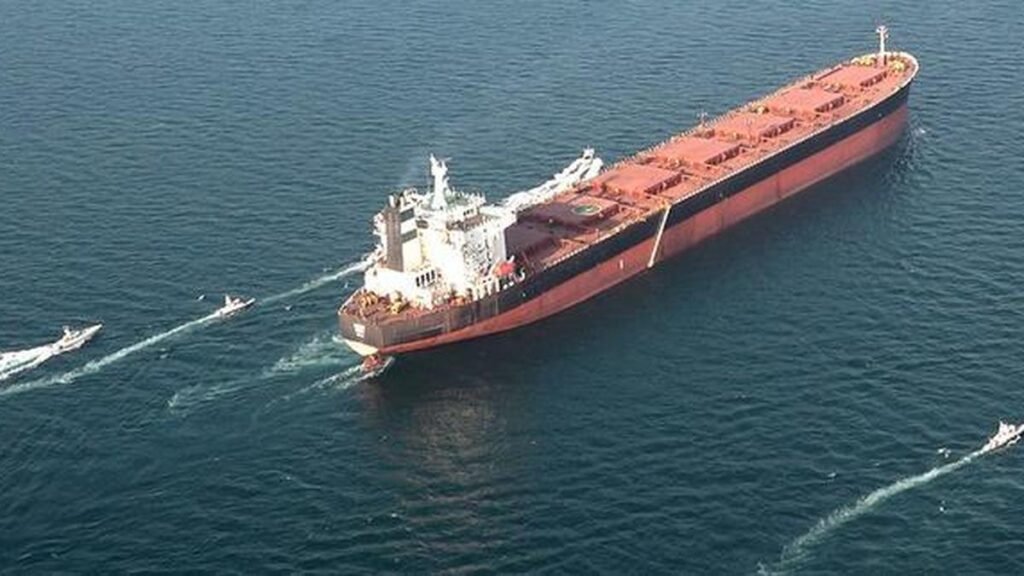
The Strait of Hormuz is an important waterway in the world. It connects the Persian Gulf to the Gulf of Oman and the Arabian Sea. This makes it a crucial route for transporting oil around the world.
20 percent of the worlds oil supply passes through the Strait of Hormuz. Countries like Saudi Arabia, Iraq, UAE, Kuwait and Iran rely on it to export oil.
Before the conflict started around 100 to 135 ships crossed the Strait of Hormuz every day. This made the strait a vital part of the energy system. If anything happens to the strait it affects oil prices, trade and the economy of the world.
2. Background: The 2026 Iran War and Strait Crisis
The current crisis started when the US and Israel attacked Iran in February 2026. This led to a conflict in the region. Iran fought back with missiles, drones and naval threats. Iran said it could block the Strait of Hormuz. Some merchant ships were. Damaged.
As things got worse shipping companies stopped operating in the area. Insurance costs went up high. Many ships avoided the Strait of Hormuz. The strait was not completely closed. It was very hard to pass through.
3. Sharp Decline in Ship Traffic
One of the effects of the conflict is that very few ships are crossing the Strait of Hormuz now. Between March 1 and 15 about 90 ships crossed. This is much lower than the 100 or more ships that used to cross every day. Sometimes no ships crossed all.
This happened because of fear of attacks, naval mines and missile threats. Insurance companies were not willing to cover the risks. There were also operations in the area. The Strait of Hormuz is not completely closed. It is heavily restricted.
4. How Iran Still Exports Oil Despite the War
Despite the problems Iran is still able to export millions of barrels of oil. This is a surprising and important part of the situation.
Some key facts are that Iran exported 13 to 16 million barrels of oil in March. This is 1 to 1.5 million barrels per day. 90 Percent of Irans oil goes to China.
Iran is doing this in a ways. Firstly it is controlling the Strait of Hormuz. It allows ships from neutral countries to pass, but blocks or threatens US and allied vessels. This creates a controlled passage system.
Secondly Iran is using ” shipping” techniques. This means that many Iranian oil shipments are made using ships that do not turn on their transponders. The ownership of these ships is also hidden. Sometimes ship-to-ship transfers are used. These are called ” fleet” operations, which help Iran bypass sanctions and detection.
Thirdly some countries like India, China and Pakistan are talking to Iran to ensure safe passage for their ships. This is why some ships are still able to cross the Strait of Hormuz
Lastly Iran has an advantage. It exports oil from Kharg Island, which’s a key hub. This island handles up to 90 percent of Irans oil exports. Is located within Irans controlled waters. This allows Iran to operate in an area.
The US is also not interfering much with Irans oil exports. This is because the US does not want oil prices to go up more. It also does not want to make the global energy crisis worse.
5. Why 90 Ships Could Pass
The number 90 ships is not random. It shows that the Strait of Hormuz is controlled and restricted.
There are a reasons for this limited passage. Firstly there are security threats like missile attacks, naval mines and drone strikes. Some ships have already been hit.
Secondly shipping companies face high insurance premiums and the risk of vessel damage or seizure. So many companies choose not to enter the Strait of Hormuz all.
Thirdly there is a presence in the area. The US has made airstrikes on missile sites and there are naval deployments from multiple countries. This makes the situation more uncertain.
Lastly Iran is restricting the passage of ships. It is only allowing selected vessels to cross the Strait of Hormuz. Iran is using the strait as a pressure tool. Traffic is deliberately limited.
6. Global Impact of the Situation
The crisis is having an impact on the whole world. Oil prices have gone up to over $100 per barrel. This affects petrol and diesel prices, inflation and economic growth.
Some countries that rely on oil from the Gulf like India face supply risks and increased import bills. India has even sent warships to protect its vessels.
The crisis is also causing an logistical problem. Around 20,000 seafarers are stranded in the region. Many ships are unable to leave.
Some countries are using pipelines of ships or rerouting oil via longer routes. This increases the cost and time.
7. Strategic Interpretation: “Selective Closure”
Experts say that the situation is not a blockade but a “selective closure” of the Strait of Hormuz. This means that the strait is closed for nations but open for Iran and its selected partners.
This gives Iran survival through oil exports and strategic leverage to put pressure on its rivals.
8. Role of Major Countries
The United States is making strikes and trying to reopen the Strait of Hormuz. It is also allowing some oil to flow to stabilize the markets.
China is the buyer of Iranian oil and continues to import oil despite sanctions.
India is ensuring passage for its energy imports and has deployed naval forces.
The Gulf Countries are looking for routes because some of their exports are disrupted.
9. Future Outlook
The situation is still very volatile. There are a few scenarios. Firstly the conflict could. The Strait of Hormuz could be completely closed. This would make oil prices go up more.
Secondly the limited passage could. Iran could maintain its selective access to the Strait of Hormuz.
Lastly there could be a resolution and negotiations could reopen the Strait of Hormuz. This would make trade normalize.
The fact that around 90 ships have crossed the Strait of Hormuz despite the war shows that the strait is not completely closed but tightly controlled. Iran has been able to maintain its oil exports and use the Strait of Hormuz as a weapon. It has balanced its survival with strategic pressure.
At the time global trade has slowed down dramatically and oil prices have surged. The risks to security have also increased. This situation shows how a single narrow waterway can affect the global economy. The Strait of Hormuz is an important waterway and what happens to it can have big consequences, for the whole world.