Rupee rebounds from record low; gains 1.6% to 93.19 against U.S. dollar
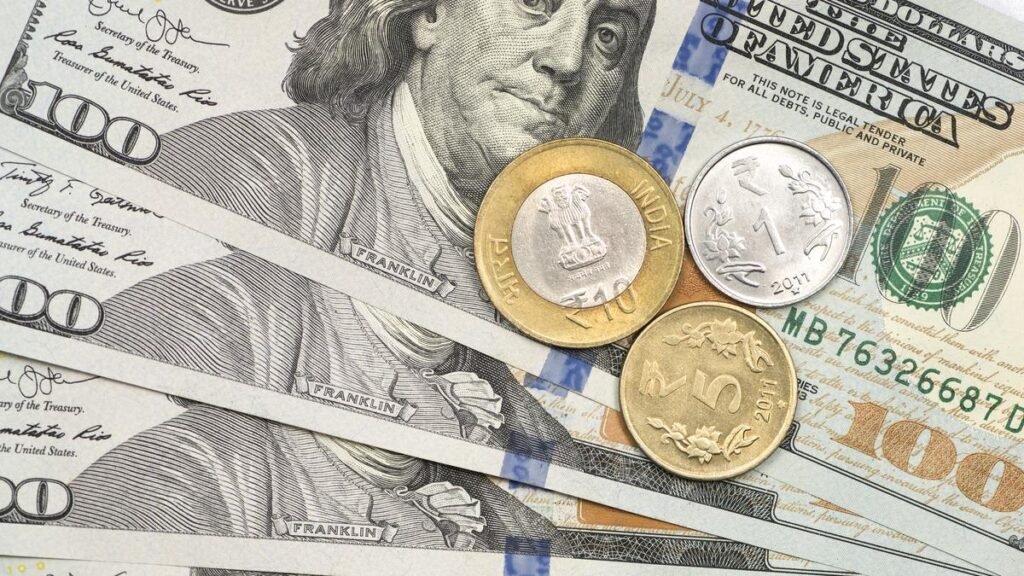
The Indian rupee has recently gained 1.6% to reach 93.19 against the US dollar after touching a record low. This is a deal for Indias foreign exchange situation. The Indian rupee movement is not a normal change in currency markets. It shows how global economic forces, Indias policy responses investor feelings and economic factors are all connected.
1. Understanding the Rupees Earlier Fall
To understand the Indian rupees rebound we need to know why it fell to a record low in the first place. The Indian rupee usually falls when people want US dollars than Indian rupees.
Key Reasons for the Rupees Depreciation
a) The US dollar is strong globally
The US Federal Reserve has increased interest rates. This makes investors want to put their money in US dollar assets. As a result other currencies like the rupee become weaker.
b) Crude oil prices are rising
India imports a lot of crude oil. When oil prices go up India needs US dollars to pay for imports. This makes the US dollar stronger. The Indian rupee weaker.
c) There are tensions
Global conflicts, especially in West Asia have disrupted supply chains and made investors uncertain. Investors often move their money to assets like the US dollar during such times. This makes emerging market currencies like the rupee weaker.
d) Foreign investors are pulling out
Foreign investors often take their money out of emerging markets when there is uncertainty. This leads to the selling of assets, which weakens the Indian rupee.
e) India has a trade deficit
India often imports more than it exports. This increases the demand for US dollars. Puts downward pressure on the Indian rupee.
2. What Triggered the Rupees Rebound?
The rupees 1.6% recovery to 93.19 per US dollar shows that some of these pressures have eased. Several factors contributed to this rebound.
a) The Reserve Bank of India intervened
The Reserve Bank of India likely intervened in the foreign exchange market to stabilize the rupee. The Reserve Bank of India may have sold US dollars from its foreign exchange reserves. This increased the US dollar supply. Supported the Indian rupee.
b) The US dollars strength has paused
The global rally in the US dollar may have slowed down. If US economic data weakens or inflation cools investors may not expect rate hikes. This reduces the attractiveness of US dollar assets. Makes emerging market currencies like the Indian rupee stronger.
c) Global risk sentiment has improved
A reduction in tensions or positive developments in global markets can improve investor sentiment. Investors may return to assets like equities in emerging markets. This leads to capital inflows into India. Increases demand for the Indian rupee.
d) Foreign investors are buying stocks and bonds
Foreign investors may have started buying Indian stocks and bonds again. Strong performance in indices like the Nifty 50 and BSE Sensex attracts global capital. Capital inflows increase demand for the rupee and help strengthen it.
e) Exporters are selling US dollars
Exporters often sell US dollars when the Indian rupee weakens significantly to lock in profits. This increases the US dollar supply in the market. Contributes to the Indian rupees appreciation.
3. The Role of Speculation and Market Dynamics
Currency markets are not just driven by fundamentals. Speculative trading also plays a role. Traders may have taken positions against the Indian rupee when it was weakening. As the Indian rupee began to recover they covered their positions by buying rupees. This accelerated the movement.
4. The Impact of the Rupees Appreciation
The strengthening of the Indian rupee has wide-ranging implications across different sectors of the economy.
a) Positive Impacts
1. Lower import costs
A stronger Indian rupee makes imports cheaper. Crude oil, electronics and machinery become less expensive. This helps reduce pressures.
2. Reduced inflation
Since India imports essential goods a stronger Indian rupee lowers input costs and helps control inflation.
3. Improved investor confidence
Currency stability signals strength. It attracts investment and enhances Indias image as a stable emerging market.
b) Negative Impacts
1. Pressure on exporters
A stronger Indian rupee makes Indian exports more expensive in markets. IT services, textiles and pharmaceuticals may face competitiveness.
2. Lower remittance value
Indians receiving money from abroad get Indian rupees for each US dollar.
5. Effects
a) IT sector
Companies like Infosys and TCS earn a large portion of their revenue in US dollars. A stronger Indian rupee reduces their earnings when converted into rupees. This can impact stock prices.
b) Oil and energy sector
Oil importers benefit from an Indian rupee. Lower import costs improve profit margins.
c) Aviation
Airlines benefit due to fuel costs. Aviation turbine fuel is linked to oil prices.
6. The Reserve Bank of Indias Policy Dilemma
The Reserve Bank of India must carefully balance currency stability with growth. If the Indian rupee appreciates much exports suffer. If it depreciates much inflation rises. The Reserve Bank of India uses tools like forex market intervention, interest rate adjustments and liquidity management to manage currency fluctuations.
7. Comparison with Emerging Market Currencies
The Indian rupees movement should be seen in a global context. Many emerging market currencies have experienced volatility. Countries with forex reserves and stable macroeconomic fundamentals tend to recover faster. Indias strong economic growth and stable financial system make the Indian rupee more resilient compared to some peers.
8. Long-Term Structural Factors
While short-term movements are influenced by market forces long-term trends depend on factors.
a) Economic growth
India remains one of the growing major economies. Strong GDP growth supports currency stability.
b) Digital economy and services exports
Growth in IT and services exports generates US dollar inflows.
c) Foreign direct investment
Long-term investments provide stability compared to volatile portfolio flows.
9. Risks to Sustained Recovery
Despite the rebound risks remain. Renewed strength in the US dollar escalation of tensions rising oil prices and global recession fears could reverse the Indian rupees gains.
10. Future Outlook
The rupees trajectory will depend on a combination of domestic and global factors.
Short-Term Outlook
The Indian rupee is likely to remain volatile within a range. The Reserve Bank of Indias intervention will continue to play a role.
Medium-Term Outlook
Stability is expected if inflation remains under control. Continued capital inflows could support the rupee.
Long-Term Outlook
Structural growth in Indias economy supports strengthening. However persistent trade deficits may limit appreciation.
The rupees rebound from a record low to 93.19 against the US dollar represents more than just a technical recovery. It reflects improving sentiment, policy intervention and a temporary easing of pressures. While the appreciation brings relief in terms of import costs and inflation control it also presents challenges for export-oriented sectors.
Currency movements are inherently complex and influenced by interconnected factors. The recent recovery highlights the resilience of the economy and the proactive role of the Reserve Bank of India in maintaining stability. However sustaining this momentum will require management of both domestic economic policies and external risks.
In essence the rupees journey—from depreciation to recovery—serves as a reminder of how deeply interconnected global and domestic financial systems are and how crucial sound economic management is in navigating such volatility. The Indian rupee is a component of Indias economy and its movement has a significant impact, on various sectors. The Reserve Bank of India plays a role in managing the Indian rupees volatility and its actions will be closely watched by investors and economists. The rupees future trajectory will depend on a combination of domestic and global factors and it is essential to monitor these factors closely to understand the Indian rupees movement.