Rupee slumps 23 paise to hit an all-time low against U.S. dollar
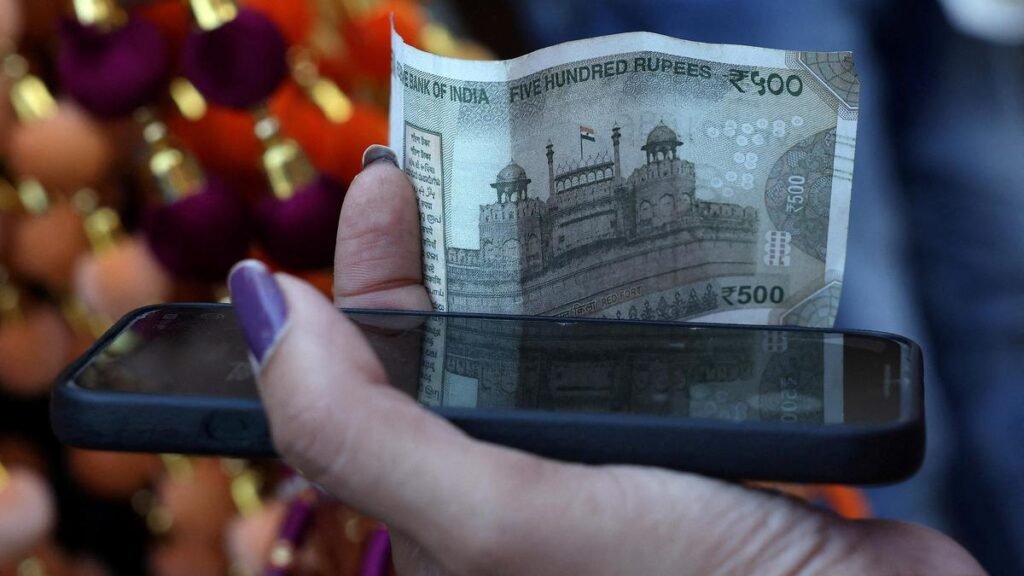
The recent fall of the Indian rupee by 23 paise to an all-time low (around ₹93.7–₹94 per US dollar) is not just a small daily fluctuation—it reflects deep economic pressures, global uncertainties, and structural issues affecting India’s economy.
According to recent reports, the rupee weakened mainly due to:
- Strong US dollar
- Rising crude oil prices
- Foreign investor outflows
- Global geopolitical tensions (especially West Asia conflict)
Let’s understand everything in detail.
🪙 1. What Does “Rupee Slumps 23 Paise” Mean?
When we say:
👉 “Rupee slumps 23 paise”
It means the value of the Indian currency has fallen relative to the US dollar.
Example:
- Earlier: ₹93.50 = $1
- Now: ₹93.73 = $1
So now, India needs more rupees to buy the same 1 dollar, meaning the rupee has weakened.
🌍 2. Understanding Exchange Rate
India follows a managed floating exchange rate system, where:
- Market demand and supply decide the value
- The Reserve Bank of India (RBI) intervenes when needed
📊 3. Immediate Reasons Behind the Fall
(A) 🔥 Rising Crude Oil Prices
India imports 80–85% of its oil needs. When oil prices rise:
- India needs more dollars to pay for imports
- Demand for dollars increases
- Rupee weakens
Recent data shows:
- Oil prices surged 40–50% due to Middle East tensions
👉 This is the BIGGEST reason behind rupee depreciation.
(B) 💵 Strong US Dollar
The US dollar is strengthening globally because:
- Higher US interest rates
- Strong US economy
- Global investors prefer safe assets
When the dollar strengthens:
- All other currencies (including INR) fall
(C) 🌏 Geopolitical Tensions (Iran / Middle East Crisis)
The ongoing conflict in West Asia has:
- Disrupted oil supply routes
- Increased global uncertainty
- Created panic in financial markets
👉 This leads investors to move money to safer assets like the US dollar.
Result: Rupee weakens further
(D) 📉 Foreign Institutional Investors (FII) Outflows
Foreign investors are pulling money out of India:
- Over $9–11 billion outflows in March
- They sell Indian assets and convert rupees into dollars
👉 This increases demand for dollars → rupee falls
(E) 📉 Weak Indian Stock Market
When stock markets fall:
- Investor confidence drops
- Capital flows out
Sensex and Nifty have also declined due to global tensions
(F) 🏦 Reduced RBI Intervention
Earlier:
- RBI was actively supporting rupee by selling dollars
Now:
- Intervention has reduced
- Market forces are allowed to play
👉 This also contributes to rupee depreciation
⚙️ 4. Structural Reasons (Long-Term Factors)
(1) Trade Deficit
India imports more than it exports:
- Imports > Exports → Need more dollars
👉 Constant pressure on rupee
(2) Current Account Deficit
Expected to rise to ~2% of GDP
This means:
- More foreign currency leaving India than coming in
(3) Dependence on Oil Imports
India is highly dependent on:
- Crude oil
- Energy imports
👉 Makes rupee vulnerable to global shocks
(4) Inflation Pressures
Weak rupee → imports become expensive → inflation rises
- Every 5% rupee fall can raise inflation by ~0.35%
📈 5. Timeline of Rupee Fall (Recent)
- Jan 2026 → around ₹91–92
- Feb 2026 → ₹92–93
- March 2026 → crossed ₹94
👉 Total depreciation: ~4% in 2026 so far
💥 6. Impact of Rupee Depreciation
(A) 🚗 Cost of Imports Increases
- Petrol & diesel become expensive
- Electronics, machinery cost rises
(B) 📈 Inflation Increases
- Fuel prices rise
- Transport costs rise
- Food prices increase
(C) 🏭 Impact on Businesses
Negative:
- Import-dependent industries suffer
Positive:
- Exporters benefit (IT, pharma)
(D) 📊 Impact on Stock Market
- Foreign investors exit
- Market volatility increases
(E) 🏦 Impact on Government
- Fiscal deficit increases
- Subsidy burden rises
(F) 🎓 Impact on Students
- Studying abroad becomes expensive
📊 7. Why Dollar Becomes Stronger?
The US dollar strengthens because:
- Higher interest rates attract investors
- Safe haven during global crises
- Strong economic growth
👉 In uncertain times, investors prefer USD over emerging currencies like INR
🏦 8. Role of RBI
RBI tries to stabilize rupee by:
(1) Selling Dollars
- Uses forex reserves
(2) Interest Rate Changes
- Increase rates → attract foreign investment
(3) Market Intervention
- Controls volatility
But:
- RBI cannot fully stop depreciation
- It can only slow it down
📉 9. Why This Fall is Serious
This is concerning because:
- Rupee hitting all-time low (~₹94)
- Continuous depreciation trend
- Global uncertainty still high
- Oil prices remain elevated
🔮 10. Future Outlook
Experts predict:
- Rupee may stay weak in short term
- Could remain in range: ₹93.5 – ₹94.5
Possible improvements if:
- Oil prices fall
- Geopolitical tensions reduce
- Foreign investment returns
🧠 11. Simple Summary (For Exams)
👉 The rupee depreciated due to:
- Rising crude oil prices
- Strong US dollar
- Foreign capital outflows
- Geopolitical tensions
- Weak domestic markets
👉 Effects:
- Inflation rises
- Imports become expensive
- Exports benefit
- Economy faces pressure
The fall of the rupee by 23 paise to an all-time low is not an isolated event—it is a reflection of global economic stress combined with domestic vulnerabilities.
The main drivers are:
- Oil price shock
- Strong dollar
- Global conflict
- Capital outflows
While short-term fluctuations are normal, continuous depreciation signals deeper economic challenges.
India’s strong fundamentals may help in the long run, but in the short term, the rupee is likely to remain under pressure unless global conditions improve.