‘safety out top priority’: civil aviation ministry issues ‘heavy fog alert’ in Northern India’: flyers cautioned

The Indian Civil Aviation Ministry has issued a “heavy fog alert” for large parts of Northern India, reiterating that passenger safety remains its top priority during the winter season. This alert comes after dense fog conditions started to intensify across the Indo-Gangetic plains, particularly affecting states such as Delhi, Punjab, Haryana, Uttar Pradesh, Rajasthan, and parts of Bihar. With the onset of winter fog every year, North Indian aviation goes through some of the most trying times: schedules go haywire, flights are delayed or diverted and even cancelled; airport, airline, and air traffic controller preparedness is put through the acid test. Incidents related to fog have conventionally caused operational bottlenecks, which the early warning by the ministry will try to avoid while ensuring that very high standards of safety are maintained.
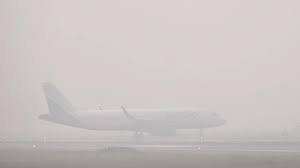
Foggy weather is considered one of the most complicated weather conditions in aviation, especially in areas like North India, where visibility suddenly reduces almost to zero. Unlike rain or storms, fog depicts reduced horizontal visibility without necessarily giving any obvious visual sign, therefore making the taking off and landing almost impossible if not tackled with the most high-profile technology and procedural discipline. The ministry’s alert highlights the need for enhanced vigilance, improved coordination among stakeholders, and clear communication with passengers. Officials have said that no compromise would be allowed on safety, even if it means extended delays or temporary suspension of operations at some airports.
IGI Airport, being the busiest airport in India and amongst the busiest in the world, remains particularly vulnerable to disruptions caused by foggy winter mornings and late-night hours. The visibility goes down below 50 meters during peak fog season, which does not allow normal flight operations to take place without advanced landing systems. Fully recognising this fact, the Civil Aviation Ministry has been working in close coordination with the AAI, airline operators and air navigation service providers to ensure that fog preparedness measures are in place well in advance. This heavy fog alert is essentially part of a larger winter operations plan that gets activated every year but has taken on added significance due to increasing air traffic volumes.
Among the most important advisory of the ministry is how ILS, specially Category II and Category III ILS, are used, enabling aircraft to land safely when visibility is extremely low. When visibility goes down to as low as 50 meters, airports fitted with CAT III ILS can continue limited operations, provided the aircraft and the pilots are certified for such operations. Over the last few years, the government has invested heavily in upgrading the infrastructure at airports, and a number of major airports in North India, including Delhi, Amritsar, Chandigarh, and Lucknow, are fitted with state-of-the-art ILS. Yet, this infrastructure might not be uniformly distributed, implying that operations can still be severely restricted in smaller or regional airports.
The Civil Aviation Ministry has also warned airlines to ensure that their pilots are adequately trained and current in low visibility operations. Flying in fog requires special training, simulator checks, and recent experience in CAT II and CAT III landings. Airlines have been asked to roster only qualified pilots for flights operating to and from fog-prone airports during winter months. While this is essential in terms of safety, it sometimes reduces the number of flights available, thereby contributing to delays and cancellations. However, officials have emphasized that matters of safety override everything else.
Heavy fog alert for passengers essentially means being prepared for disruption of service and thus plan one’s travel accordingly. Flyers have been advised to check flight status regularly, arrive well in advance at airports, and remain in contact with their airlines for updates. The ministry has urged airlines to enhance passenger communication by providing timely information through SMS alerts, mobile apps, emails, and airport announcements. Transparent communication is seen as critical in managing passenger expectations and reducing frustration during weather-related disruptions.
Delays snowballing down the day are also an issue that is commonly witnessed during fog conditions. Delays or cancellations of flights in the morning have been found to almost always affect the aircraft rotation, crew scheduling, and airport congestion throughout the day. The airlines have, therefore, been encouraged to incorporate buffer time into their schedules and employ more ground staff when the fog conditions are at their peak. Airports, for their part, have been instructed to ensure adequate availability of runway lighting, surface movement guidance systems, and specifically trained personnel to handle ground operations under visibility that is poor.
The ATC plays the central role in the fog management of flights. Controllers have to closely regulate the movements of aircraft to ensure safe separation in the slowed conditions of runway operations. The Ministry of Civil Aviation has underscored the need for coordination between ATC units, meteorological departments, and airline operations centres. Real-time weather information, accurate fog forecasting, and quick dissemination of information are the key components of informed decisions on flight operations. IMD has been closely working with aviation authorities to provide frequent updates on visibility, temperature, and fog density.
Another central tenet of the heavy fog alert is that ground safety itself becomes paramount. Fog is a factor not only for aircraft while flying but also on the ground, as the constrained visibility can cause runway incursions, misunderstandings in the taxiways, and hazards of vehicle movements. In relation to this, airports have been instructed to implement stringent protocols concerning ground vehicles by increasing the number of reflectors on them and using advanced surveillance systems to track aircraft and vehicle movements. These are very important in nature to prevent the occurrence of any accidents in low-visibility conditions.
The ministry has also spoken of passenger welfare in the event of a delay beyond reasonable hours of waiting. Airlines have been reminded about their obligations under the CAR, which place obligations on airlines to provide refreshments, accommodation, and alternative travel arrangements when there is a specific threshold delay. Generally, whenever winter fog disrupts traveling, passengers have to wait for long hours at airports, hence the need for these welfare concerns to be highly thought of. Authorities warned the airlines against ignoring passenger rights, with an assurance that it will attract penalties.
All taken, the heavy fog alert reflects the growing complexity of managing aviation operations in a rapidly expanding market such as India. With increasing passengers, higher frequencies, and choked airport capacity, disruptions because of weather can have disproportionate impacts. The emphasis on safety-first messaging by the government is not only to prevent accidents but also to reinforce public confidence in the aviation system. Past incidents around the world have shown how complacency on weather matters can give rise to serious consequences, and authorities here appear keen to avoid such risks. Climate patterns, too, affect the frequency and intensity of fog. Specialists further point out that changes in temperature gradients, levels of pollution, and urban heat might make a difference in fog formation over North India. So, when there is a high level of particulate matter in the atmosphere, it adds to the density of fog, thereby further slashing visibility. This crossroads of environmental and aviation challenges underlines the long-term planning for cleaner air, better forecasting technologies, and resilient infrastructure design. The warning by the Civil Aviation Ministry is not a temporary advisory but part of sustained efforts at institutionalizing safety culture across the aviation sector. Safety audits, mock drills, and coordination meetings are held routinely during the winter months to review preparedness for emerging challenges. Carriers, airport operators, and the regulator are expected to function as an interconnected ecosystem, giving safety precedence over punctuality where warranted. In short, if the Civil Aviation Ministry issues a heavy fog alert, it only underlines how seriously Indian authorities take the aviation risks created by winter weather. The government has conveyed a strong message to airlines, airports, and passengers alike: safety first. Delays and cancellations due to fog are inconvenient and frustrating but a necessary evil to ensure safe operations in inclement conditions. For flyers, awareness, patience, and proactive planning are the keys during the fog season. For the aviation industry, the alert is a good reminder that vigilance, preparedness, and coordination are hallmarks of navigating one of the most demanding operational periods of the year.