SC hearing on Sabarimala women entry highlights: Legislature, not courts, entitled to enact social reform, says SG
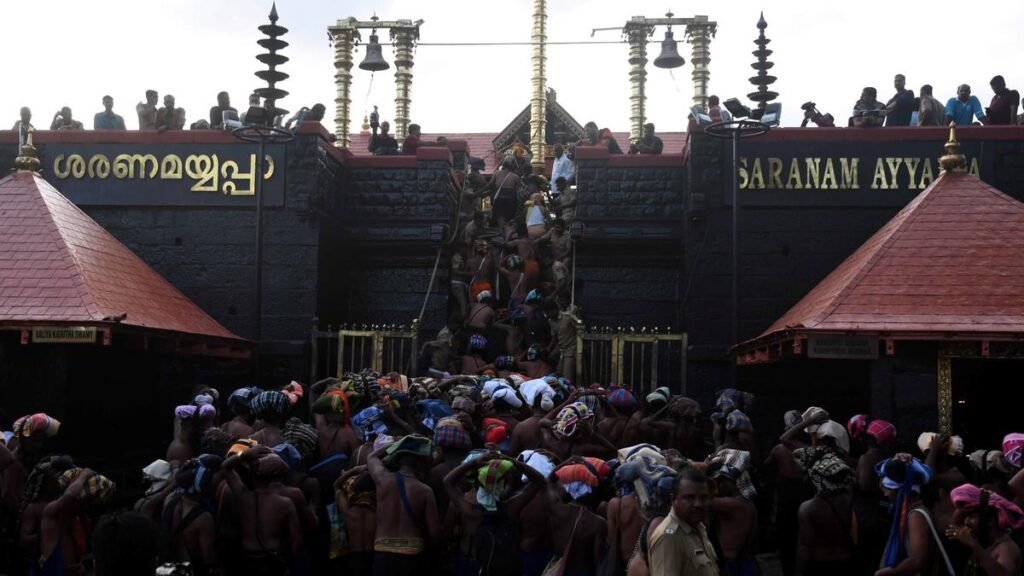
The Supreme Court hearing on the Sabarimala women entry issue is a deal in India. It is about freedom, equality for women and who should make changes in society.
1. Background of the Sabarimala Issue
The Sabarimala Temple in Kerala is for Lord Ayyappa. For a time women aged 10-50 were not allowed in. They said it was because Lord Ayyappa is a celibate.
The temple authorities said this was needed to keep Lord Ayyappas nature and tradition.
2. The 2018 Supreme Court Judgment
In 2018 the Supreme Court said (4:1):
* The ban on women was unfair
* It broke the rules of equality and freedom of religion
The court said devotion cannot be different for men and women. It also said menstruation does not make women impure.
Justice Indu Malhotra disagreed. She said courts should not interfere in beliefs.
3. Review. Continuing Controversy
After the 2018 judgment:
* Many people protested in Kerala
* Some asked the court to reconsider
In 2019 the Supreme Court:
* Did not change the 2018 judgment
* Asked a group to look into it
4. Current Hearing: Key Highlight
The recent hearings had a point. The Solicitor General said:
* “The legislature, not courts should make changes.”
This changes the focus from courts to parliament.
5. Understanding the SGs Argument
The SGs point is:
* India has a system where the legislature makes laws the judiciary interprets them and the executive implements them
* Courts should not make changes
* Such changes should come from processes
The SG also said:
* The legislature represents the people
* The judiciary should be careful in policy
6. Counterarguments: Why Courts Intervene
Some people argue that courts must act when:
* Peoples rights are broken
* Laws or customs are unfair
Courts have made changes in the past like:
* Banning Triple Talaq
* Supporting LGBTQ+ rights
7. Constitutional Clash in Sabarimala Case
This case is about:
* The right to equality and the right to freedom
The 2018 judgment prioritized equality. Critics say it should have prioritized freedom.
8. Religious Practices Doctrine
A key principle is:
* “Essential Religious Practices”
Courts look at whether a practice is essential to a religion. If not it can be changed.
9. Broader Questions Referred to Larger Bench
The Supreme Court is now looking at:
* What is an essential religious practice?
* Can courts decide doctrines?
10. Social and Political Impact
* Many people protested in Kerala
* Political parties took positions
* Feminist groups supported womens entry
11. Philosophical Debate: Reform vs Tradition
This case is about:
* Should traditions change?
Some people say:
* Traditions must change for equality
Others say:
* Faith is beyond question
12. Comparative Perspective
Globally courts often look into practices.. Each country is different.
13. Possible Outcomes of Current Hearing
The Supreme Court may:
* Uphold the 2018 judgment
* Change it
* Overturn it
* Ask parliament to decide
14. Implications for Indian Democracy
This case will define:
* The role of courts in making changes
* The role of parliament in making laws
15. Critical Analysis
The SGs point is important. It:
* Respects processes
* Prevents courts from overstepping
But it also has weaknesses:
* Parliament may delay changes
* Rights may still be broken
The Sabarimala case is not about temple entry. It is about who makes changes, in society and how India balances tradition and modernity. The Supreme Courts final judgment will shape the future of freedom and equality in India.