Taapsee Pannu says she was told not to date and to act opposite ‘big stars’ early in her career: ‘You are only a desirable heroine…’
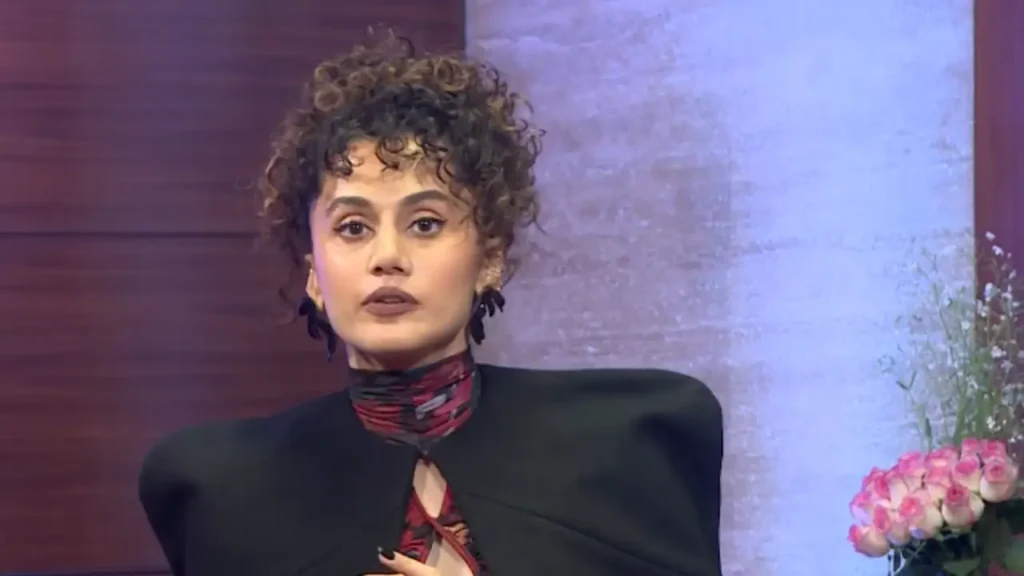
Taapsee Pannu has once again pulled the curtain back on a side of the film industry that many insiders quietly accept, but few spell out this bluntly. In a recent conversation, the actor said that in the early phase of her career she was advised to not date, and to prioritise working opposite “big stars”—even if the age gap was uncomfortable—because that, she was told, was the quickest route to being seen as an “A-lister.”
The remark that’s getting the most attention is the idea she was repeatedly sold: that a heroine is “desirable” only within a narrow window, and that her market value depends heavily on who the male lead is. While discussing what she believed at the start of her journey, Taapsee recalled being told that female actors have a “shelf life” of around 5–6 years, and that the “formula” to extend visibility was to sign films opposite top male stars, regardless of how significant (or insignificant) the role might be.
“Do films with big heroes, no matter what your role is”
According to Taapsee, the early guidance she received wasn’t delivered as an opinion—it was presented as “industry truth.” She said she accepted it initially because it was coming from seniors who were more experienced and who seemed to understand how the system works. The advice, as she described it, was simple: if you want the “A-list” stamp, you must be seen beside A-list heroes; your screen presence and character depth come second.
This is a familiar conversation in Bollywood—one that connects directly to how stardom is often “validated” for women. For men, box office power is frequently framed as personal. For women, it is often framed as relational: Who is she paired with? Is she the “first choice” opposite the biggest hero? Taapsee’s account underlines how that lens can shape decision-making for newcomers, especially those without industry backing or a powerful mentor network.
The dating “rule” and the image of the “ideal heroine”
Taapsee also said she was told not to date early in her career—another piece of advice rooted less in personal wellbeing and more in image management. The underlying logic is not difficult to decode: if the industry sells a heroine as aspirational and “available” in a fantasy sense, then a real relationship might be seen as interfering with that manufactured appeal.
That’s exactly why her story resonates—because it’s not just about romance; it’s about control. It suggests a system where a woman’s professional value is linked to perceptions about her personal life, while men rarely face the same pressure in the same way.
Age gaps, optics, and the “hero-centric” ladder
One of the sharper points in Taapsee’s remarks is her reference to being urged to work opposite big male stars regardless of age difference. It’s a topic audiences have debated for years: older male leads routinely romancing much younger women on screen, with little scrutiny, while women’s age is treated as a career constraint.
Taapsee’s recollection connects the dots between that casting pattern and career strategy: she implies it wasn’t just happening—it was being actively recommended as a stepping-stone.
Why she believed it then—and why she questions it now
In the same broader set of conversations around her journey, Taapsee has spoken about early self-doubt and the emotional toll of trying to fit an industry mould she didn’t fully understand at the time. She described her path as difficult and marked by insecurity, especially in the initial years when she lacked guidance on how to navigate expectations.
That context matters. When you are new, you tend to treat advice as a survival kit—especially if it comes from people who appear to have “made it.” Taapsee’s point isn’t that every senior intentionally misleads newcomers; it’s that the system rewards certain choices so consistently that they begin to sound like rules.
The outsider equation: pressure + perception
Another reason the story lands is Taapsee’s “outsider” positioning—something she has addressed repeatedly. In a separate interview, she spoke about building a career without being a “clone” of someone else and about the long, ongoing challenge of carving space in an industry where ease and access aren’t evenly distributed.
Put simply: when you don’t come with a famous surname, the margin for error feels smaller. Advice like “play it safe, don’t date, work with big heroes” can become even more persuasive because it sounds like the fastest way to reduce risk.
How Taapsee’s film choices complicate the “formula”
What makes Taapsee’s career interesting is that—despite hearing that “big hero” advice—she eventually became closely associated with films where her character is not decorative but central. Over time, she has been known for taking roles that lean into agency, grit, and moral complexity, and for collaborating with directors and writers who give women story weight.
So the news hook here isn’t only what she was told—it’s what her trajectory says in response: you can outgrow the rulebook.
At the same time, her comments don’t pretend the industry has transformed overnight. If anything, they highlight that even today, many women are still introduced to a professional playbook built around:
- Visibility through male stardom
- Strict public-image policing
- Fear-based timelines (“shelf life” warnings)
- Role compromises framed as “strategy”
The bigger conversation: what counts as “success” for actresses?
Taapsee’s words open up a bigger question: when the industry defines “success” for women through desirability and association, what happens to artistry?
Because if you believe the “only desirable heroine” idea, you’re likely to:
- Avoid risks (experimental roles, unconventional stories).
- Prioritise visibility over craft.
- Accept roles that don’t challenge you—because the co-star’s brand is the “ticket.”
- Treat your personal life as a PR liability rather than a human reality.
The cost is not just personal. It shapes the kind of cinema audiences get—what stories are funded, how women are written, and which careers are allowed to evolve with age.
Why this moment matters right now
There’s a reason these comments are being widely shared: they reflect a tension the audience increasingly recognises. Viewers today are more vocal about age gaps, about superficial writing of female characters, and about the double standards applied to women’s public lives.
Taapsee’s account also arrives alongside other recent discussions she has had about the lessons she learned from early setbacks and how difficult phases shaped her choices. That makes this story feel less like a one-off headline and more like part of a larger narrative: an actor looking back, naming the pressures clearly, and claiming the right to define success on her own terms.
What fans are taking away
Online, reactions typically split into a few themes:
- “This is exactly how it works”: Many people see her comments as confirmation of long-suspected dynamics.
- “Good she said it out loud”: Audiences appreciate when mainstream actors name the uncomfortable parts without dressing them up.
- “The industry needs structural change”: Some argue that individual resistance isn’t enough—casting patterns, writing rooms, and financing decisions need to shift.
Whether people agree with her framing or not, the story has traction because it touches on something bigger than Taapsee: the persistent idea that women in cinema are valued primarily for how they look beside men, and how quickly that value is assumed to “expire.”