Tariff updates: Ongoing live developments around proposed U.S. tariffs with formal talks expected in January.

Why ‘January Talks’ Suddenly Matter
1.
A) Canada-U.S.: talks in mid-January linked to USMCA review (2026
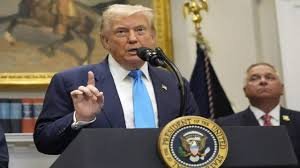
The Canadian government and the U.S. have confirmed that they will commence official talks in mid-January with the intention of commencing the USMCA review in preparation for the deadline in 2026. Note that this is no ordinary meeting. The two parties consider it the precise point at which they can convert the several months of tariffs into a negotiation process.
“Tariff updates” that are newsworthy here is that the present irritants are not hypothetical. Canada is quite specifically citing tariffs (and threats of tariffs) that are already affecting the identified sectors – steel, aluminum, autos, and lumber.
B) UK-U.S. “talks expected in January” because a tech-trade package is paused
On a separate note, the U.S. has also paused/prohibited a large UK-U.S. “tech prosperity deal” as well as other trade understanding agreements, with both countries announcing that negotiations will continue come January. These haltings have been linked largely to the trade disagreements that can lead to tariff pressure (or relief) based on the outcome, ranging from the digital service taxes, regulation, and food.So “January” is appearing in the articles due to:
the U.S. and Canada start official USMCA review talks, and
the U.S. and UK attempt to unfreeze a stalled package that ties market access and tariff outcomes to non-tariff policies.
2) What the “Proposed U.S. Tariffs” subject actually refers to today
“Despite headlines that may include ‘proposed’ or ‘threatened,’ the process functions as follows:”
Tariffs are employed as leverage to compel progress on other matters (rules of market access, digital taxes, agricultural standards, subsidies, and so forth).
The U.S. sets a deadline or makes a statement of intention, and the market moves accordingly.
Talks commence (or resume) as follows: tariff reprieve in exchange for policy concessions.
This is apparent in the following cases regarding Canada and the UK:
Current “pressure points” in Canada’s tariffs
In the dispute landscape involving the Canada-U.S. trade relationship, the politically vocal sectors are steel/aluminum, autos, and lumber/softwood, which happen to be highly symbolic and strongly represented by industry groups in each country. The Canadian government is presenting these as harmful “trade tensions” that must be remedied.
Nevertheless, ordinarily, simultaneously, and also in this regard, issues related to Canadian policy concerns which are not tariffs in themselves, often utilized as bargaining chips, have also been pointed out in public statements made by the U.S. Trade Representative:
Dairy market access
“Alcohol rules
Digital Services Issues
In this
“That’s classic ‘tariff negotiations logic’: the pain is the tariffs, and those are the bargaining chips,” said the official. The EU’s offer to
“Pressure points” in the UK’s current tariff
With the UK, there is evidence that the U.S. remains dissatisfied with:
Digital Services Tax / Digital Regulation
Tasks:
Analyzing the
food safety regulations that limit U.S. agricultural exports
. and that the U.S. has reacted by putting the pace of the tech prosperity track and some aspects of trade relief on hold, even as they claim talks continue through January.
Thus, ‘proposed tariffs’ in this case could be interpreted as follows: nothing has been specifically declared regarding a tariff rate agreed upon for the UK within the U.S. framework for this week, but rather the results of tariffs (relief or increase) have been retained for bargaining purposes.
3) “Live” updates, those that are constantly changing from day to day and should be closely followed
To grasp “the ongoing live developments,” these live-moving variables must be examined in relation to one another instead of just one:
Variable 1: Is the U.S. turning tariff pressure into a rules-based review (or keeping it ad hoc)?
Canada: The mention of “formal talks” in mid-January indicates that there is some move towards an
UK: There are concerns from lawmakers and commentators that some of these “-deals” are simply political announcements that are not locked in, making tariff alleviation reversible.
Why it matters: Pricings of risk in the context of a regulatory framework are different from those in the context of a press release framework.
Variable 2: Sectors which turn into bargaining chips.
The focus of Canada’s messages has been on sector pain (
The U.S. emphasizes policy access concerns (dairy/alcohol/digital).
The UK-U.S. track is strongly linked to digital and food standards.
A negotiation could resemble “tariffs,” but usually these trade-offs end up in rules and regulations in the form of “quotas,” “procurement policies,” and “tax policies.”
Variable 3: Is there credible deadlines with consequences?
Reuters has separately mapped out timelines for “trade war” situations and the important dates regarding tariffs in 2025-26, which highlight the use of deadlines to make decisions.
Even if you don’t record all the dates, record whether the January meetings conclude with:
a standstill agreement (no new tariffs during the course of the talks), or
a threat of escalation tied to a specific compliance demand.
Variable 4: Risk of Retaliation and “Sp
There are already retaliatory elements as well as more general tension in the Canada scenario.
When retaliation and counter-retaliation are normalized, even the threat of tariffs will lead to:
inventory frontloading (importers rushing product early),
contract renegotiations,
currency and commodity movements (notably metal prices).
4) The case of Switzerland demonstrates the application of tariff scheduling by the U.S. as a tool of negotiation
Example of a useful ‘how it works in practice’ case: U.S. sets tariff elements of a framework agreement with Switzerland/Liechtenstein, including changes to tariff schedule retroactive to a certain date, as well as a time limit for its completion (with a threat that U.S. may reconsider changes if agreement not completed by a certain date).
Why this is important to your question in January: It demonstrates that what is actually happening in America now is not “announce tariffs.” Rather:
To publish details through formal channels,
adjust tariff schedules,
keep conditionality (“finalize by X date or we reconsider”).
This same pattern – conditional relief combined with deadlines – could appear for the January results with other partners as well.
5) What this means for India (practical angle)
You’ve been keeping up with quite a few markets/finance stories, so here’s the interpretation of investors & economy through the lens of India.
This can lead to:
A) Trade diversion: tariffs canIf an increase in tariffs is introduced in certain U.S. trade partners or groups, consumers will switch manufacturers. This could lead to opportunities for Indian exports in certain product ranges and also poses issues in terms of compliance and pricing.
B) Input inflation: Metals and components
“Tariff wars related to steel, aluminum, or autos could lead to supply chain-related price volatility.” Canada-U.S. tensions in such product categories are significant, as they have enough scale to shape the overall pricing mood within North America.
“For India, this may manifest in the form of:”
higher or more volatile imported input prices (directly or indirectly),
order books in a globalizing world (notably in automobile parts and engineering products).
C) “Policy bargaining” becoming normal
The involvement of tariff exemptions with respect to digital taxes/services, market access, and standards indicates that notices about international trade negotiations are primarily directed at ensuring regulatory alignment and not only at customs duty rates.
The fact that India has similar “points of tension” with many of its partners (digital norms, data governance, and the like), makes the trend at issue relevant even beyond the US/Canada or US/UK scenarios.
6) Situations that might arise following the initiation of talk scenarios in January
Scenario 1: Freeze + Framework (most pro-market)
- No new tariffs during the course of negotiations.
A structured schedule is provided: Working Groups, Issues List, Timeline.
Initial ‘wins’ (small changes in quotas, for example, or tariff reductions in a sector). This is what markets usually enjoy, as it minimizes uncertainty. Scenario 2:
Conditional relief + hard deadlines
Your client is in “If you change X policy by Y date, then some relief will be given.”
Relief will follow if there are changes in some policies Threat of Snap-Back Tariffs Persists This can still be an opportunity, but volatility remains high—businesses hedge and defer invest. Scenario 3: Escalation into tariff spiral (Least Market-Friendly) The talks begin, but one of the parties signals “no movement,” and the tariff threats escalate. Retaliation follows quickly. This could lead to more broad-based risk-off positioning, particularly in those assets most sensitive to relationships between North American markets. 7) What to Watch (simple checklist) If you’re following this as a “live developments” ticker, these are the real-world indicators to pay attention to in the wake of the January meetings: Specific details about the starting dates and the people leading the delegations. Tasks and issue lists: does it cover only tariffs, or tariffs + digital + agriculture + standards? AP News 1 Any freeze commitment (“no new tariffs in the talks”). Industry call-outs: steel/aluminum autos/lumber (Canada) vs. digital AP News +1 Legal form: documented agreements versus press release level of understanding (credibility).