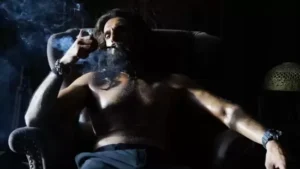
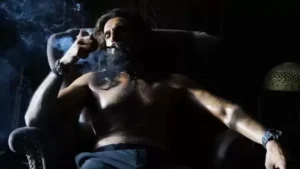
The remake of “Saat Samundar Paar” for a new film has sparked fan backlash online with mixed reviews on social media.
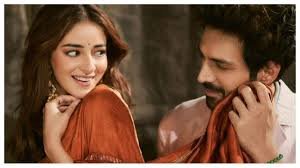
“Saat Samundar Paar” is not merely a song; it is a milestone in Indian popular music. First introduced to the world in 1991 as a part of the Bollywood movie Vishwatma, it contained the powerful vocals of Sadhana Sargam against the iconic screen presence of Divya Bharti. Composed by Viju Shah, the track became an anthem of longing, love, and emotional intensity. Since then, the song has transcended its initial cinematic appearance and grown deep roots in Indian pop culture.
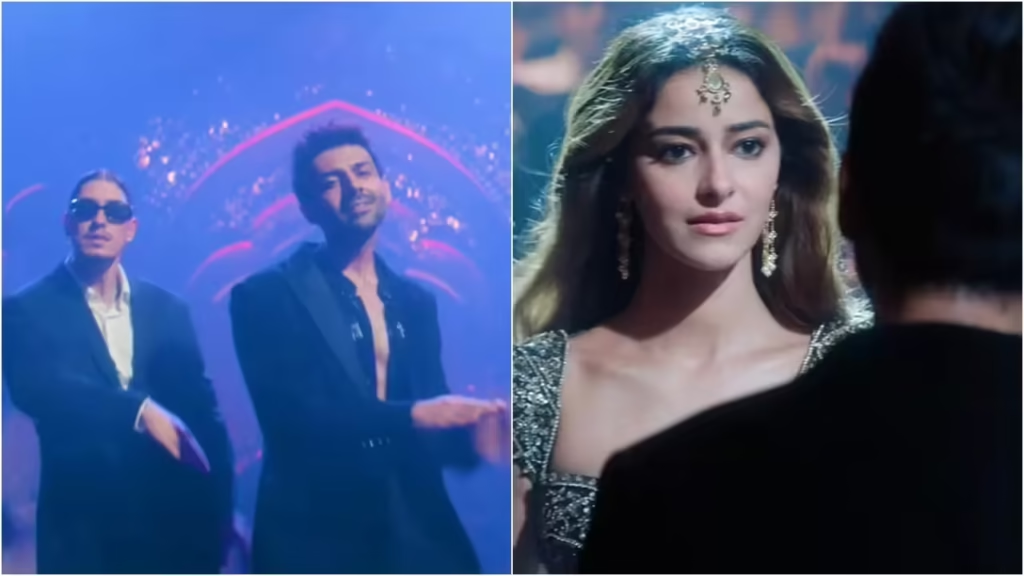
Therefore, when news that “Saat Samundar Paar” was being remade for a new film emerged, expectations were naturally high. However, instead of universal excitement, the remake triggered a wave of backlash online, as fans expressed disappointment, anger, and scepticism. In no time, debates, memes, criticism, and mixed reviews started flooding social media platforms.
This reaction raises some very important questions:
Why do covers of old songs spark so much contention?
What did go so wrong-or right-in this remake?
How does nostalgia, artistic license, and commercial interests mix well in Bollywood today?
The following article elaborates on these questions.
The Legacy of the Original “Saat Samundar Paar”
Emotional and Cultural Significance
The original song worked emotionally because it embodied lyrical emotion, soulful melody, and dramatic visual storytelling. In an era when Bollywood music was loaded with melody and emotion to substitute for digital production, “Saat Samundar Paar” was timeless.
For many listeners:
It represents the childhood memories.
It reminds one of the golden era of 90s Bollywood.
It is associated with Divya Bharti, whose tragic early death added a layer of emotional reverence to her work.
Because of this fact, the song is more than just a form of entertainment; it’s a sentimental artifact.
The Rise of Remakes in Bollywood
A Broader Industry Trend
The remake of “Saat Samundar Paar” is not an isolated incident. In the last ten years, Bollywood has witnessed an unprecedented rise in:
Classic songs remixed
Reimagined vintage movie soundtracks
Revived melodies with modern beats
From “Tamma Tamma Again” to “Dilbar” and “Tip Tip Barsa Paani”, the producers have repeatedly fallen back upon nostalgia as a commercial strategy.
Why Producers Choose Remakes
Guaranteed Recall Value
A familiar song ensures instant recognition and curiosity.
Younger Audience Reach
Remakes introduce Gen Z and younger millennials to classic songs.
Marketing Advantage
A known song creates online buzz on its own.
Lower Creative Risk
Proven melodies are less risky than investing in wholly new compositions.
But this approach also carries a risk: that of alienating loyal fans of the original.
“Saat Samundar Paar” Remake Announced
When the remake was officially announced, reactions were first mixed but then curious. Many fans were hoping that the song would:
Remain emotionally deep, and end
Respect the original composition.
Offer a new interpretation that is sensitive nonetheless.
But then, with teaser clips and audio previews surfacing, public opinion began to change.
Fan Backlash: What Sparked the Anger?
- Shallow Emotions
The biggest complaints with the remake were that it didn’t have the same emotional feel and depth as the original. Fans felt:
The new version sounded hurried.
Gone was the soulful melody, replaced by a heavy electronic beat.
Pain and longing that were part of the original vocals were lacking.
For many listeners, the remake registered much more as a dance track than as an emotional ballad.
- Overuse of Contemporary Beats and Auto-Tune
The other major criticism was the production choices. This remake of was reportedly heavy with
EDM-style bass
Auto-tuned vocals
Club-oriented rhythm
While this style appeals to younger audiences, long-time fans have argued that:
Trendiness took over and the core emotion of the song was sacrificed.
It sounded so generic.
It could be any modern song, not necessarily “Saat Samundar Paar”
- No Way to Avoid Comparisons to the Original
Remakes offer themselves up to direct comparison, and in this instance, the original set an impossibly high benchmark.
Fans likened
Sadhana Sargam’s classical vocal depth vs. the new singer’s delivery
Divya Bharti’s expressive performance vs. the new visual treatment
Lyric pronunciation and emotional pauses
Where most comparisons were made, the fans felt the remake came up short.
- Nostalgia and Emotional Proprietorship
Perhaps the biggest reason behind the backlash is the nostalgia. Fans do not just listen to old songs; they own them emotionally.
Many social media users expressed sentiments like:
“This song is our childhood”
“Some classics should never be touched”
“You can’t remake emotions”
For such fans, this remake felt like a violation of memory, not just a creative reinterpretation.
Social Media Reactions: A Divided Audience
Twitter (X): Brutal and Instant Criticism
On platforms such as Twitter:
Hashtags against the remake started trending.
Short clips comparing old and new versions went viral.
Sarcastic memes that mocked the remix trend in Bollywood
Common comments included:
“Stop ruining classics”
“Bollywood has run out of ideas”
“Original is original for a reason”
Instagram and Reels: Mixed Engagement
Instagram proved to have a more balanced reaction:
Some users enjoyed dance reels set to the new version.
Influencers lauded the visual styling of the song.
Others have used reels to express disappointment.
This highlighted a generational divide:
Younger audiences were more accepting.
Older fans were more critical.
YouTube Comments: Specific Critiques
The comment sections on YouTube became places where fans practiced long-form critique. One wrote paragraphs explaining:
Why the original was better
What are the missing emotional ingredients?
How remakes reflect lack of creativity
At the same time, some rose to the remake’s defense, saying:
Music changes over time.
Every generation has the right to its version.
The remake doesn’t blot out the original.
Supporting the Remake: The Other Side of the Argument
Some even found support for the remake despite backlash.
Arguments in Favor
Music Must Evolve
Supporters said that to envision old-style music today is unrealistic.
Different Audience, Different Taste
Younger listeners, who didn’t grow up with the original, enjoyed the new version.
Original Still Exists
The original doesn’t get deleted by a remake; fans can still listen to it at any moment in time.
Visual Attractiveness
The newfangled cinematography, styling, and choreography pleased many.
This group considered the backlash to be disproportionate and emotionally charged.
The Bigger Issue: Creativity vs. Commercialization
Is Bollywood Over-Relying on Nostalgia?
The controversy reignited a larger debate:
Is Bollywood becoming creatively lazy?
Is originality being replaced by remakes?
Is it purely a moneymaking venture to exploit nostalgia?
Critics believe that constant remakes:
Limit opportunities for new composers
Limit musical experimentation
Create audience fatigue
Economic Pressures on Filmmakers
Filmmakers face:
High costs of production
Unpredictable box-office performances
Competition by OTT platforms
In this atmosphere, familiar songs feel like financial insurance.
Ethics of Remaking Classics – an Emotional Issue
Remaking a classic isn’t a creative act but an emotional responsibility.
Key ethical questions include:
Should some songs be left unedited?
How much creative freedom can be taken?
Where is the line between tribute and exploitation?
It is here that “Saat Samundar Paar” sits at the center of this dilemma.
Lessons from the Backlash
For Filmmakers & Music Producers
Respect the source material. Understand Why the Original Worked Avoid Overproduction Clearly Communicate the Intent Innovation needs to be balanced with sensitivity. For Readership The backlash also reflects how much audiences care about music. It demonstrates : Emotional investment into art Cultural memory connected with sound Desire for authenticity Conclusion: A Song, A Generation, A Debate The remake of “Saat Samundar Paar” has done more than update a song; it has reignited a national conversation about nostalgia, creativity, and respect for cultural icons. While some see this backlash as resistance to change, others do see it as a defense of emotional heritage. Neither side is entirely wrong. Music exists in the crossroads of memory and modernity, and remakes will always be controversial when they touch something deep inside that is loved. Ultimately, the controversy establishes one thing beyond doubt: “Saat Samundar Paar” is eternal. These strong reactions—positive or negative alike—bear witness to its enduring influence on Indian music and the collective memory of its people.