West Asia crisis: Export uncertainty hits mango trade, Karnataka farmers explore alternative and local markets
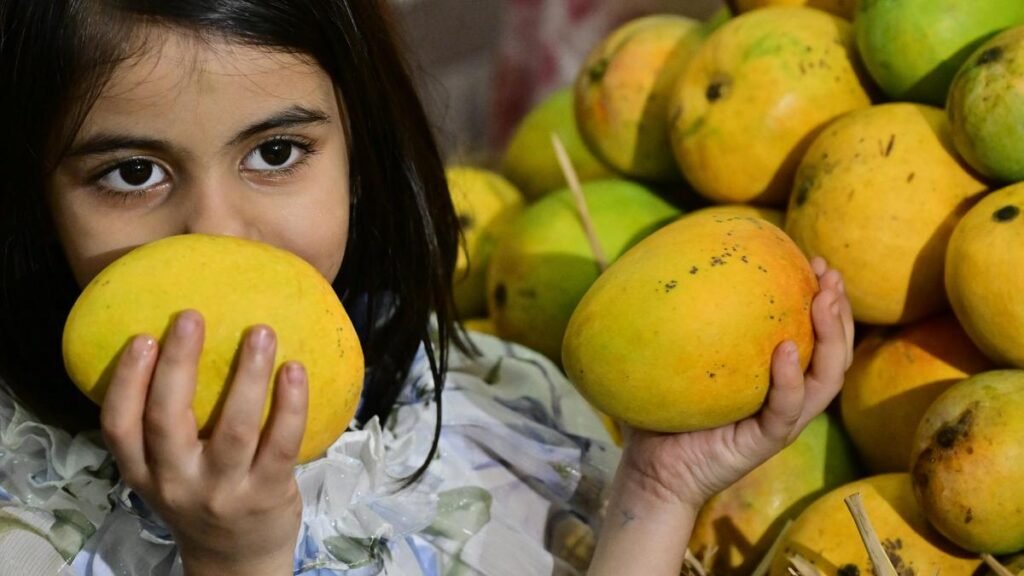
The situation in West Asia also known as the Middle East is really bad for trade. This is especially true for India, where people who export farm products like mangoes are having a time. The state of Karnataka is one of the affected areas because many farmers there depend on selling their mangoes to other countries.
🌍 1. Why West Asia is important for Indian Mango Export
West Asia has always been a market for Indian farm products, including mangoes. Countries like the UAE, Saudi Arabia, Qatar, Oman and Kuwait buy a lot of fruits.
Why West Asia matters to mango exporters:
It is close to India so it takes less time and money to ship mangoes there.
There are Indians living in West Asia and they like to buy Indian mangoes.
During the month of Ramzan people in West Asia eat a lot of mangoes.
India has been trading with West Asia for a time so the system is well established.
In some areas half of the exports go to the Middle East. This makes the system very vulnerable to problems in the region.
⚠️ 2. What is causing the crisis?
4
The crisis is happening because of problems between countries like Iran, Israel and the United States. Some of the issues include:
🚢 Problems with trade and shipping
There are threats of blockades in the Strait of Hormuz.
Ships have to take a route, which takes more time.
Shipments are being delayed by 15-20 days.
💸 Costs are going up
The cost of shipping has increased by 40-60%.
It now costs ₹600-650 per kilogram to ship mangoes by air, which’s twice as much as before.
📦 The supply chain is breaking down
Containers are stuck at ports or at sea.
Buyers from countries are delaying payments.
Ships are not coming often as they used to.
🥭 3. How the crisis is affecting the mango trade
(A) Export problems
Mango shipments are stuck at ports or on the way.
Exporters are not placing orders.
People are having to use air freight to ship mangoes.
As a result the number of mangoes being exported is going down sharply.
(B) Prices are falling in markets
When exports slow down there is too much supply in the local market.
This means that prices are falling and farmers are having to sell their mangoes at a loss.
In some cases the mangoes are being thrown away. Wasted.
We have seen this happen with crops like vegetables and onions where prices fell because of export problems.
(C) Losses due to mangoes going
Mangoes are very perishable:
They can only be stored for 1-3 weeks.
Delays mean that the mangoes are going bad.
Exporters are saying that:
Whole shipments of mangoes are going bad.
Small traders are facing financial losses.
🌾 4. The situation for farmers in Karnataka
Karnataka areas like Kolar, Srinivasapura and Bengaluru Rural is a big mango-producing region.
What farmers are facing:
Export orders are being. Delayed.
Traders are offering prices.
There is not storage space.
Transportation costs are going up.
In some cases farmers have:
Thrown away their mangoes because they could not sell them.
Sold their mangoes at low prices.
🔄 5. Moving to local markets
Farmers are adapting to the situation.
(A) Focusing on the local market
Selling mangoes in markets.
Targeting cities like Bengaluru, Mumbai and Delhi.
Supplying mangoes to chains and supermarkets.
(B) Selling to processing units
Selling mangoes to factories that make pulp and juice.
However these units are also facing problems because of export issues.
(C) Finding new export markets
Looking at Europe, Southeast Asia and domestic e-commerce.
The Agricultural export authority, APEDA is also:
Looking for shipping routes through the UAE.
Helping to reroute shipments and reduce delays.
📉 6. The economic impact on the whole value chain
The mango crisis is not just affecting farmers it is affecting the system:
👨🌾 Farmers
Are losing income.
Are facing debt.
🚛 Transporters
Have shipments.
Have logistics capacity.
📦 Exporters
Are facing cash flow problems.
Are seeing rising costs.
🏭 Processing industries
Are facing export demand.
Have inventory.
🌐 7. The bigger impact on agriculture
The mango crisis is part of a trend:
Spice exports, like cumin are going down because of instability.
Rice, chillies and eggs are facing disruptions.
Many sectors are being affected at the time.
This shows how problems in countries can affect the whole agricultural economy.
🏛️ 8. What the government is doing
The government is:
Looking for shipping routes.
Reducing port charges.
Considering subsidies for air freight.
Monitoring export flows.
Farmers want:
A minimum support price for their mangoes.
The government to buy their mangoes directly.
Export incentives.
🔮 9. What this means for the future
(A) The need to diversify markets
Depending much on West Asia is not a good idea.
India needs to expand into:
Europe.
Africa.
East Asia.
(B) Improving storage
To reduce spoilage.
To keep mangoes fresh for longer.
(C) Increasing processing capacity
To convert mangoes into pulp, juice and dried products.
(D) Using technology for agriculture and direct selling
Creating platforms for farmers to sell directly to consumers.
Online fruit delivery models.
📊 10. Key points
The crisis in West Asia has disrupted mango exports.
Farmers in Karnataka are facing price crashes and unsold produce.
Logistics costs and delays are challenges.
Farmers are shifting to alternative markets.
The long-term solution is to diversify and improve infrastructure.
The crisis in West Asia shows that India’s agricultural export system is vulnerable because it depends much on one region and has fragile logistics networks. For mango farmers in Karnataka what should have been a season has turned into a time of uncertainty and loss.
However the crisis is also leading to changes. Farmers, exporters and policymakers are starting to rethink their strategies looking for markets strengthening domestic supply chains and investing in processing and storage.
If these changes continue the current crisis could ultimately lead to a resilient and diversified agricultural economy, in India.