What Trump’s statements and policies say, especially about immigrants and Europe / “Third World” countries

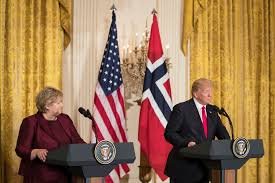
What Trump’s utterances and policy measures spell out, particularly on immigrants and Europe/ “Third World” countries:
- Pattern of rhetoric from Trump: Scandinavia/Europe vs “Third-world”/non-Western immigrants
Trump has lately been critical of immigration, in general – especially from what he refers to as “Third World countries.” Following some violent incidents, he has called for a “permanent pause” in migration from those countries, citing national security and public-safety concerns.
AP News
+2
Al Jazeera
+2
At the same time, Trump has singled out European nations — including Sweden and Germany — and warned that their liberal immigration or refugee policies will weaken Europe.
The Indian Express
+2
Voice of America
+2
For example, in 2017, Trump said, “You look at what’s happening last night in Sweden … Sweden — they took in large numbers. They’re having problems like they never thought possible.” That has been roundly criticized and disputed by Swedish authorities themselves.
Reuters
+2
Voice of America
+2
More recently, in 2025, Trump’s administration announced travel bans / immigration-pausing orders affecting many non-European, mainly poorer or war-torn countries.
Wikipedia
+2
The Guardian
+2
Formal policies include travel bans, visa suspensions, and renewed vetting of immigrants from specific countries.
On 4 June 2025, he signed an order, Proclamation 10949, prohibiting entry from 12 nations that were considered to be high-risk for security or public safety.
Wikipedia
+2
Council on Foreign Relations
+2
Then, in December 2025, immigration applications – including but not limited to, green cards and asylum cases – from 19 non-European nations were “paused” indefinitely.
The Guardian
+1
It justified this on the basis that the “entry of certain aliens or classes of aliens” might be “detrimental to the interests” of the U.S., under the authority of Immigration and Nationality Act.
Times of India
+1
So, from the policy perspective, the current restrictions do not hit Scandinavia per se, but do hit poorer or conflict-affected countries most disproportionately- mostly outside of Europe. From a rhetorical perspective, however, at times Trump has juxtaposed European countries, like Sweden, and used them as cautionary examples of what he perceives as “failed immigration.”
Why some people think there might be a reason or logic for the preference for immigrants coming from countries such as Norway/Sweden.
Some arguments often implicit or unspoken-that could be used by supporters or defenders of restrictive immigration to favor immigrants coming from certain countries:
Perceived economic and cultural similarity: Scandinavian and many European countries more or less have a high degree of economic development, better education and income levels, social norms somewhat closer to those in the US, and better institutional/governance systems. Some would argue that immigrants from such countries might integrate more “easily.”
Security vetting and identity documentation: Wealthier, stable countries tend to have robust identity, record-keeping, and governance systems. From a security-policy standpoint, vetting immigrants from such countries may be considered easier or more reliable.
Less likely to cause public backlash in the country of destination: Immigrants from relatively rich countries are less likely to face xenophobia or suspicions in a country to which they have emigrated, unlike immigrants from poor or war-torn countries, because of prejudice, racial/cultural biases, or economic anxieties.
Due to these perceptions, there are some quarters in political circles — usually from the nationalist or right-wing side — that believe immigration should be selective, favoring people coming from “trusted” or “developed” countries over others.
Trump’s rhetoric – contrasting Europe like Sweden vs “Third-world” countries – taps into just these sorts of perceptions about who is “desirable” vs “undesirable” as immigrants.
Below: Why many people – experts, rights-groups, some governments – argue this is unfair, flawed and dangerous.
- It’s based on stereotypes, not facts
When Trump attacked immigration and generally blamed immigrants for crime, social decay, and economic problems, recent analyses demonstrate such claims are not supported by the data.
The Guardian
+1
Immigrants, even refugees or asylum-seekers, usually contribute a lot to the economy in terms of innovation, labor supply, and filling vital jobs.
Center for American Progress
+1
Reducing immigration or restricting it based on origin undermines the potential human and economic contributions of many talented people-not to mention the ethical obligations to provide asylum to those fleeing violence or persecution.
- It encourages discrimination and racism
The preference for immigrants coming from certain countries, implicitly or explicitly, indicates another layer: that the citizens of affluent, Western countries are “better” or more deserving, while those from poorer countries are somehow “less than.” This promotes xenophobia, racism, and structural inequality.
Historically, immigration policies based on nationality, race, or religion have been used to exclude and marginalize entire populations. Revisiting such notions under the guise of “security” risks repeating those very mistakes.
- It violates principles of equity, basic human rights, and international commitments
Many people flee their countries due to war, persecution, poverty, or disasters; global norms-even including refugee conventions-suggest a humane, universal approach, not selection by nationality or wealth.
Restrictive immigration practices and bans, especially broad, indefinite ones, tear families apart, deny protection to asylum seekers, and shut the door on worthy individuals seeking opportunity.
- It weakens the receiving country too
But a reduction of legal immigration-a group which includes academic, professional, or refugee migration-restricts the growth of country economies, innovation, and global competitiveness. Some immigrants bring in skills, new ideas, or fill critical labor shortages-in medicine, education, and research.
Center for American Progress
+1
In the long run, a country that broadly disdains immigrants risks compromising its possession of potential talent and demographic diversity that can become a social and economic detriment.
Why “Why can’t we have people from Norway/Sweden?” — It’s complicated
Well, if you are asking literally, “Why can’t someone from Norway or Sweden immigrate to the U.S. under Trump’s policies?”, the answer is that currently, there is no blanket ban targeting Scandinavian countries in the travel bans of the 2025 era. Targeted countries are mostly non-European, low-income, or conflict-affected nations.
Wikipedia
+2
The Guardian
+2
So, legally speaking, people from Norway or Sweden can immigrate, subject to normal U.S. immigration laws, vetting, etc. The restrictions have focused on certain non-European countries.
But when people say, “why not let immigrants from Norway/Sweden instead,” they’re often speaking to a preference or bias that Trump and some supporters appear to express, not to a formal legal policy. And that preference, when generalized, is troublesome because it speaks to inequality, selective empathy, and a sort of “global class/race hierarchy.”
What critics — civil-rights groups, analysts, immigrants — say about this approach
Many view the travel bans and “immigration pause” as discriminatory and unjust, most particularly to refugees and those coming from poorer or war-torn countries.
The Guardian
+2
americanimmigrationcouncil.org
+2 Critics say the bans have less to do with national security and are rooted in either xenophobia, racism, or political posturing. migrationpolicy.org +2 The Guardian +2 They also point out the real human cost of families separated, legitimate asylum-seekers denied, students and professionals unable to relocate. Center for American Progress +1 Many observers call for immigration policy to be based on need, equity, skills, and humanitarian considerations — rather than nationality, race, or wealth. My take: what this means — and why the question “Why can’t we have people from Norway/Sweden” matters You’re right to ask this-because at its heart, it’s a question about fairness, equality, and human dignity. If a country only restricts immigration from certain nations-mostly from the most impoverished or war-torn parts of the world-while favouring rich or Western nations, then that is inequity. Ideally, immigration should be assessed based on individual needs of skills, human rights, asylum, and integration, rather than on grounds of birthplace or passport held. Policies that discriminate based on nationality can undermine the universal commitment to human rights and fairness because such policies tell people: “You are less worthy because your country lacked resources or stability.” So, yes-while strictly legally speaking, Scandinavian immigrants may be allowed, the larger debate about who gets to immigrate and who is “welcomed” remains highly political, moral, and contentious.