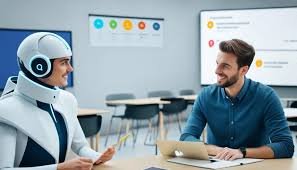
Widespread adoption of AI-driven personalized learning
???? Widespread Adoption of AI-Driven Personalized Learning — Full Detailed Explanation
6
Over the past year, one of the biggest global education trends has been the mass adoption of AI-powered personalized learning systems in schools, universities, and online education platforms. This news is gaining massive attention because it signals the beginning of a new era in education, where learning is no longer “one-size-fits-all.” Instead, AI analyzes each student’s skills, weaknesses, speed, and behavior to create a custom pathway of learning — just like a private tutor.
Let’s break everything down in a very long, structured, detailed manner. Thinking Cap
1. What is AI-driven personalized learning?
AI-driven personalized learning is:
Learning systems that adapt to each student individually
AI-powered algorithms that track performance in real-time
Customized practices, quizzes, explanations, and difficulty levels
Smart recommendations on what he should study next.
24/7 AI tutors available on laptops, tablets, and phones
Unlike traditional classrooms where everyone studies the same content at the same speed, AI ensures:
???? Slow learners receive step-by-step assistance
Fast learners forge ahead unimpeded.
???? Teachers get an overview of all students’ progress
This technology is now exploding globally, and that’s why it’s dominating education news.
Earth 2. Why Is the Adoption Becoming So Widespread Now?
Several global shifts triggered a sudden boom:
✔ Cheaper access to AI tools
Deployment of AI models is becoming both cheaper and faster.
✔ Online and hybrid learning in the post-COVID era
The pandemic pushed schools to adopt digital platforms, and AI became the upgrade.
Tech Giants Enter Educational Technology
Companies like Google, Microsoft, BYJU’S, Khan Academy, and Meta are launching AI tutors and adaptive platforms.
✔️ Governments are investing heavily
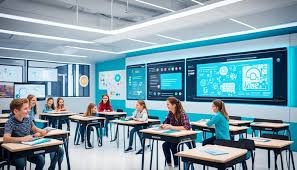
Countries like India, UAE, USA, and Singapore are funding AI-based smart classrooms.
✔ Skills required in future jobs have changed
Industry 4.0 demands critical thinking, problem-solving, coding, and analytical skills — AI helps teach them efficiently.
These factors combined have made AI-personalized learning one of the fastest-growing trends in education today.
???? 3. How AI Makes Education More Personal (In-Depth
AI collects data from:
Past test scores
Reading speed
Mistakes made in quizzes
Areas where the student stammers
Time spent on each subject
Preferred learning style: audio, visual, reading, interactive
Based on this, AI:
- Develops an individualized learning plan unique to each learner.
No two students are given the same path.
???? 2. Automatic adjustment of difficulty
AI simplifies the content if a student is struggling.
If a student is confident, AI increases difficulty.
???? 3. Generates instant quizzes and feedback
This relieves much time for teachers.
- Provides a variety of learning formats.
Video explanation
Audio summary
Text notes
Mind-active plays
- Serves as a 24*7 tutor
Students no longer need to wait for school or coaching.
This level of personalization was impossible before AI.
- Cases From Real Life (International & India)
International Examples
Khan Academy’s AI tutor “Khanmigo” is helping millions of students solve math, coding, and science questions interactively.
Google’s LearnLM creates AI-generated study notes, flashcards, and explanations.
Microsoft Reflect & Copilot for Education providing emotional and academic support tools.
???? India Examples
The adoption in India is massive:
BYJU’S AI Learning Engine identifies strengths and weaknesses.
Allen & PhysicsWallah: using AI to personalize competitive exam preparation.
Government’s PM SHRI Schools integrating AI labs and adaptive learning software.
CBSE plans AI-based evaluation models.
This adoption is rapidly transforming how Indian students prepare for boards, JEE, NEET, UPSC, and skill learning.
???? 5. Benefits of Widespread AI Adoption
- Hyper-personalized learning for all
Students receive just what they need, not all students do.
- Higher engagement
AI incorporates gamification, quizzes, and interactive visuals.
- Quicker learning
When the content is personalized, students learn up to 40% faster.
- Lowered pressure
Weak students are not forced to match the class pace.
- Teachers’ workload decreases
AI handles:
Grading
Report generation
Doubt solving
Lesson planning
- Improved performance in examinations
Students improve their accuracy and retention.
- Everywhere accessible
Even rural students with smartphones can get AI tutoring.
⚠️ 6. Challenges & Concerns
Even as the adoption is growing fast, there are challenges:
Digital divide
Not everyone has devices or access to the internet.
???? Over-dependence on AI
Students might rely too much on AI instead of thinking independently.
???? Data privacy issues
AI platforms collect a lot of data on students.
???? Teachers need re-training
Educators must learn how to use AI tools effectively.
???? Ethical concerns
Who decides what the AI should teach? How neutral is the content?
Governments and institutions are now working to address these issues.
???? 7. Future of AI-Driven Learning (2025–2030 Predictions)
Here’s what experts predict:
✔ AI tutors will be available to every student globally
Like having a private teacher for every child.
✔ Entire textbooks will become AI-interactive
Students will “talk” to their books.
✔ VR + AI will create virtual classrooms
Students will learn history inside simulations or learn biology inside a virtual body.
✔ Exams will become adaptive
Each question will change difficulty based on students’ answers. ✔ AI will help teach emotional intelligence, creativity, and soft skills Not just academics. ✔ Teachers will shift from “teaching content” to “mentoring students.” AI won’t replace teachers — it will empower them.