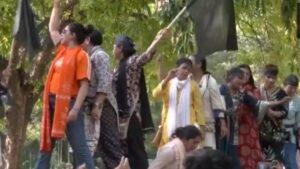
Despite setback, Govt. determined to remove all obstacles to women’s reservation: PM Modi
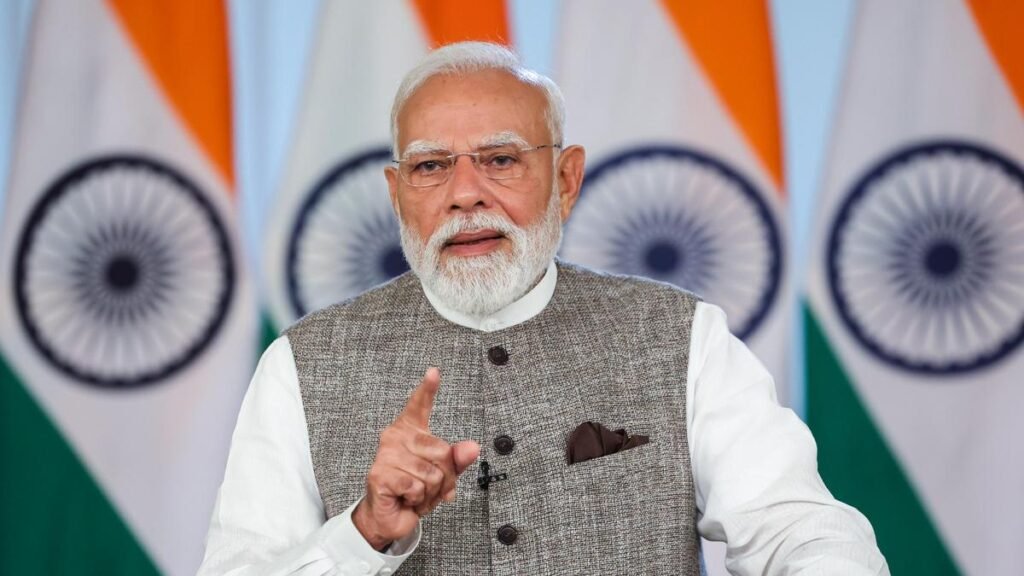
The statement by Narendra Modi—“Despite setback, Govt. Determined to remove all obstacles to women’s reservation”—shows a political commitment to enhancing women’s representation in India’s legislative bodies. This issue has been one of the debated topics in Indian politics for decades. It touches upon themes of gender equality, democratic inclusiveness, constitutional reform and social justice.
1. The Idea of Women’s Reservation
Women’s reservation in India refers to the proposal to reserve a fixed percentage of seats in bodies like the Lok Sabha and State Legislative Assemblies for women. The objective is to ensure women have representation in decision-making institutions. Women have historically been underrepresented in these institutions.
India despite being the world’s democracy has seen relatively low female representation in Parliament. Women constitute half of the population. However their presence in bodies has often hovered around 10–15%. This imbalance has been viewed as a barrier to governance.
2. Historical Background
The roots of women’s reservation go back to the 1990s. The first major attempt was made in 1996. The Women’s Reservation Bill was introduced in Parliament. Faced strong opposition and could not be passed.
Over the years multiple governments attempted to bring the bill. However political disagreements prevented consensus. A significant breakthrough came in 2010. The Rajya Sabha passed the bill. It lapsed as it was not approved by the Lok Sabha.
3. The Recent Development: Nari Shakti Vandan Adhiniyam
In 2023 the government led by Narendra Modi. Passed a landmark legislation. This law aims to reserve 33% of seats in the Lok Sabha and State Assemblies for women.
The bill was passed with support in Parliament. This marked a moment in India’s legislative journey.
Key Features:
* 33% reservation for women in Lok Sabha and State Assemblies
* Reservation within Castes and Scheduled Tribes quotas
* Implementation linked to the next delimitation exercise
* Rotation of seats
4. Understanding the “Setback”
Despite the passage of the law the Prime Minister’s statement refers to political setbacks. These have slowed implementation.
4.1 Delimitation Requirement
The law states that reservation will be implemented after a delimitation exercise. This is expected after the census. India’s delimitation has been frozen until 2026. This delays implementation.
4.2 Census Delay
The census, necessary before delimitation has been delayed. Without updated population data the process cannot proceed.
4.3 Political Criticism
Opposition parties have criticized the delay mechanism. They argue that the law lacks effect and may postpone actual benefits for years.
4.4 Demand for Sub-Quotas
Some groups have demanded quotas within the women’s reservation for Other Backward Classes. This has been an issue.
5. Government’s Determination
The statement by the Prime Minister emphasizes that despite these challenges the government remains committed. They aim to remove all obstacles.
Key Signals of Determination:
* Commitment to conducting the census
* Ensuring delimitation
* Building consensus
* Addressing concerns of communities
This reflects a broader vision of strengthening democracy through inclusive representation.
6. Importance of Women’s Reservation
A democratic system is truly representative when all sections of society have a voice. Increasing women’s participation ensures decision-making.
6.1 Democratic Inclusiveness
Women’s participation ensures that all sections of society have a voice.
6.2 Better Governance Outcomes
Studies have shown that women leaders often prioritize issues. These include health, education, sanitation and welfare.
6.3 Empowerment
Political representation empowers women socially and economically. It inspires participation in public life.
6.4 Role Models
Women leaders act as role models for generations. They encourage them to pursue leadership roles.
7. Lessons from Local Governance
India already has a model of women’s reservation at the grassroots level. Under the Panchayati Raj system seats are reserved for women in bodies. This has led to:
* Increased participation of women in governance
* Improved local development outcomes
* Greater awareness of women’s issues
This success strengthens the case for extending reservation to levels.
8. Political Debate and Criticism
While widely supported the policy is not without criticism.
8.1 Merit vs Reservation
Some argue that reservation may compromise merit. However supporters counter that structural barriers have limited women’s opportunities.
8.2 Proxy Representation
There are concerns that women representatives may act as proxies for male family members. While this has occurred it has decreased over time.
8.3 Rotation System Issues
Frequent rotation of seats may disrupt political continuity and accountability.
8.4 OBC Representation Debate
The absence of a quota for OBC women remains a contentious issue.
9. Global Perspective
India is not alone in adopting gender quotas. Countries like Rwanda, Sweden and Norway have implemented measures with significant success.
10. Socio-Economic Impact
10.1 Policy Priorities
With women legislators policies may become more inclusive. They may focus on health, education, gender safety and employment.
10.2 Economic Growth
Empowering women contributes to growth. It increases workforce participation and productivity.
10.3 Social Transformation
Greater political representation challenges norms. It promotes gender equality.
11. Challenges Ahead
Despite the government’s determination several challenges remain:
* Timely completion of census
* Smooth delimitation process
* Managing disagreements
* Ensuring implementation
12. Future Outlook
The success of women’s reservation will depend on:
* Will
* Administrative efficiency
* Social acceptance
If implemented effectively it could transform India’s political landscape.
13. The statement by Narendra Modi highlights a moment in India’s journey toward gender equality. While setbacks have slowed progress the government’s commitment indicates that the issue remains a priority.
Women’s reservation is not a political reform—it is a social revolution. It aims to correct imbalances and build a more inclusive democracy. By ensuring that women have a voice in governance India moves closer to realizing the true spirit of equality enshrined in its Constitution.
In the coming years the focus will be on translating intent into reality. If successful this reform could redefine the role of women in politics. It could set an example, for the world.