‘You gave me clearance, firing now’: Frantic audio of India flagged ship at Hormuz surfaces, Iran envoy reiterates ties
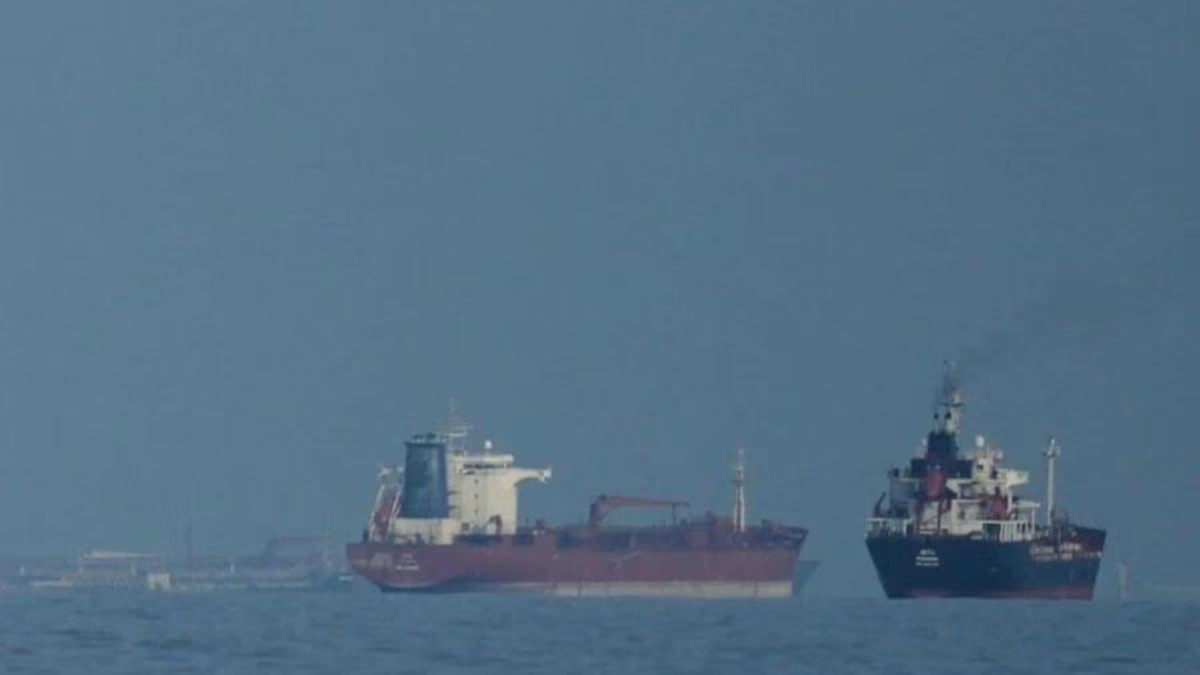
In April 2026 a serious incident happened in the Strait of Hormuz. This is one of the worlds critical oil shipping routes.
Two Indian oil tankers were trying to pass through the strait. They were fired upon by gunboats. These gunboats are reportedly linked to the Islamic Revolutionary Guard Corps (IRGC). The ships had to turn. Thankfully no one was hurt.
This incident quickly became an issue between India and Iran.
### 2. The ” audio”. What does it reveal?
A distress audio clip from one of the tankers Sanmar Herald surfaced. It became a part of the story.
#### What was heard?
A crew member radioed forces. He said:
“You gave me clearance to go… you are firing now… let me turn back.”
This short message reveals critical things:
* There was confusion at sea. The ship believed it had official clearance to pass. Suddenly it came under fire. This created panic.
* There was a breakdown of communication. Maritime navigation depends heavily on coordination between naval authorities and civilian ships. This incident suggests there was miscommunication or conflicting commands within forces.
* The crew was in danger. The tone of the message reflects fear and urgency. The crew believed they were in danger.
### 3. Why is the Strait of Hormuz so important?
The Strait of Hormuz is one of the strategically sensitive locations in the world.
Here are some key facts:
* 20% of global oil trade passes through it.
* It connects the Persian Gulf (an oil- region) to the Arabian Sea and global markets.
* Countries that depend on it include India, China, Japan and European nations.
For India nearly half of crude oil imports pass through this route. So any disruption here directly affects fuel prices the economy and energy security.
### 4. Background: Why were ships being targeted?
This incident is not isolated. It is part of a geopolitical crisis.
There are tensions involving Iran, the United States and Israel.
Some key developments:
* Iran had partially. Restricted the strait.
* The US imposed a blockade on Iranian oil exports.
* Iran warned ships that authorized vessels could pass. Others could be treated as threats.
This created a high-risk war zone at sea. Misidentification can lead to firing. Civilian ships are caught in tensions.
### 5. What happened to the ships?
According to reports the ships involved were:
* Sanmar Herald
* Jag Arnav
Both were:
* Approached by gunboats
* Fired upon
* Forced to retreat
Another Indian tanker successfully crossed later. This shows the situation is inconsistent and unpredictable.
### 6. India’s response
India reacted quickly and strongly.
#### Diplomatic action:
* India summoned the ambassador.
* Expressed “deep concern.”
* Demanded passage of ships.
Key demands:
* Ensure security of vessels.
* Resume transit operations.
* Prevent repeat incidents.
### 7. Iran’s response: “Relations are very strong”
After being summoned the Iranian envoy responded carefully.
What Iran said:
* India-Iran relations are “very strong.”
* Emphasized cooperation and communication.
* Desire to avoid escalation.
Why this matters:
* Iran is trying to avoid fallout.
* Maintain energy and trade ties with India.
* Show the incident may not have been intentional.
### 8. India–Iran relations: Why both sides are cautious
Despite the firing incident both countries have ties.
Key areas of cooperation:
* Energy trade: India imports oil from Iran (directly or indirectly).
* Strategic projects: Chabahar Port ( for India’s access to Central Asia).
* balance: India maintains ties with Iran, the US and Israel. So it must balance carefully.
### 9. What caused the firing? (Possible explanations)
The exact reason is still unclear. Experts suggest:
1. Miscommunication: The ship had clearance but local forces didn’t recognize it.
2. Fragmented command: Iran’s naval operations may not be centrally coordinated during war.
3. High-alert environment: Any ship = potential threat.
4. Signaling: Iran may be sending a message to the US and global shipping companies.
### 10. Global implications
This incident has global consequences.
* **Energy markets**: Oil prices can rise due to the risk of supply disruption and insurance costs for shipping.
* **Shipping industry**: Ships may avoid Hormuz take routes and increase freight costs.
* **Risk of escalation**: If a ship is seriously damaged it could trigger retaliation.
### 11. India’s counter-measures
India has already started protecting its interests.
#### Operation: Operation Urja Suraksha
* Indian Navy deployed destroyers, frigates and escort ships.
* Purpose: Protect vessels and ensure oil supply continues.
### 12. Key takeaway from the audio incident
The audio clip is important because it shows:
* Real-time panic and confusion.
* The danger faced by sailors.
* The fragility of communication during war.
It turns an issue into a human story of survival at sea.
### 13. Final analysis
This incident highlights three realities:
1. The Strait of Hormuz is a pressure point. Any conflict here affects the world economy.
2. Civilian ships are caught in conflicts. With clearance they are not fully safe.
3. Diplomacy is still active. Despite tensions India. Iran reassured. Both sides are trying to avoid escalation.
The “you gave me clearance” audio captures the dangerous reality of modern geopolitical conflicts. A routine oil shipment turned into a life-threatening situation within seconds due to miscommunication and military tension.
While India has taken a diplomatic stand Iran’s emphasis on “strong ties” shows that both countries want to contain the crisis rather than escalate it. However long as tensions between Iran, the US and Israel continue the Strait of Hormuz will remain a volatile and unpredictable hotspot—, with global consequences.