SBI seeks review of SC verdict that ‘spectrum’ does not count as an asset in IBC proceedings
The State Bank of India recently went to the Supreme Court of India to ask them to review a judgment they made on February 13 2026. This judgment said that telecom spectrum cannot be considered an asset when a company is going through insolvency proceedings, which are governed by the Insolvency and Bankruptcy Code.
This case is very important because it affects a lot of people and companies including banks and lenders telecom companies and infrastructure financing. The State Bank of India filed this petition on behalf of lenders to the Aircel Group, which owes a lot of money to banks.
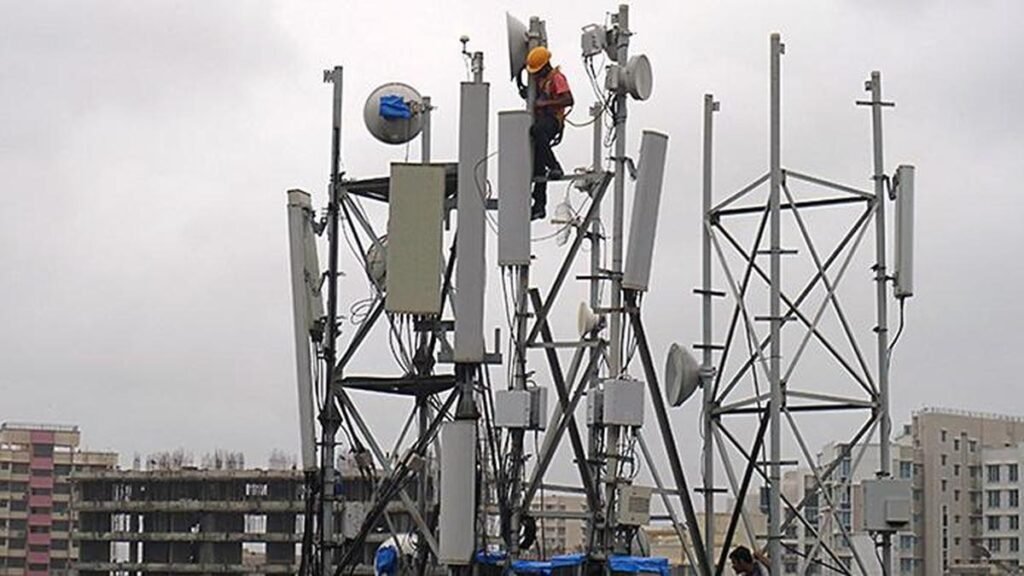
The Supreme Court said that telecom spectrum is a resource that is owned by the Government of India. Telecom companies do not own the spectrum they only get a license to use it. So the spectrum cannot be treated as a company asset under the Insolvency and Bankruptcy Code.
In words companies do not own the spectrum they only borrow or use it. The legal reasoning behind this is that the spectrum belongs to the public and is held in trust by the government. The licenses that telecom companies get only give them conditional rights to use the spectrum and these rights can be taken away. Since telecom companies do not own the spectrum it cannot be considered an asset under insolvency law.
The Insolvency and Bankruptcy Code is a law that helps resolve companies and allows the sale of company assets to recover loans. Normally when a company fails its assets are. The banks recover their money.. In this case the Supreme Courts ruling created a problem for lenders because if spectrum is not considered an asset it cannot be sold during insolvency proceedings and cannot be used to repay loans.
The State Bank of India strongly disagrees with the Supreme Courts ruling. Filed a review petition. The banks main arguments are that the judgment contains errors spectrum usage rights have value and the court ignored the security interests of banks. The bank also argues that if telecom companies paid a lot of money for spectrum and used it as collateral for loans then it should be considered an asset.
The case is important because it affects not the telecom sector but also the banking sector and infrastructure financing. If the Supreme Courts ruling is upheld banks may reduce lending to the telecom sector. Increase interest rates, which could lead to financial stress for telecom companies. On the hand if the Supreme Court revises its decision spectrum may be treated as an asset, which could improve recovery for banks and improve lending confidence.
The State Bank of India vs Supreme Court spectrum case is not a legal dispute it is a major economic and financial issue. At its core the debate is about ownership vs usage rights resources vs private financing and legal interpretation vs economic reality. The final outcome will shape Indias banking system, telecom sector financing and the future of insolvency law.
The Supreme Court emphasized the ownership of natural resources while the State Bank of India emphasized financial practicality and lender protection. The courts decision will have an impact on the telecom sector the banking sector and infrastructure financing. It will also affect the way companies are financed and how loans are recovered.
Some key points to consider are:
* What is the Insolvency and Bankruptcy Code. How does it work?
* What is the role of spectrum in the telecom business. Why is it important?
* What are the implications of the Supreme Courts ruling on the telecom sector and the banking sector?
* What are the arguments made by the State Bank of India in its review petition. How do they relate to the broader economic and financial issues at stake?
The case is complex. Has many different aspects to it. The Supreme Courts decision will have reaching consequences and will shape the future of the telecom sector the banking sector and infrastructure financing in India.
The main issue is whether a “right to use” something is the same as “ownership” of it. The Supreme Court says no while the State Bank of India says yes. This debate is at the heart of the case. Will determine the outcome.
The Insolvency and Bankruptcy Code is a law that helps companies that’re in financial trouble. It allows them to sell their assets and pay off their debts.. What happens when a companys assets are not clearly defined, like in the case of telecom spectrum?
The State Bank of India is arguing that spectrum usage rights are valuable and should be considered an asset. The bank says that if telecom companies can use spectrum as collateral for loans then it should be treated as an asset. The bank also argues that the Supreme Courts ruling ignored the security interests of banks and undermined their rights as creditors.
The case has different parties involved including the State Bank of India the Supreme Court and the telecom companies. Each party has its interests and arguments and the outcome will depend on how the court weighs these different factors.
The implications of the case are far-reaching. Will affect many different sectors of the economy. The telecom sector will be affected because it relies heavily on spectrum to operate. The banking sector will also be affected because it lends money to telecom companies and relies on spectrum as collateral. Infrastructure financing will also be affected because it relies on government-granted licenses and spectrum usage rights.
The case is an example of how legal and economic issues can intersect and have far-reaching consequences. The outcome will depend on how the court balances the interests and arguments involved. The State Bank of India vs Supreme Court spectrum case is a landmark case that will shape the future of the telecom sector the banking sector and infrastructure financing in India.
Some of the concepts involved in the case include:
* Asset: something owned by a company that can be sold during insolvency proceedings
* Intangible asset: a -physical asset, such as spectrum rights or licenses
* Sovereign resource: a resource owned by the state such as spectrum or minerals
* Security interest: collateral given to banks to ensure loan repayment
The case raises different issues, including:
* Ownership vs usage: whether usage rights can be treated as assets
* Creditor rights: whether banks security interests are valid
* Government dues: the priority of government vs lenders
* Interpretation: whether the Supreme Court misinterpreted the Insolvency and Bankruptcy Code
The future implications of the case are significant and will depend on the outcome. If the Supreme Court upholds its decision banks may reduce lending to the telecom sector. Increase interest rates. If the Supreme Court revises its decision spectrum may be treated as an asset, which could improve recovery for banks and improve lending confidence.
The case is an multifaceted one and the outcome will depend on how the court weighs the different factors involved. The State Bank of India vs Supreme Court spectrum case is a landmark case that will shape the future of the telecom sector the banking sector and infrastructure financing in India.
The conclusion is that the case is not a legal dispute but a major economic and financial issue. The final outcome will shape Indias banking system, telecom sector financing and the future of insolvency law. The debate is about ownership vs usage rights resources vs private financing and legal interpretation vs economic reality. The Supreme Court emphasized ownership of natural resources while the State Bank of India emphasized financial practicality and lender protection. The final outcome will have implications for the telecom sector, the banking sector and infrastructure financing, in India.