Iran-Israel war live: Deep historical mistrust in Iran toward U.S. government remains, says Iran President
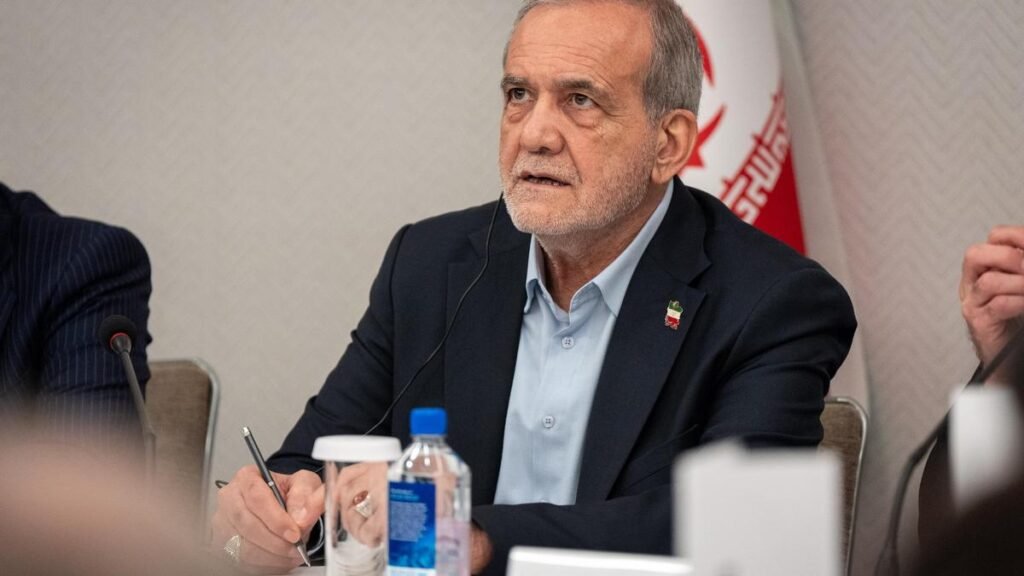
The statement that there is “deep historical mistrust in Iran toward the U.S. government” is not just a political slogan—it reflects decades of conflict, intervention, broken agreements, and ideological rivalry. To fully understand what Iran’s President meant in the context of the ongoing Iran–Israel war and U.S. involvement, we need to examine both the current situation and the long historical background that shapes Iran’s thinking today.
1. What the Iranian President Actually Said (Current Context)
Iranian President Masoud Pezeshkian recently emphasized that:
- Iran has a deep historical distrust of the United States
- The U.S. is sending “contradictory signals”—talking about diplomacy while taking aggressive actions
- Iran believes the U.S. ultimately seeks “submission” rather than negotiation
This statement comes at a time when:
- A fragile ceasefire between Iran and the U.S. is close to collapse
- The U.S. has seized Iranian ships and imposed blockades
- Negotiations are uncertain and may fail
- Military tensions involving Israel continue in the region
So, the remark is not isolated—it is tied to active war conditions and diplomatic breakdown.
2. The Core Question: Why Does Iran Distrust the U.S.?
Iran’s mistrust is rooted in history, ideology, geopolitics, and recent events. Let’s break this into major phases.
3. The 1953 Coup: The Foundation of Distrust
One of the most important events is the 1953 coup d’état in Iran.
- Iran had a democratically elected Prime Minister, Mohammad Mosaddegh
- He nationalized Iran’s oil industry (previously controlled by Western companies)
- The U.S. and UK supported a coup to remove him and restore the Shah
This event is deeply embedded in Iranian memory because:
- It is seen as Western interference in Iranian sovereignty
- It replaced democracy with an authoritarian monarchy
- It proved (from Iran’s perspective) that the U.S. prioritizes its own interests over democracy
👉 This is often considered the starting point of modern Iranian distrust.
4. The 1979 Islamic Revolution & Hostage Crisis
The next turning point was the 1979 Iranian Revolution:
- The Shah (supported by the U.S.) was overthrown
- Iran became an Islamic Republic under Ayatollah Khomeini
- The U.S. embassy in Tehran was seized
- American diplomats were held hostage for 444 days
Why this matters:
- Iran began viewing the U.S. as an imperialist enemy
- The U.S. began viewing Iran as a hostile revolutionary state
- Diplomatic relations were completely severed
This event transformed mistrust into open hostility.
5. Iran–Iraq War (1980–1988): U.S. Alignment Against Iran
During the Iran–Iraq War:
- The U.S. supported Iraq (led by Saddam Hussein)
- Iran suffered massive casualties
- The U.S. later shot down an Iranian civilian airliner (1988), killing 290 people
From Iran’s perspective:
- The U.S. backed its enemy in war
- Civilian lives were lost due to U.S. military actions
- There was no accountability
👉 This reinforced the belief that the U.S. is actively hostile, not neutral.
6. Sanctions, Nuclear Disputes, and “Maximum Pressure”
From the 2000s onward:
- Iran developed a nuclear program
- The U.S. imposed heavy economic sanctions
- In 2015, the nuclear deal (JCPOA) was signed
- In 2018, the U.S. withdrew from the deal under Donald Trump
Why this is crucial:
- Iran saw the withdrawal as a breach of trust
- Even after compliance, sanctions returned
- The U.S. adopted a “maximum pressure” strategy
👉 This is one of the biggest modern reasons for mistrust:
Iran believes the U.S. does not honor agreements.
7. Proxy Wars and Regional Rivalry
Iran and the U.S. have not always fought directly—but they oppose each other through:
- Militias in Iraq
- Hezbollah in Lebanon
- Hamas in Gaza
- Conflicts in Syria and Yemen
At the same time:
- The U.S. is a key ally of Israel
- Iran is strongly anti-Israel
This creates a triangular conflict:
👉 Iran vs Israel (direct + proxy)
👉 Iran vs U.S. (strategic + ideological)
8. Recent Trigger: 2025–2026 Iran War
The current war escalated after:
- U.S. and Israeli strikes on Iran
- Iran retaliating against Israel and U.S. bases
- Thousands killed and massive regional disruption
Additional tensions include:
- Control of the Strait of Hormuz (critical oil route)
- Naval confrontations
- Accusations of ceasefire violations
👉 In this environment, distrust is not theoretical—it’s actively reinforced by events.
9. Why Iran Thinks the U.S. Is “Not Serious About Diplomacy”
Iran’s leadership argues:
- The U.S. talks about peace but continues military actions
- It imposes sanctions even during negotiations
- It changes positions across administrations
- It supports Israel militarily
From Iran’s perspective, this looks like:
Diplomacy is being used as a tool for pressure—not genuine compromise.
10. Ideological Conflict: Not Just Politics
The conflict is also ideological:
| Iran | United States |
|---|---|
| Islamic Republic | Liberal democracy |
| Anti-Western influence | Pro-Western global order |
| Anti-Israel stance | Strong Israel ally |
This ideological clash means:
- Even if policies change, core mistrust remains
- Each side sees the other as a threat to its system
11. Israeli Factor: Why It Intensifies Mistrust
Iran views Israel as:
- An occupying power in Palestine
- A direct military threat
The U.S.:
- Provides military aid to Israel
- Supports Israeli operations
👉 So from Iran’s perspective:
Supporting Israel = opposing Iran
This strengthens the belief that the U.S. is structurally aligned against Iran.
12. Strategic Reality: Why Mistrust Persists Today
Even today:
- Iran doubts U.S. intentions in negotiations
- U.S. doubts Iran’s nuclear ambitions
- Both sides prepare for war even during talks
This creates a cycle:
- Distrust → military buildup
- Military buildup → more distrust
- Talks fail → conflict escalates
13. Economic and Global Impact
The mistrust affects the world:
- Oil prices rise due to Hormuz tensions
- Global trade is disrupted
- Countries like India worry about energy supply
👉 So this is not just a regional issue—it’s global.
14. Can This Mistrust Be Resolved?
Short answer: Not easily
Even U.S. leaders admit:
- Trust cannot be rebuilt quickly
- It requires long-term consistency
For trust to improve:
- Agreements must be honored
- Military escalation must stop
- Both sides must compromise
But currently:
- War conditions make this very difficult
15. Conclusion
The Iranian President’s statement about “deep historical mistrust” is rooted in over 70 years of conflict:
- 1953 coup → loss of sovereignty
- 1979 revolution → ideological rupture
- Wars and sanctions → sustained hostility
- Nuclear deal collapse → broken trust
- Current war → active reinforcement of suspicion
Today, this mistrust is:
- Historical (past interventions)
- Political (conflicting goals)
- Military (ongoing confrontation)
- Psychological (deep national memory)
In the context of the Iran–Israel war and U.S. involvement, this mistrust explains why:
- Negotiations keep failing
- Ceasefires remain fragile
- War risks remain high
👉 Ultimately, the statement reflects a reality:
Iran does not see the United States as a neutral negotiator—but as a long-term adversary whose actions have repeatedly undermined trust.