More than 700 activists write to EC alleging MCC violation in PM address to the nation
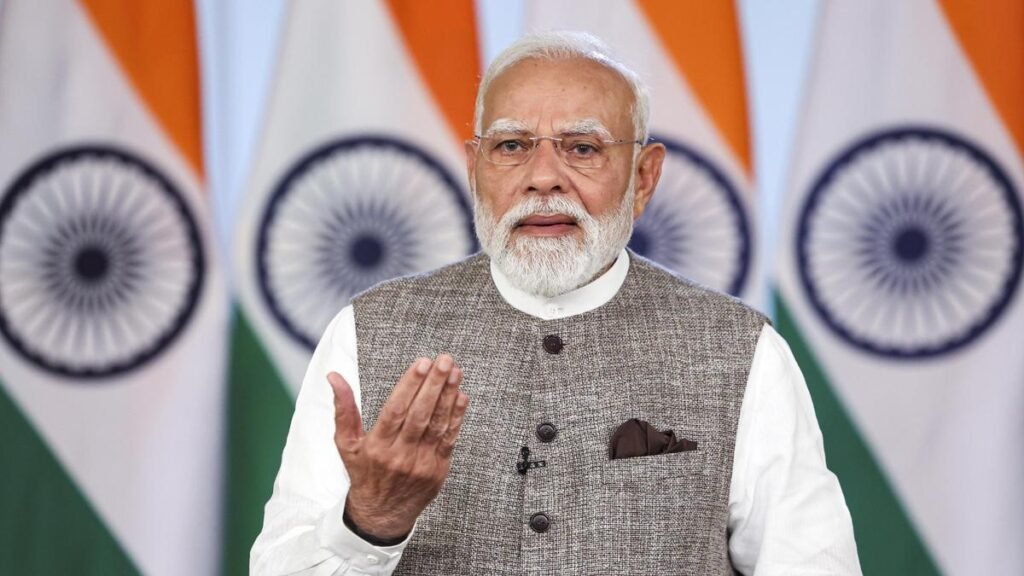
The issue of “More than 700 activists writing to the Election Commission (EC) alleging Model Code of Conduct (MCC) violation in the Prime Minister’s address to the nation” sits at the intersection of electoral ethics, constitutional governance, political communication, and democratic accountability. To understand the full scope of this controversy, it is essential to unpack the institutional framework of the MCC, the role of the Election Commission of India, the position of the Prime Minister—currently Narendra Modi—and the concerns raised by civil society actors.
1. Background: What Triggered the Controversy?
The controversy began when a large group of over 700 activists, academics, former bureaucrats, and civil society members collectively addressed a formal complaint to the Election Commission. Their allegation was that the Prime Minister’s televised address to the nation violated the Model Code of Conduct, which comes into force during election periods.
The MCC is a set of guidelines that regulate the behavior of political parties and government authorities to ensure free and fair elections. It is not a law enacted by Parliament but has moral and quasi-legal authority, and its enforcement lies with the Election Commission.
The activists argued that the timing, content, and tone of the Prime Minister’s speech were politically advantageous and potentially influenced voters, thereby breaching the spirit—if not the letter—of the MCC.
2. Understanding the Model Code of Conduct (MCC)
The Model Code of Conduct is a crucial pillar of India’s electoral system. It comes into effect as soon as the Election Commission announces election dates. Its purpose is to ensure that the ruling party does not misuse its position to gain an unfair advantage.
Key Provisions of the MCC:
- No use of official machinery for campaigning
- No announcements of new schemes, projects, or policies
- No use of government media for partisan purposes
- No appeal to caste, religion, or communal sentiments
- Equal opportunity for all political parties
The MCC applies to:
- Political parties
- Candidates
- Ministers (including the Prime Minister)
- Government officials
One critical aspect is that even official communications must avoid influencing voters.
3. Nature of the Prime Minister’s Address
The Prime Minister’s address to the nation is typically considered a formal government communication. Such speeches may cover:
- National security
- Economic policies
- Crisis management
- Public welfare announcements
However, during election periods, such addresses become sensitive. The activists claimed that:
- The speech highlighted government achievements.
- It may have indirectly promoted the ruling party.
- It potentially influenced voters in ongoing elections.
If true, this raises questions about whether the address crossed the line from governance into campaigning.
4. Arguments Made by the Activists
The group of over 700 activists presented several key arguments in their complaint:
a) Misuse of Official Platform
They argued that a Prime Minister’s address is a powerful platform funded by public resources. Using it during elections—even indirectly—for political messaging could be seen as misuse of state machinery.
b) Unequal Playing Field
Opposition parties do not have access to such nationwide broadcast mechanisms. Therefore, any politically suggestive content in such an address could create an uneven playing field.
c) Timing of the Address
The timing of the speech during the election cycle was seen as suspicious. Activists argued that even neutral messages can become politically charged when delivered close to voting dates.
d) Content Analysis
According to the complaint, the speech allegedly:
- Emphasized government achievements
- Highlighted policy successes
- Used language that could resonate with voters emotionally
Such elements, they argued, resemble campaign rhetoric.
5. Legal and Constitutional Perspective
a) Freedom of Speech vs Electoral Neutrality
The Prime Minister, like any citizen, has the right to speak. However, during elections, this right is balanced against the need for neutrality in governance.
b) Role of the Election Commission
The Election Commission of India has the authority to:
- Issue notices
- Seek explanations
- Direct corrective actions
- In extreme cases, bar individuals from campaigning
However, enforcing the MCC against a sitting Prime Minister is politically and institutionally complex.
6. Government’s Likely Defense
While the activists raised concerns, the government or ruling party may present counterarguments:
a) Official Duty
The Prime Minister’s office may argue that the address was part of routine governance, not political campaigning.
b) Absence of Explicit Appeal
If the speech did not explicitly ask for votes or mention political opponents, it may be argued that no direct violation occurred.
c) Public Interest Communication
The government may claim that the address was necessary for informing citizens about important issues.
7. Precedents and Past Controversies
This is not the first time such allegations have surfaced in India’s electoral history. Past controversies include:
- Government advertisements during elections
- Use of official social media accounts
- Announcements of welfare schemes close to polls
In many cases, the Election Commission has issued warnings or guidelines rather than strict penalties.
8. Challenges in Enforcing the MCC
The MCC faces several structural challenges:
a) Non-Statutory Nature
Since it is not a law, enforcement depends on moral authority and voluntary compliance.
b) Ambiguity
Distinguishing between governance and campaigning is often subjective.
c) Political Pressure
The Election Commission must act independently but often faces scrutiny regarding its decisions.
9. Broader Democratic Implications
This controversy raises deeper questions about Indian democracy:
a) Institutional Trust
If large groups of civil society actors feel compelled to write to the EC, it indicates concerns about institutional fairness.
b) Media and Communication Power
In the digital age, national addresses have massive reach. Their impact on voters can be significant.
c) Level Playing Field
Free and fair elections require that all parties compete under equal conditions. Any perceived advantage undermines this principle.
10. Possible Outcomes
The Election Commission may take several actions:
- Seek Explanation
It may ask the Prime Minister’s office for clarification. - Issue Advisory
A warning or advisory may be issued to avoid similar situations. - Dismiss Complaint
If no violation is found, the complaint may be closed. - Stronger Action (Rare)
In extreme cases, restrictions could be imposed.
11. Role of Civil Society
The involvement of over 700 activists highlights the importance of civil society in democratic oversight. Their actions:
- Promote accountability
- Encourage transparency
- Keep institutions responsive
However, critics may argue that such interventions can also be politically motivated.
12. Media and Public Perception
Media coverage plays a crucial role in shaping how such controversies are perceived. Public opinion may vary:
- Supporters may see the complaint as unnecessary criticism.
- Critics may view it as a legitimate concern about misuse of power.
13. Ethical Considerations
Even if no technical violation is found, ethical questions remain:
- Should incumbents exercise extra caution during elections?
- Is it appropriate to highlight achievements when voters are deciding?
In democracies, perception often matters as much as legality.
14. Conclusion
The allegation that the Prime Minister’s address violated the Model Code of Conduct is not just a legal issue—it is a test of democratic norms. The involvement of a large number of activists underscores the seriousness of the concern.
At its core, the debate revolves around a fundamental principle: Can those in power separate governance from political advantage during elections?
The response of the Election Commission of India will be crucial in determining not only the outcome of this specific case but also the credibility of India’s electoral framework.
Regardless of the final decision, this episode highlights the need for:
- Clearer guidelines
- Stronger enforcement mechanisms
- Greater transparency in political communication
In a democracy as large and complex as India, maintaining electoral integrity is an ongoing challenge—and controversies like this serve as reminders of the vigilance required to protect it.